Contribute
Contribute

At dhoop, we use food as a lens to look at the world and encourage you to do the same. Wear the dhoop-tinted glasses and provoke our thoughts. Challenge our preconceived notions. Make us learn and unlearn through your writing.
Write for Us
Write for Us


At dhoop, we use food as a lens to look at the world and encourage you to do the same. Wear the dhoop-tinted glasses and provoke our thoughts. Challenge our preconceived notions. Make us learn and unlearn through your writing.

As a multi-disciplinary magazine, space, and research platform each one of our themes intend to uncover a new facet of food through the lenses of culture, sustainability, design, economics, commerce, and importantly, individual, deeply personal perspectives that help shine light on humane aspect of a subject we so love devouring.
Each year, the editorial team at Dhoop gets its forks and knives out to tear through a new issue — and one that will hopefully help sink our teeth deeper into food and how it inhabits the world around us.
On chilly winter mornings, rows of delicate purple flowers line the fields of Pampore, near Srinagar, where farmers weed out the flowers with orange pistils the world knows and loves as saffron. The spice, highly regarded for its labor-intensive harvesting process, unique depth, and rich history grows only in specific high-altitude areas of Kashmir and comes with a Geographical Indication tag. It also carries the badge of being a quintessential, local ‘Indian’ gem that is exported the world over, but dig a little deeper and you’ll see, saffron — with an origin story that traces back to the Mediterranean — is not even native to India.
If origin doesn’t make something truly hyperlocal, what does? Could it be the destination? Indigenisation? Re-territorialisation? Or, Naturalisation? Is local something you are born with, or is it something you simply become?
On chilly winter mornings, rows of delicate purple flowers line the fields of Pampore, near Srinagar, where farmers weed out the flowers with orange pistils the world knows and loves as saffron. The spice, highly regarded for its labor-intensive harvesting process, unique depth, and rich history grows only in specific high-altitude areas of Kashmir and comes with a Geographical Indication tag. It also carries the badge of being a quintessential, local ‘Indian’ gem that is exported the world over, but dig a little deeper and you’ll see, saffron — with an origin story that traces back to the Mediterranean — is not even native to India.
If origin doesn’t make something truly hyperlocal, what does? Could it be the destination? Indigenisation? Re-territorialisation? Or, Naturalisation? Is local something you are born with, or is it something you simply become?
On chilly winter mornings, rows of delicate purple flowers line the fields of Pampore, near Srinagar, where farmers weed out the flowers with orange pistils the world knows and loves as saffron. The spice, highly regarded for its labor-intensive harvesting process, unique depth, and rich history grows only in specific high-altitude areas of Kashmir and comes with a Geographical Indication tag. It also carries the badge of being a quintessential, local ‘Indian’ gem that is exported the world over, but dig a little deeper and you’ll see, saffron — with an origin story that traces back to the Mediterranean — is not even native to India.
If origin doesn’t make something truly hyperlocal, what does? Could it be the destination? Indigenisation? Re-territorialisation? Or, Naturalisation? Is local something you are born with, or is it something you simply become?
On chilly winter mornings, rows of delicate purple flowers line the fields of Pampore, near Srinagar, where farmers weed out the flowers with orange pistils the world knows and loves as saffron. The spice, highly regarded for its labor-intensive harvesting process, unique depth, and rich history grows only in specific high-altitude areas of Kashmir and comes with a Geographical Indication tag. It also carries the badge of being a quintessential, local ‘Indian’ gem that is exported the world over, but dig a little deeper and you’ll see, saffron — with an origin story that traces back to the Mediterranean — is not even native to India.
If origin doesn’t make something truly hyperlocal, what does? Could it be the destination? Indigenisation? Re-territorialisation? Or, Naturalisation? Is local something you are born with, or is it something you simply become?
From avocado toasts becoming as commonplace as baingan and the deep embedding of tomatoes into Indian cuisine, where our kitchens are unimaginable without it to imported, speciality products weaselling their way into our grocery lists — ‘hyperlocal’ takes on a new meaning in the age of ready-to-eat meals, girl dinner, and air-fried everything. As diets homogenise, food is becoming more universal than unique.
Then, what is the relationship between hyperlocal and the human?
For our forthcoming issue, we’re inviting perspectives, narratives, arguments, and musings that challenge and test the idea of hyperlocal through the prism of nature (and how it nurtures produce), climate change, culture, global trade and commerce, biodiversity, diets, diversity, folklores, and importantly from the nuanced, lived-in slant of people and their habits.
From avocado toasts becoming as commonplace as baingan and the deep embedding of tomatoes into Indian cuisine, where our kitchens are unimaginable without it to imported, speciality products weaselling their way into our grocery lists — ‘hyperlocal’ takes on a new meaning in the age of ready-to-eat meals, girl dinner, and air-fried everything. As diets homogenise, food is becoming more universal than unique.
Then, what is the relationship between hyperlocal and the human?
For our forthcoming issue, we’re inviting perspectives, narratives, arguments, and musings that challenge and test the idea of hyperlocal through the prism of nature (and how it nurtures produce), climate change, culture, global trade and commerce, biodiversity, diets, diversity, folklores, and importantly from the nuanced, lived-in slant of people and their habits.
From avocado toasts becoming as commonplace as baingan and the deep embedding of tomatoes into Indian cuisine, where our kitchens are unimaginable without it to imported, speciality products weaselling their way into our grocery lists — ‘hyperlocal’ takes on a new meaning in the age of ready-to-eat meals, girl dinner, and air-fried everything. As diets homogenise, food is becoming more universal than unique.
Then, what is the relationship between hyperlocal and the human?
For our forthcoming issue, we’re inviting perspectives, narratives, arguments, and musings that challenge and test the idea of hyperlocal through the prism of nature (and how it nurtures produce), climate change, culture, global trade and commerce, biodiversity, diets, diversity, folklores, and importantly from the nuanced, lived-in slant of people and their habits.
From avocado toasts becoming as commonplace as baingan and the deep embedding of tomatoes into Indian cuisine, where our kitchens are unimaginable without it to imported, speciality products weaselling their way into our grocery lists — ‘hyperlocal’ takes on a new meaning in the age of ready-to-eat meals, girl dinner, and air-fried everything. As diets homogenise, food is becoming more universal than unique.
Then, what is the relationship between hyperlocal and the human?
For our forthcoming issue, we’re inviting perspectives, narratives, arguments, and musings that challenge and test the idea of hyperlocal through the prism of nature (and how it nurtures produce), climate change, culture, global trade and commerce, biodiversity, diets, diversity, folklores, and importantly from the nuanced, lived-in slant of people and their habits.
Pitching Guidelines
Pitching Guidelines
Pitching Guidelines
Pitching Guidelines
How to Pitch
What do you want to write about? How will you bring a unique perspective to the subject?
Tell us what you want to write about, the reasons it's important and unique.
How to Pitch
What do you want to write about? How will you bring a unique perspective to the subject?
Tell us what you want to write about, the reasons it's important and unique.
How to Pitch
What do you want to write about? How will you bring a unique perspective to the subject?
Tell us what you want to write about, the reasons it's important and unique.
How to Pitch
What do you want to write about? How will you bring a unique perspective to the subject?
Tell us what you want to write about, the reasons it's important and unique.
Our Upcoming theme
HYPERLOCAL
As a multi-disciplinary magazine, space, and research platform each one of our themes intend to uncover a new facet of food through the lenses of culture, sustainability, design, economics, commerce, and importantly, individual, deeply personal perspectives that help shine light on humane aspect of a subject we so love devouring.
Each year, the editorial team at Dhoop gets its forks and knives out to tear through a new issue — and one that will hopefully help sink our teeth deeper into food and how it inhabits the world around us.

Our Upcoming theme
HYPERLOCAL
As a multi-disciplinary magazine, space, and research platform each one of our themes intend to uncover a new facet of food through the lenses of culture, sustainability, design, economics, commerce, and importantly, individual, deeply personal perspectives that help shine light on humane aspect of a subject we so love devouring.
Each year, the editorial team at Dhoop gets its forks and knives out to tear through a new issue — and one that will hopefully help sink our teeth deeper into food and how it inhabits the world around us.

Issue #4
Hyperlocal
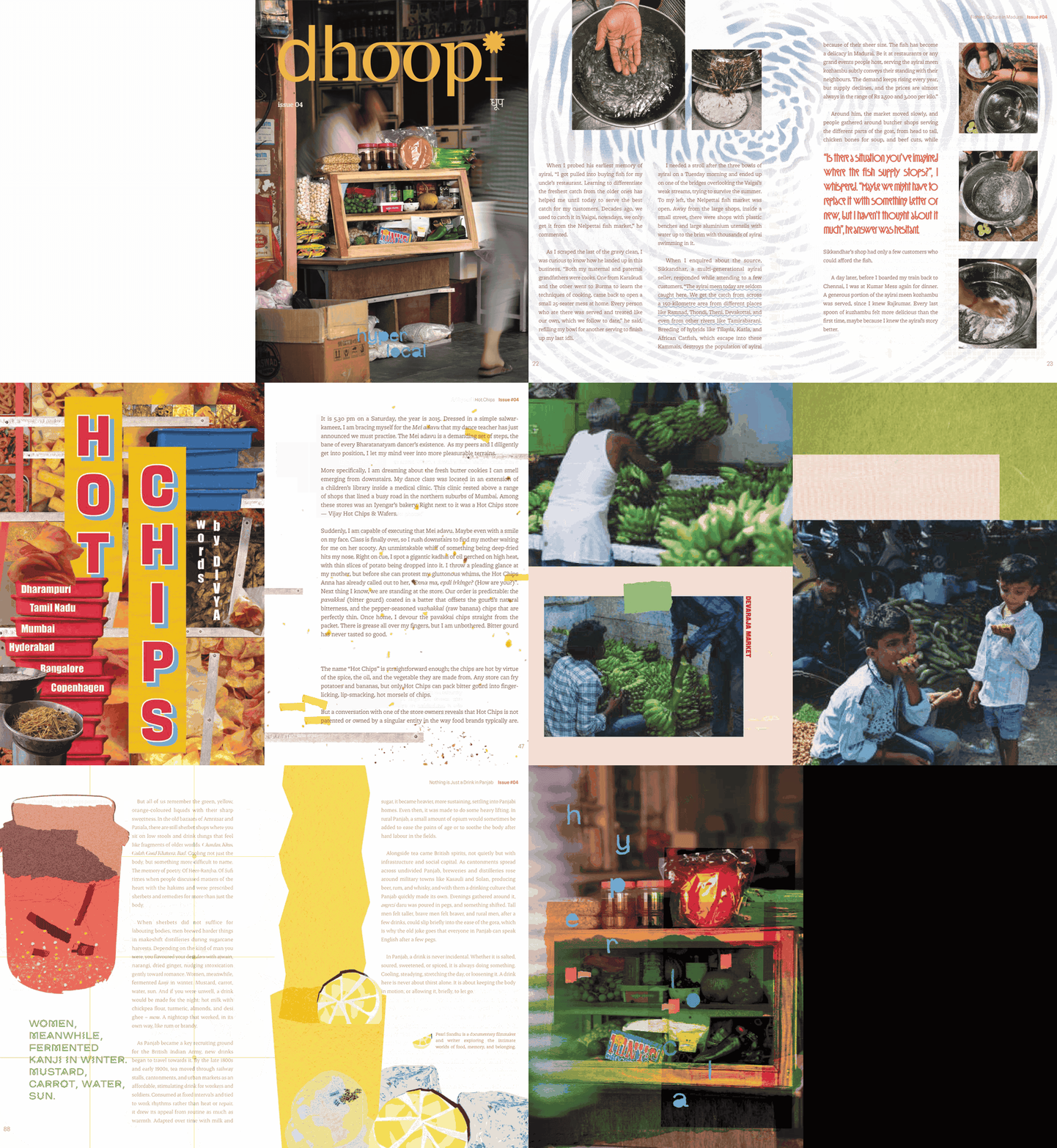
As a multi-disciplinary magazine, space, and research platform each one of our themes intend to uncover a new facet of food through the lenses of culture, sustainability, design, economics, commerce, and importantly, individual, deeply personal perspectives that help shine light on humane aspect of a subject we so love devouring.
Each year, the editorial team at Dhoop gets its forks and knives out to tear through a new issue — and one that will hopefully help sink our teeth deeper into food and how it inhabits the world around us.
Resources
Resources
Resources
Resources
Some extra bits to help you dive deeper. Scroll to see all
Reading List
Reading List
View the full list
View the full list
‘How do you reduce a national dish to a powder?’: the weird, secretive world of crisp flavours
The Guardian
The Indian Village That Revolves Around Gulab Jamuns
Atlas Obscura
Fishy diplomacy: what a hilsa ban reveals about India-Bangladesh tensions
Aljazeera
Collaborated Articles
Article in Magazine
Article in Magazine
Article in Magazine
Article in Magazine
Shop Magazine to Read
Shop to Read
Shop Magazine to Read
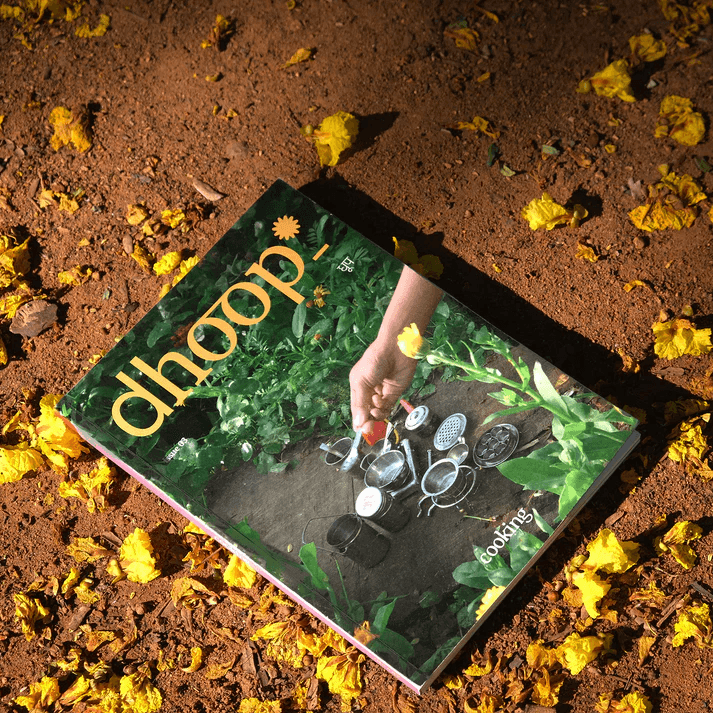
Issue 3: Cooking
Issue 3: Cooking
Issue 3: Cooking


Beyond Duty, Inheritance and Memory
Written by Indu Benny
On the Streets
On the Streets
On the Streets
On the Streets
Written by Ashim Tyagi
Feeding the Living, Honouring the Departed
Written by Mahek Arora
Diverging from the Recipe: A zuihitsu
Written by Devi Sastry
We have a loooooooooooong table
Some dhoop for you!
Sign up for our newsletter.
dhoop uses food as a lens. Through this lens, we interrogate culture, sustainability, design, and the systems that sustain life. We started as a magazine focused on stories of food and its intersections.
Issue 03: Cooking
This issue expands our understanding of cooking—as a practice, sure, but perhaps more importantly, as an understanding, as a language, as a memory, and in transit.

Some dhoop for you!
Sign up for our newsletter here.
dhoop uses food as a lens. Through this lens, we interrogate culture, sustainability, design, and the systems that sustain life. We started as a magazine focused on stories of food and its intersections.
We work out of Jaipur, Bangalore & Mumbai

Issue 03: Cooking
This issue expands our understanding of cooking—as a practice, sure, but perhaps more importantly, as an understanding, as a language, as a memory, and in transit.

Some dhoop for you!
Sign up for our newsletter.
dhoop uses food as a lens. Through this lens, we interrogate culture, sustainability, design, and the systems that sustain life. We started as a magazine focused on stories of food and its intersections.

Issue 03: Cooking
This issue expands our understanding of cooking—as a practice, sure, but perhaps more importantly, as an understanding, as a language, as a memory, and in transit.

Some dhoop for you!
Sign up for our newsletter.
dhoop uses food as a lens. Through this lens, we interrogate culture, sustainability, design, and the systems that sustain life. We started as a magazine focused on stories of food and its intersections.
We work out of Jaipur, Bangalore & Mumbai

Issue 03: Cooking
This issue expands our understanding of cooking—as a practice, sure, but perhaps more importantly, as an understanding, as a language, as a memory, and in transit.