

Same Same but…: Aam/ Mango of Opar and Epar

Same Same but…: Aam/ Mango of Opar and Epar

Ishita Dey

Ishita Dey

Summer 2017. I was conducting fieldwork in sweetshops in Rajshahi, Bangladesh. I bought a bottle of water, and a waft of aroma of Himsagar Aam engulfed my mind. I followed the aroma to find a heap of perfectly shaped Himsagar Aam getting arranged on mango leaves in the local bazaar.

Same Same but…: Aam/ Mango of Opar and Epar

Same Same but…: Aam/ Mango of Opar and Epar

Rini Singhi

Ishita Dey

Ishita Dey

Summer 2017. I was conducting fieldwork in sweetshops in Rajshahi, Bangladesh. I bought a bottle of water, and a waft of aroma of Himsagar Aam engulfed my mind. I followed the aroma to find a heap of perfectly shaped Himsagar Aam getting arranged on mango leaves in the local bazaar.

I walked up to the vendor and asked if the Aam was from Opar (the Bangla word for that side, implying West Bengal). The vendor asked me if I was from Kolkata. I nodded. He replied (pointing to the Aam), “No, this is from Epar. Original Khirsapat”. I bought 2 kilograms of mangoes and entrusted a staff member at the kitchen of the university guest house with detailed instructions on soaking and carving the mangoes. I made sure to specify that the flesh and peel around the seeds should remain, a request that left the staff member grinning from ear to ear. He struck up a conversation about the fleshy parts of the mango and different ways of eating various kinds of mango, and was relieved to know I enjoyed tearing the peel with my teeth and sucking on the fibrous peel. We both agreed that the peel close to the seed has the best taste. He took the packet of mangoes and offered to show me around the mango orchard of Rajshahi University Campus. I savoured the mangoes for dinner and learnt that Shibgunj Upazilla of Chapainawabgunj district was known for Khirsapat mangoes. 

The next day, I took up the offer of a mango orchard tour, and my guide spoke passionately of Khsirsapat, Fazli, Gopalbhog, and Lyangda as local specialities. The shade of the mango orchard was not enough to prevent me from sweating. Pointing to our sweat-soaked clothes, the guide commented, “We are sweating, and mangoes won't taste sweet without the sweat”. The average temperature conducive to mangoes ranges from 24–30°C, and certain varieties can endure a slightly higher temperature along with humidity. Mangoes require a certain heat to ripen on the tree, and since April, mango cultivators fear that Kalbaisakhi / Nor’westers can cause premature fruit dropping to damage mango flowers. 
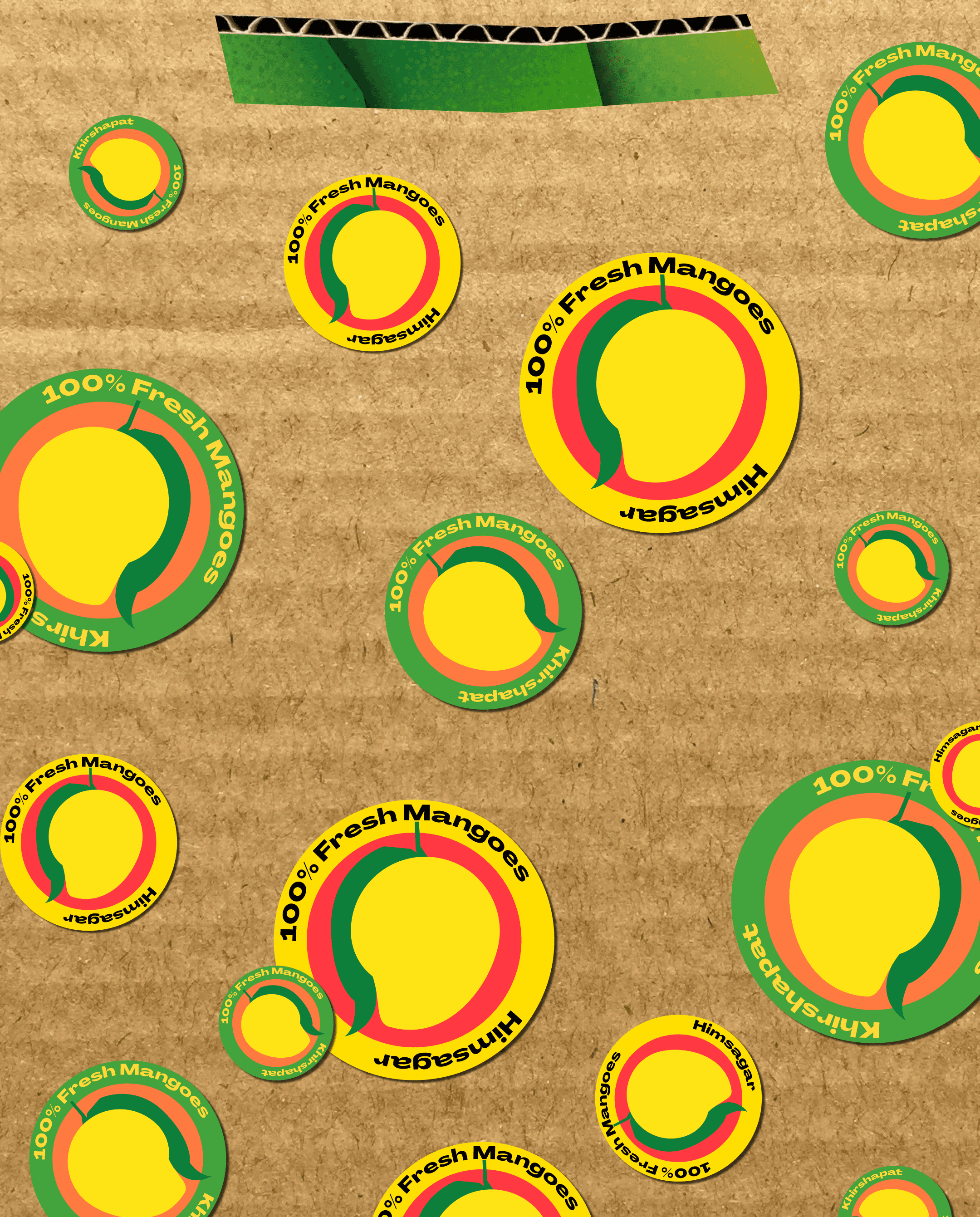
I reached Shibgunj Upazilla to learn about a new sweet, and one of the workers in a sweetshop advised me to try another seasonal speciality of Shibgunj – Khirsapat Mango. As soon as I got a break from learning about sweets, I decided to visit Chotosona Mosque, and on the way, we crossed picturesque mango orchards. As we crossed one mango orchard after another, I was tempted to ask if these were known for the Khirsapat variety. As I stumbled on the ‘r’ of  Khirsapat while asking him, immediately, the autorickshaw driver turned around and said, “So did you like ours, or yours?”, I was taken aback. On our way back, we bought Khirsapat mangoes. When we were served these mangoes with our dinner, I remarked, “These taste exactly like Himsagar”. 

Read the full article and much more in our latest issue

Read the full article and much more in our latest issue

Read the full article and much more in our latest issue

Issue #4:

Hyperlocal

Issue #4:

Hyperlocal

Issue #4:
Hyperlocal

Issue #4:

Hyperlocal

If origin doesn’t make something truly hyperlocal, what does? Could it be the destination? Indigenisation? Re-territorialisation? Or, naturalisation? Is local something you are born with, or is it something you simply become?

If origin doesn’t make something truly hyperlocal, what does? Could it be the destination? Indigenisation? Re-territorialisation? Or, naturalisation? Is local something you are born with, or is it something you simply become?

If origin doesn’t make something truly hyperlocal, what does? Could it be the destination? Indigenisation? Re-territorialisation? Or, naturalisation? Is local something you are born with, or is it something you simply become?

Some dhoop for you!

Sign up for our newsletter.

dhoop uses food as a lens. Through this lens, we interrogate culture, sustainability, design, and the systems that sustain life. We started as a magazine focused on stories of food and its intersections.

Issue 04: Hyperlocal

Speaking of man-made, who decided what is local to a place? Can only native, indigenous things be local? If origin doesn’t make something truly hyperlocal, what does? Could it be the destination? Indigenisation? Re-territorialisation? Or, naturalisation? Is local something you are born with, or is it something you simply become?

Some dhoop for you!

Sign up for our newsletter.

dhoop uses food as a lens. Through this lens, we interrogate culture, sustainability, design, and the systems that sustain life. We started as a magazine focused on stories of food and its intersections.

Issue 04: Hyperlocal

Speaking of man-made, who decided what is local to a place? Can only native, indigenous things be local? If origin doesn’t make something truly hyperlocal, what does? Could it be the destination? Indigenisation? Re-territorialisation? Or, naturalisation? Is local something you are born with, or is it something you simply become?

Some dhoop for you!

Sign up for our newsletter.

dhoop uses food as a lens. Through this lens, we interrogate culture, sustainability, design, and the systems that sustain life. We started as a magazine focused on stories of food and its intersections.

We work out of Jaipur, Bangalore & Mumbai

Issue 04: Hyperlocal

Speaking of man-made, who decided what is local to a place? Can only native, indigenous things be local? If origin doesn’t make something truly hyperlocal, what does? Could it be the destination? Indigenisation? Re-territorialisation? Or, naturalisation? Is local something you are born with, or is it something you simply become?

Some dhoop for you!

Sign up for our newsletter here.

dhoop uses food as a lens. Through this lens, we interrogate culture, sustainability, design, and the systems that sustain life. We started as a magazine focused on stories of food and its intersections.

We work out of Jaipur, Bangalore & Mumbai

Issue 04: Hyperlocal

Speaking of man-made, who decided what is local to a place? Can only native, indigenous things be local? If origin doesn’t make something truly hyperlocal, what does? Could it be the destination? Indigenisation? Re-territorialisation? Or, naturalisation? Is local something you are born with, or is it something you simply become?