
My first encounter with that version was traumatic. A giant brass tumbler at a famous shop in Amritsar, forced upon me by an uncle staging a full demonstration of Panjabi dairy supremacy, backed by his firm belief that everyone has an expandable stomach. It was frothy, creamy, layered with malai. Somewhere halfway through, I thought I might die. I was told to finish it.

The sweet white lassi you think of as Panjabi lassi is an imposter. It slows you down by drowning you in itself. The real thing is chatti di lassi, closer to whey than to what we now call lassi. Not a dessert. The chatti is the clay vessel in which curd is churned to extract butter, and what remains is a thin, aerated liquid. The whey, lightly sour, faintly fermented, carries the memory of milk without its weight. Musty, alive, slightly unpredictable. Always with roasted cumin, black salt, and sometimes a hint of black pepper. Real Panjabi lassi is a summer salve, not an anaesthetic. Even when it becomes kacchi lassi, that Barbie-pink liquid passed through a car window during chabeels, it remains light. It is meant to cool, not overwhelm. Before the White Revolution, households had plenty of unpasteurised milk. It was often thinned with water and either sweetened or balanced with black salt and pepper, which worked as an everyday antacid.
Over time, the recipe became quicker and more vivid with Rooh Afza — it added colour, fragrance, and sweetness to the half milk, half water drink. During chabeels, men step into the road to press it into your hands. This garish street drink is an offering to the masses in the memory of a guru who sat on burning sand. The act of giving it away, cold and sweet, is a small comfort offered to strangers in transit.
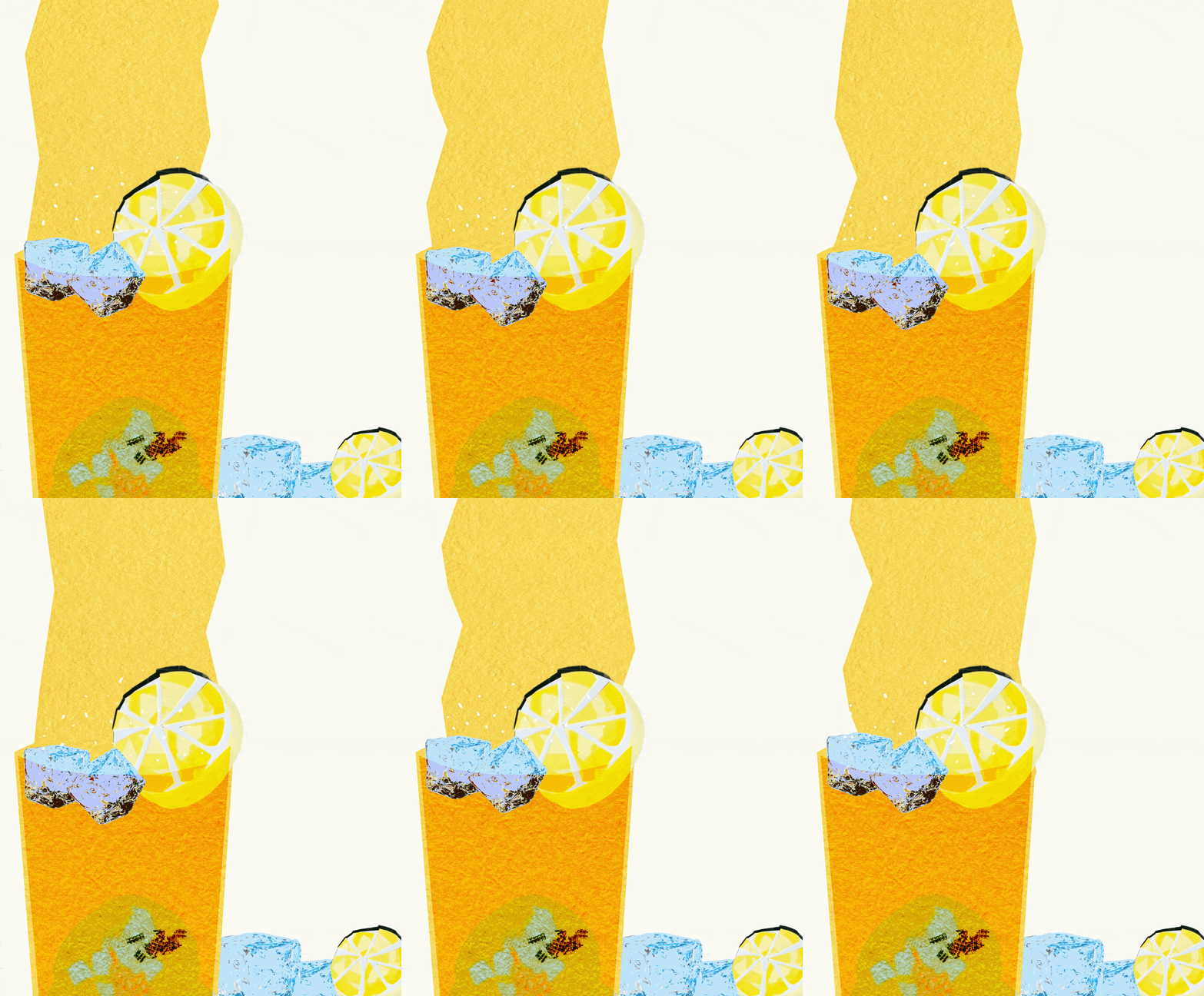
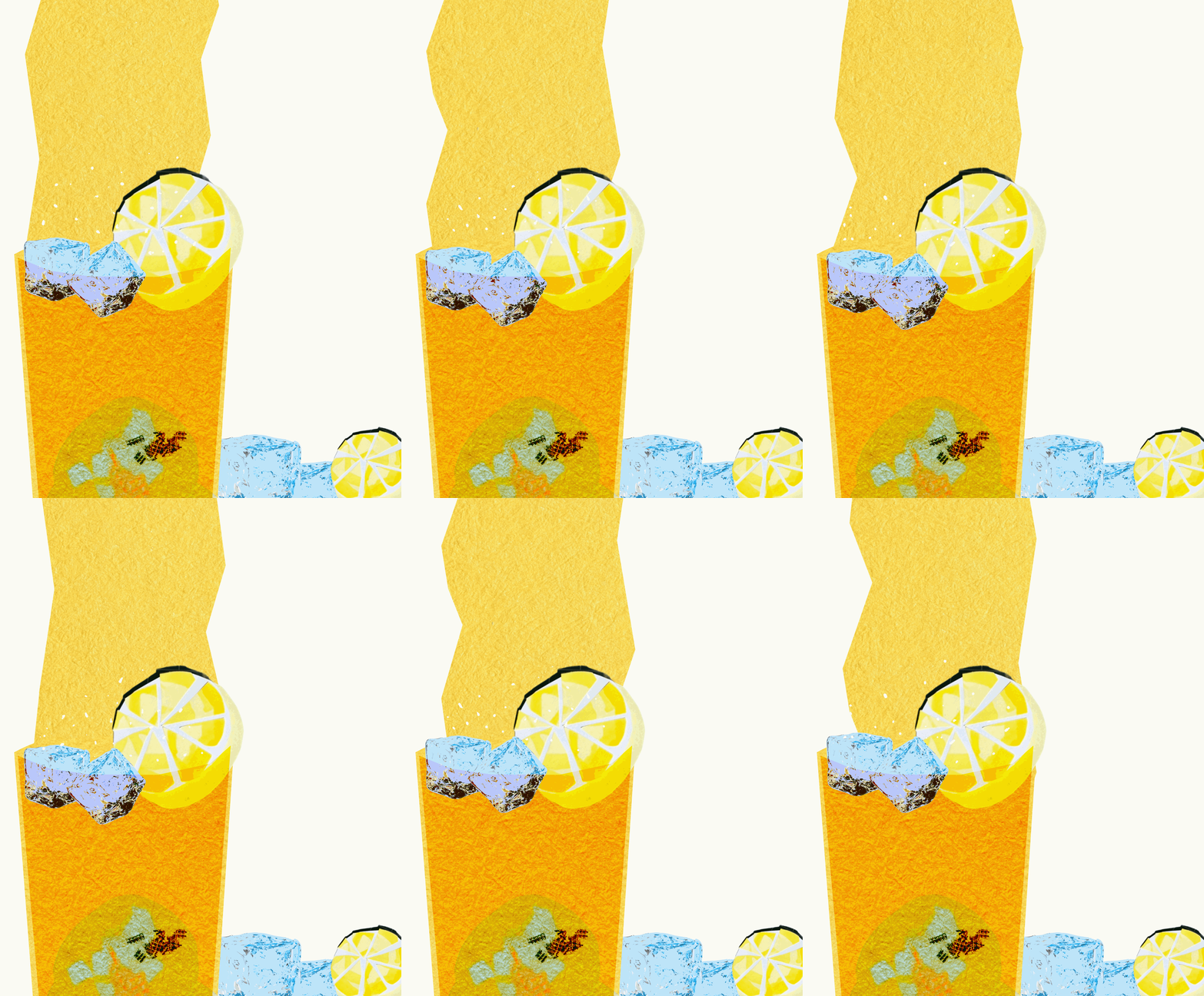
Summer in Panjab is not just a season but a crisis. The drinks become pivotal to life then. At home, shikanjvi arrives first, sharp, salted, poured endlessly into steel glasses until the body steadies from the hot winds. Lemons from the garden, softer than the sharp kagazi nimbus of today, are used. Black salt is not a mere garnish here but a repair mechanism, carrying electrolytes, trace minerals, and the memory of a Panjab that once stretched into the salt ranges of Khewra and Warcha, now across a border but once intimately part of the land before Partition. Someone stands with a steel jug and keeps pouring until the depletion leaves your body, and it never ends with one glass.
I remember being sent to the handpump to draw cold water for the shikanjvi at home. You had to pump a few rounds before the groundwater ran cold. There were refrigerators, but in peak summer, there was rarely any electricity. Once the guests were done, you got the leftover shikanjvi as a reward. It turned bitter quickly, so it had to be made fresh and finished just as fast.
And when even that was not enough, when the heat needed something more sustaining, there was jau da sattu – roasted barley ground into powder and stirred into water. Sometimes sweet, sometimes salted, sometimes eaten with onions and roti. This is not just a drink but a summer shortcut. A way to avoid cooking in 45-degree heat and nourish even when the heat dulls the appetite.
In the summers, sugarcane juice appears along the roadside, stalks stacked high, the kolhu creaking, juice pressed fresh and drunk right there, standing, slightly sticky, slightly relieved. But before that sugar high, there is always a guilty pause! Most Panjabis I know will ask the raswala to show proof of hygiene. As if the human eye can spot the virus. And because the human eye can never spot a virus, it always became a moral conundrum about trust in the vendor and one’s own luck. For in all Panjabis sits this old fear: Haiza. Cholera!
I’ve never seen anyone in my Panjabi family fall sick from drinking sugarcane juice, and yet the word has weight. It’s inherited, almost. A leftover from a time when things could turn quickly into something serious. And what’s interesting is that the suspicion of haiza was never just about illness. It carried a quiet moral judgment about public drinking and the inability to rein in one’s tongue. And while men with appetites could digest stones and iron, the legend goes. Many of them could not hold sugarcane juice. That's why I grew up thinking of sugarcane juice as the great temptress of a drink. Second only to gudamba.
It is when the pachhua westerly brings storms and knocks raw mangoes to the ground that gudamba truly takes over. The first time I had it at my nani’s house was the morning after a storm. I had been sent to pick up fallen mangoes from a neighbour’s orchard. I remember bringing them back, a little dusty, then I watched them roast in a chulha till their skins went black. Inside, they had turned a dull yellow. And by the time they were mashed with jaggery and spices into a hot slurry, they were something else entirely. Thick. Smoky. Tangy. Sweet breakfast. Something you scoop up with roti. Exciting because there are the hairy mango pits swimming in the slurry. I wanted every part of my tongue to catch it. I think I went a little quiet with that much pleasure.
The family story is that they had to stop me from having any more rotis. It felt like some small brake had failed in my body. I just could not stop. It is a sweet memory for a very particular reason. It is the only time I remember my nani asking me to stop eating. In every other memory, she is fighting me to eat more. One more bite. One more roti. So to think that this, my strange chemistry with gudamba, could shake that equation. It still surprises me. As if for once, appetite outran love. And even she had to step back, tired of making rotis for a six-year-old child who had just discovered this summer special.
Another drink that is full of nostalgia for many Panjabis is kadhni da dudh, or bhadoli da dudh milk left to simmer all day in an underground chulha covered with a pottery mesh, a drink neither reduced to be heavy on the stomach nor thickened into indulgence for the palate, but gently held in heat. By afternoon, it turned a faint blush and was served warm. By all logic, it should have been heavy. But everyone who remembers it insists it was light.
A friend once travelled to a rural wedding just to taste it. He had heard the legend from elders in his Gujjar family of milk from particular cattle, heated slowly over wood, carrying a faint smoke. He arrived with reverence, only to find the halwai tearing open a blue Amul packet, pouring it into an industrial-size kadhai like the most ordinary thing in the world. My friend's heart dropped, and he left the wedding heartbroken. Some of us will never know what kadhni da dudh really tasted like.
But all of us remember the green, yellow, orange coloured liquids with its sharp sweetness. In the old bazaars of Amritsar and Patiala, there are still sherbet shops where you sit on low stools and drink things that feel like fragments of older worlds. Chandan, Khus, Gulab, Gond Khateera, Bael. Cooling not just the body, but something more difficult to name. The memory of poetry. Of Heer-Ranjha. Of Sufi times when people discussed matters of the heart with the hakims and were prescribed sherbets and remedies for more than just the body.
When sherbets did not suffice for labouring bodies, men brewed harder things in makeshift distilleries during sugarcane harvests. Depending on the kind of man you were, you flavoured your desi daru with ajwain, narangi, dried ginger, nudging intoxication gently toward romance. Women, meanwhile, fermented kanji in winter. Mustard, carrot, water, sun. And if you were unwell, a drink would be made for the night: hot milk with chickpea flour, turmeric, almonds, and desi ghee – mesu. A nightcap that worked, in its own way, like rum or brandy.
As Panjab became a key recruiting ground for the British Indian Army, new drinks began to travel towards it. By the late 1800s and early 1900s, tea moved through railway stalls, cantonments, and urban markets as an affordable, stimulating drink for workers and soldiers. Consumed at fixed intervals and tied to work rhythms rather than heat or repair, it drew its appeal from routine as much as warmth. Adapted over time with milk and sugar, it became heavier, more sustaining, settling into Panjabi homes. Even then, it was made to do some heavy lifting. In rural Panjab, a small amount of opium would sometimes be added to ease the pains of age or to soothe the body from the hard labour in the fields.
Alongside tea came British spirits, not quietly but with infrastructure and social capital. As cantonments spread across undivided Panjab, breweries and distilleries rose around military towns like Kasauli and Solan, producing beer, rum, and whisky, and with them a drinking culture that Panjab quickly made its own. Evenings gathered around it, angrezi daru was poured in pegs, and something shifted. Tall men felt taller, brave men felt braver, and rural men, after a few drinks, could slip briefly into the ease of the gora, which is why the old joke goes that everyone in Panjab can speak English after a few pegs.
In Panjab, a drink is never incidental. Whether it is salted, soured, sweetened, or spiced, it is always doing something. Cooling, steadying, stretching the day, or loosening it. A drink here is never about thirst alone. It is about keeping the body in motion, or allowing it, briefly, to let go.
This article is supported by Ikk Panjab. Ikk Panjab is a hospitality enterprise based out of Delhi NCR and Chandigarh that celebrates the cuisine of Undivided Punjab, bringing to life the flavours, stories, and memories of a land once whole — and a culture steeped in extraordinary richness, warmth, and legacy.