
The sight of men standing sweat-pasted to their inner garments and dark-coloured sarongs hanging folded below their torso, hands kneading the dough, making parottas swinging their arms high in the air holding the dough in four fingers is a culture that is partly visual and mostly culinary.
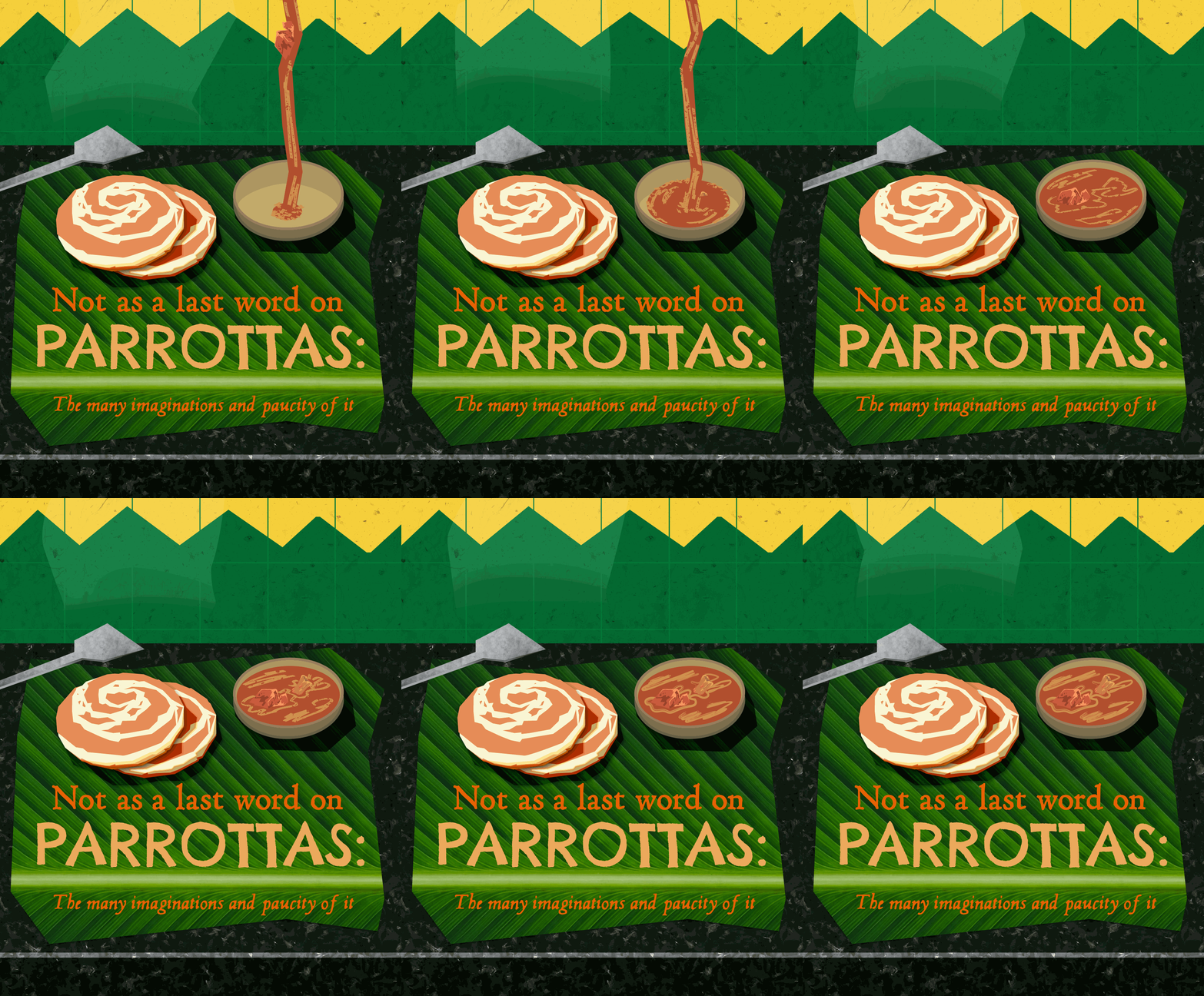
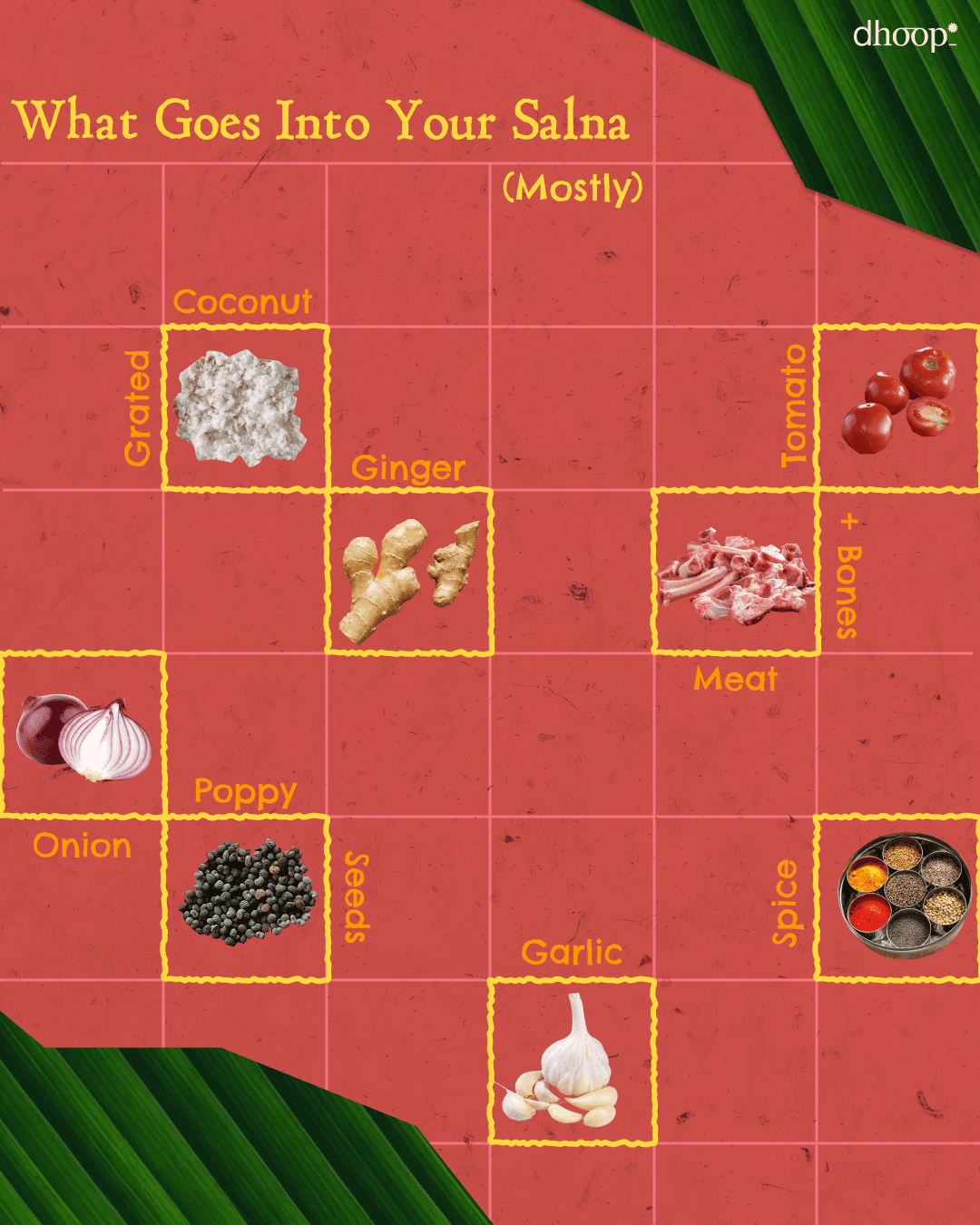
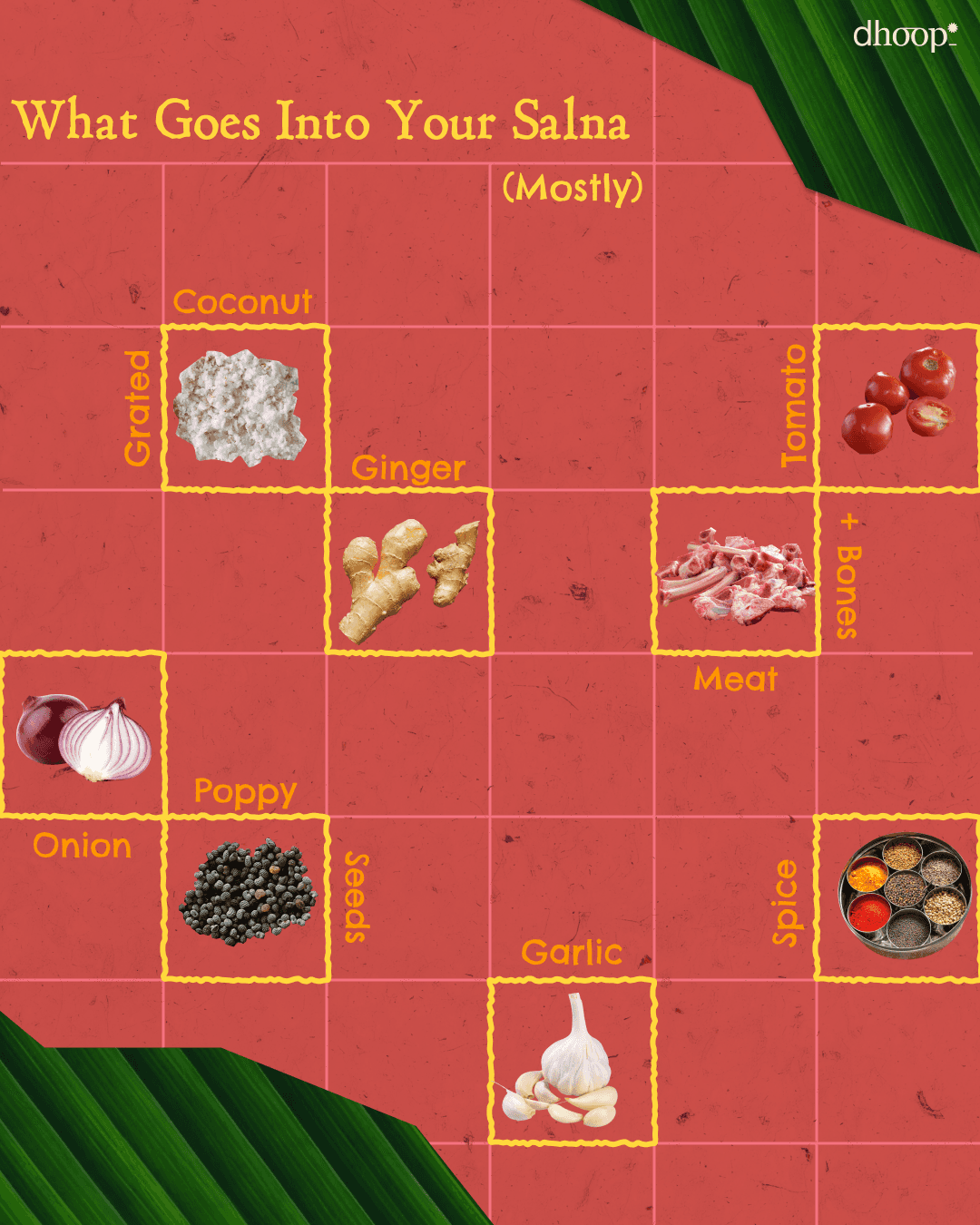
When I say parottas, they are not the north Indian parathas we all know and love. I am talking about the classics — flaky, soft, and well-made gooey ones that are made on the streets of Tamil Nadu. Salna is a runny curry and a deviation of sound from the word "salan". If I try to write a simple definition for salna, I might offend many people and make only a few nod their heads in approval, because it is different in different places. If I try expanding that definition to cover the validation of one and all, it is going to be a lifeless long sentence. It is a gravy that is runny mostly with spices, bones of meat, and a masala of roasted Bengal gram, coconuts sometimes, and poppy seeds mostly.
As a participant of this landscape, I went around Tamil Nadu's three district cities — Thoothukudi, Tirunelveli, and Chennai — on a self-imposed endeavour to understand parottas. Not as a dish but as a place. At the start, it felt like a project where you want to make sense of a verb through a noun and vice versa. I mean, imagine attempting to understand the recurrent sight of arm-swinging with a greasy dough next to a hot hearth in south Tamil Nadu's bazaars today. The tens of cramped 5 cross 5 sq ft kitchens that produce hundreds of hot maida parottas in a district city that is surrounded by farmlands that grow rice.
That question that pushed me to the field was thanks to the internet and food studies spaces that were beginning to push forward theories about Parottas in Kerala and Tamil Nadu which I think are creations of lazy imaginations. Some disturbing keywords that pop up in readings and discussions pertaining to Parottas were Indian ocean trade networks, trade relations between Persian Gulf and Malabar, Arab ties, bread-making seeping into south India. As an individual who inhabits this palatal universe of street-side Parottas since childhood, I know for sure our grandmothers in Tamil Nadu and Malabar knew very little or nothing about it until the 1950s. So, this medieval-ising of Parottas and wheat-based bread preparations into the social and food history of Kerala and Tamil Nadu was not just unacceptable but untrue. I cannot also resort to the same armchair theories about our beloved bread. So, I decided to talk to people, old Parotta masters (the word for its makers in Parotta eateries), old establishments to hear from them not just their history but their journey through decades that kept them both constant and changing.
If wheat-based bread making tiptoed through trade in the coasts of Kerala and Tamil Nadu, where did they get the wheat from? History rules out this imagination as a dud with the fact that maida, the key ingredient for parottas, was unavailable in Tamil Nadu until the 1960s. Kovilpatti Lakshmi Flour Mill was the first to set up a wheat flour mill and produce maida in the region in 1961 in the southern district of Tirunelveli, followed by Naga Mills in 1962 in Chennai. The popularly known PL 480 Food Aid programme's wheat from the US was what was initially used for maida. Both these names went on to become a retail brand only in the 1980s and were initially producers of maida for biscuit manufacturers and bakeries. After 1968, parotta places also became their biggest consumer. Even today on their website these three — bakeries, biscuit manufacturers, and parotta places — are considered their biggest consumers.
Maida made its way into Tamil diets first through dishes like these, but not as an ingredient. The wheat dosa campaign of the 1950s in Tamil Nadu by the state to sell the taste for wheat to the people, who were largely apprehensive of it, also adds to our belief that the Tamil society had teething troubles with the new grain. "In Kerala, children were chosen to be turned to wheat-converts by serving godhambu kanji (wheat congee) in the 1960s," Mallory Cerleski, a research scholar who studies food in the communist governments across the world, tells me. Another report that eased my difficulty in understanding that wheat and maida in Tamil diets were not all that difficult to become a part of is P.K. Nambiar's Food Habits in Madras State that came as a report in 1964 as a part of the census marks distinct regions which were not completely rice-eating in the heartlands of Tamil Nadu.
Wheat and maida became household names in the 1980s when the brands Kuthuvilakku and Naga Foods expanded in the retail markets. It is also a decade when parottas reached their prime — a thing to speculate through literature and hearsays. Perumal Murugan in Pyre communicates mid-1980s and rurality to his readers through a chapter where his lead Kumaresan, an agrarian in his 20s, looks forward to a parcel of parottas and chicken salna that an egg merchant Bhai Anna, a Muslim man, would bring from the town on his egg collection routine from the villagers to stay put on nights.
This piece of literature set in rural Tamil Nadu, written by an author raised in the countryside of the state, uses parottas as taste-markers alone. Urban creators, both through 2000s sitcoms and cinema from the 90s have used parotta as class-markers. Although parottas as a rural aesthetic in Tamil pop culture penetrates from reality to literature, art, and entertainment. Oor in Tamil means countryside and sapad means food and parottas fall under the category of oor sapad in larger Tamil consciousness. Looking back in time, parottas' initial eater-fans were farmers, truck drivers, and the rural working class in general.
The seed to rice-growers becoming the first takers of maida parottas was sown much before the 1960s. With failed crops season by season, imported rice grains sustained the rural poor since the early 20th century in Tamil Nadu. 1954 is when the then Madras Presidency, a large part of Tamil Nadu today, got its first wheat breeding station and the time when the noise about the Green Revolution was getting louder. After a series of see-saws in decisions and policies, Tamil Nadu's Thanjavur belt, the rice bowl delta region, saw a surplus of grains thanks to Rockefeller Foundation's methods. We know that the big farmers entirely reaped the benefits of the Green Revolution and it led to many communist-led uprisings supporting farmers across the country. Thanjavur district in Tamil Nadu was no exception. The Keezhvenmani massacre in 1968 became a birthmark of the Green Revolution which ferried agricultural surpluses.
1968 coincidentally is also when Thoothukudi in Tamil Nadu got its first parotta eatery. A tiny shop designed for men dining in and takeaways for women at homes. Though the late parotta master Rajamani's son told me that Thoothukudi's parotta eateries picked up with the coming of its power stations, port expansions, and industrial townships, the rural has been an active consumer of parottas since the 1960s because of its cheapness and its capacity to leave you full in a few bites at a time it came to them during man-made shortages even when they were producing surpluses.
Closely reading agricultural surpluses of the 1960s in TN, incidents like Keezhvenmani, the unchanged status quo of the small-time landless farmers, and the ready-success of Parotta eateries with mass-manufactured maida mills from the same era tell us about the backdrop when the new entrant called Parottas tiptoed in. Parottas permanence in TN is neither wholly the story of mass-availability of maida in the 1980s nor the 1960’s green-revolution induced experiments in the paddy fields of Thanjavur that brought forth wheat. Underneath is the chief requisite of all for the bread to become: the creation of a new kind of labour and craft that took place in that era. A culture that has been never introduced to the hand-technique of making any kind of wheat-based bread was initiated into it through necessities, migration, monsoon winds, and trade.