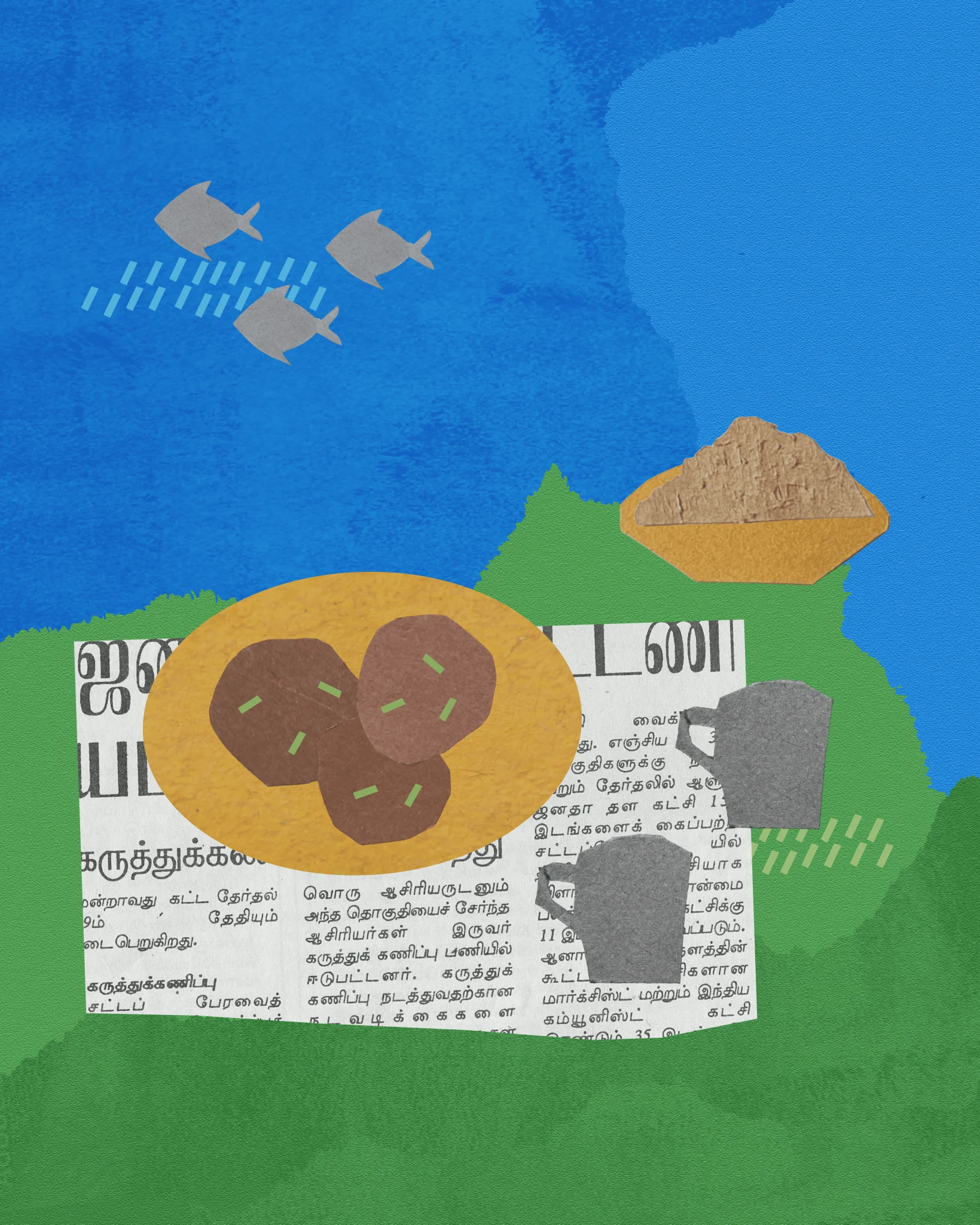
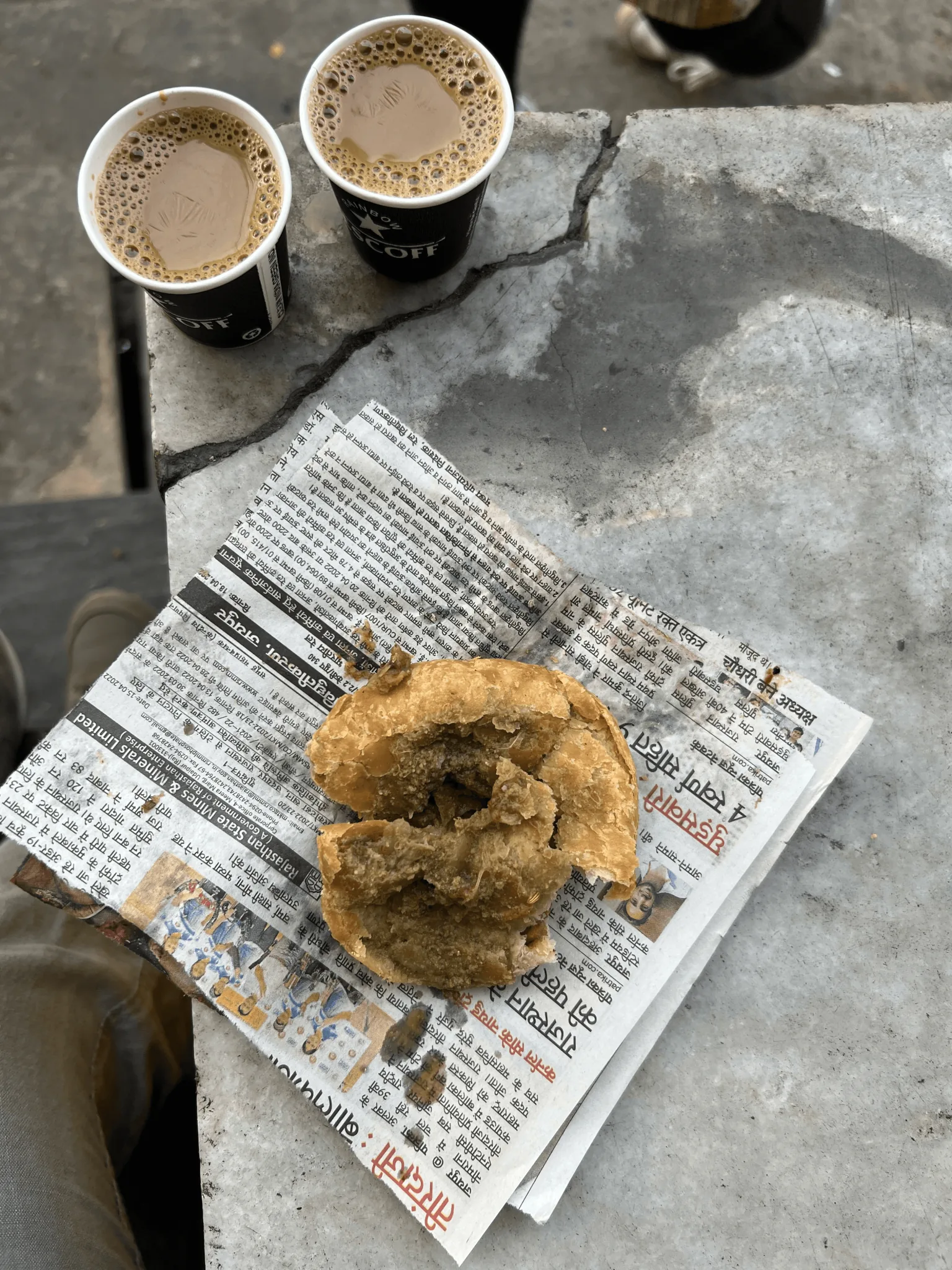
Like us, many gathered early in the morning to get Shankar Samosa’s first batch of the day. The steel containers were carried home but eating the hot samosa with hari chutney on the street was our guilty pleasure.
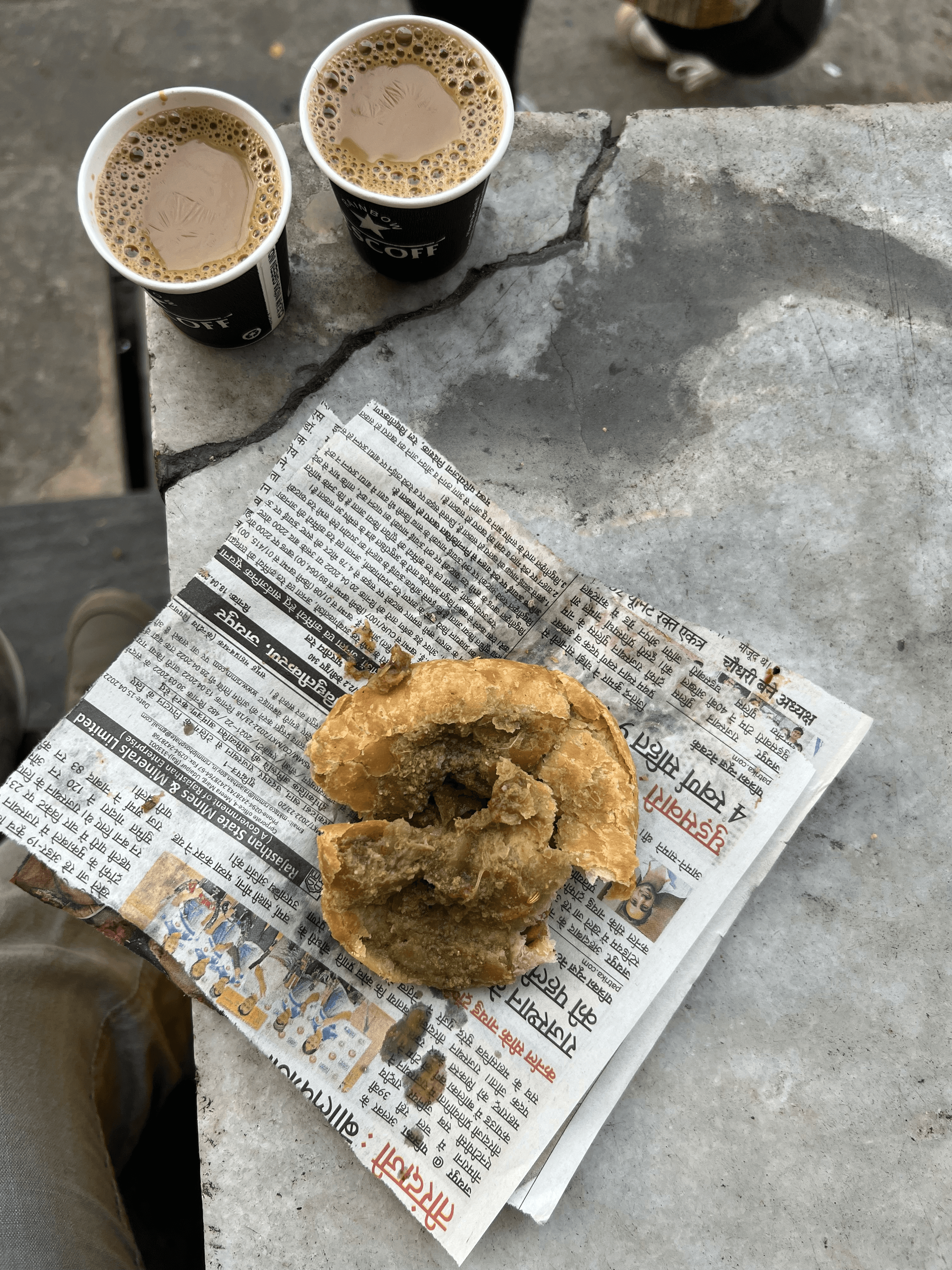
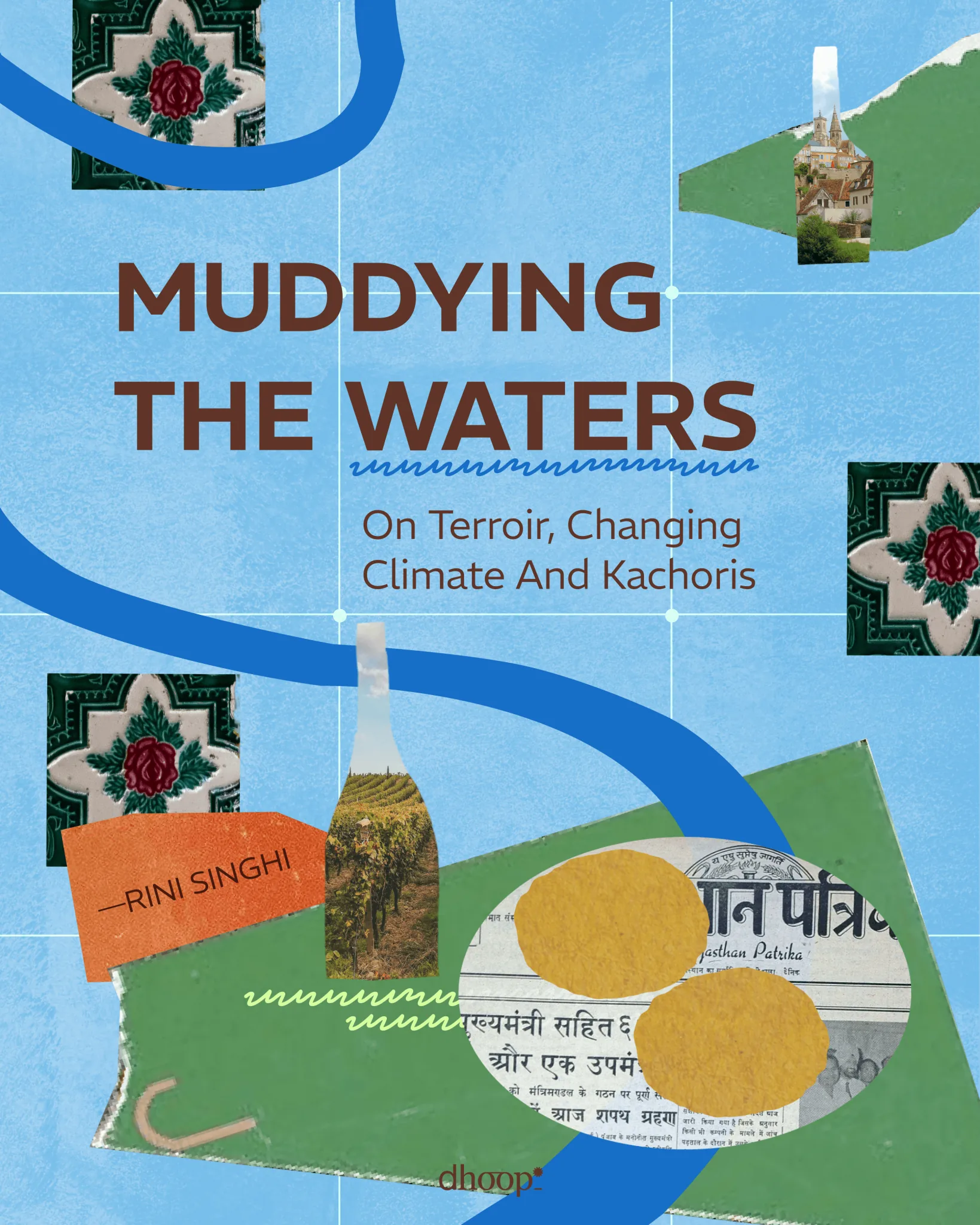
Where did you picture this samosa-eating-chole-kulche-packing sunday ritual? Can you name the city? It could well be any Indian or global city. You get samosas everywhere, it’s a ubiquitous fried snack that most people love. However, if one had the option of picking their favourite fried food for breakfast, my father would undoubtedly pick Kota Kachori over the uncountable kachoris one can find in Jaipur. It is true that nostalgia, which seems so much more powerful than flavour, convenience and logic, drives this. When you grow up in a certain city, neighbourhood, eating something specific, you are drawn to not only the food but the memory and phase of life you associate with it. So when Kota Kachori became a brand and opened an eponymous outlet in my neighbourhood, our samosa ritual evolved to kachoris. I heard rumours that water is being transported from Kota to Jaipur because the salty water here is interfering with the ‘real flavour’ of the kachori. The founder of the brand Kota Kachori, Robin Jain chuckled at this and responded that it was purely a rumour perhaps by loyalists who couldn’t believe the similarity in taste, the one sold in Jaipur tasted exactly like the original one. Often fond tastes are localised in people’s imagination, tying it to a place and terrain. He also mentioned that, “the authenticity of our flavour comes from our disciplined processes and sourcing. From day one, we brought our trained chefs from Kota, followed the same time-tested recipes, and sourced our key spices and special ingredients directly from Kota.” Imagine transporting water from one place to another for a perfect kachori.
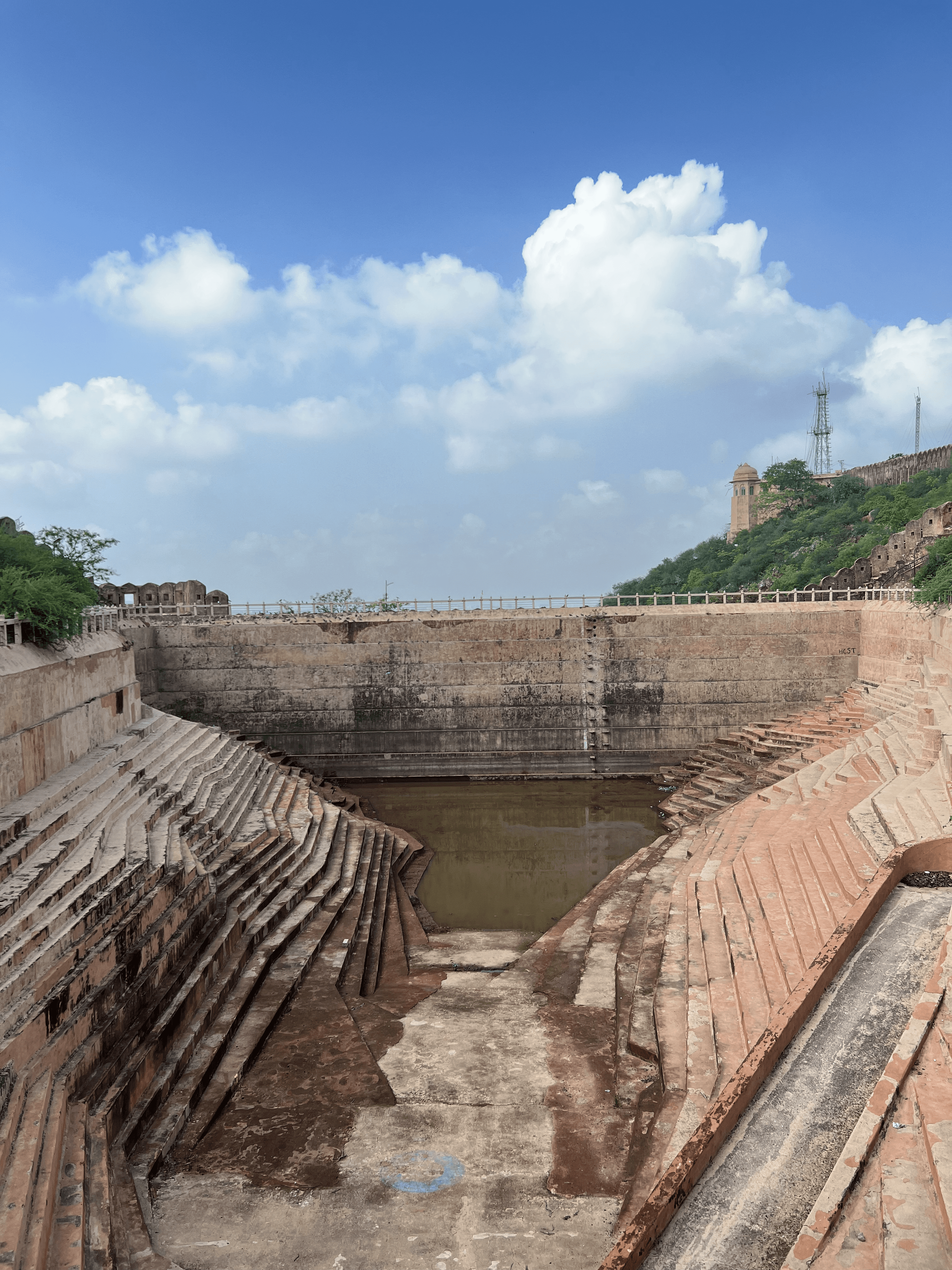
This is not the first time someone established the connection of food of a place to water of a place – the water from the Ramgarh dam near Jaipur is said to have been a digestive elixir for city dwellers who consumed fried and sweet foods on a daily basis. Jitendar Singh Sekhawat, a former journalist with Rajasthan Patrika claims that the taseer, the effect of the water from Ramgarh lake aided digestion and that’s what made fried foods embed into the cultural fabric of the city – people could consume them without the fear of indigestion or bloating.
Some say water from a specific place aids digestion, natural water with certain natural characteristics like mineral content aids digestion. So not all water, right? Now that the Ramgarh lake has dried up for more than two decades, there have been numerous efforts to revive it…ofcourse not only so that we can eat kachoris fearlessly! Logic backs these claims of natural water being tied to the quality of water; the better natural filtration, the better the quality of water.
But in the making of kachoris, what is more important – quality of water, specific ingredients or the halwayi’s craft? What’s terroir in this case? Does the place imbue any flavour to the final product? Then water is part of terroir too, right? In simple words (of Thomas Parker), the French word terroir is “That unique concept…[used] to describe how flavor and personality in a product are determined according to its specific region or origin.” The first thing that comes to mind when you hear the word terroir is not kachoris, it is wine or cheese. If Kota’s speciality is kachori, can we reverse engineer and define the terroir for it too? It’s not that simple, are the ingredients key or is the craft of making? If the final product is the sum of its surroundings, then water, people, and air from Kota makes it special, right? Place of origin, the birthplace which inherently establishes connection with land, the environment…as if the produce (in this case) becomes itself through the sum of its surroundings.
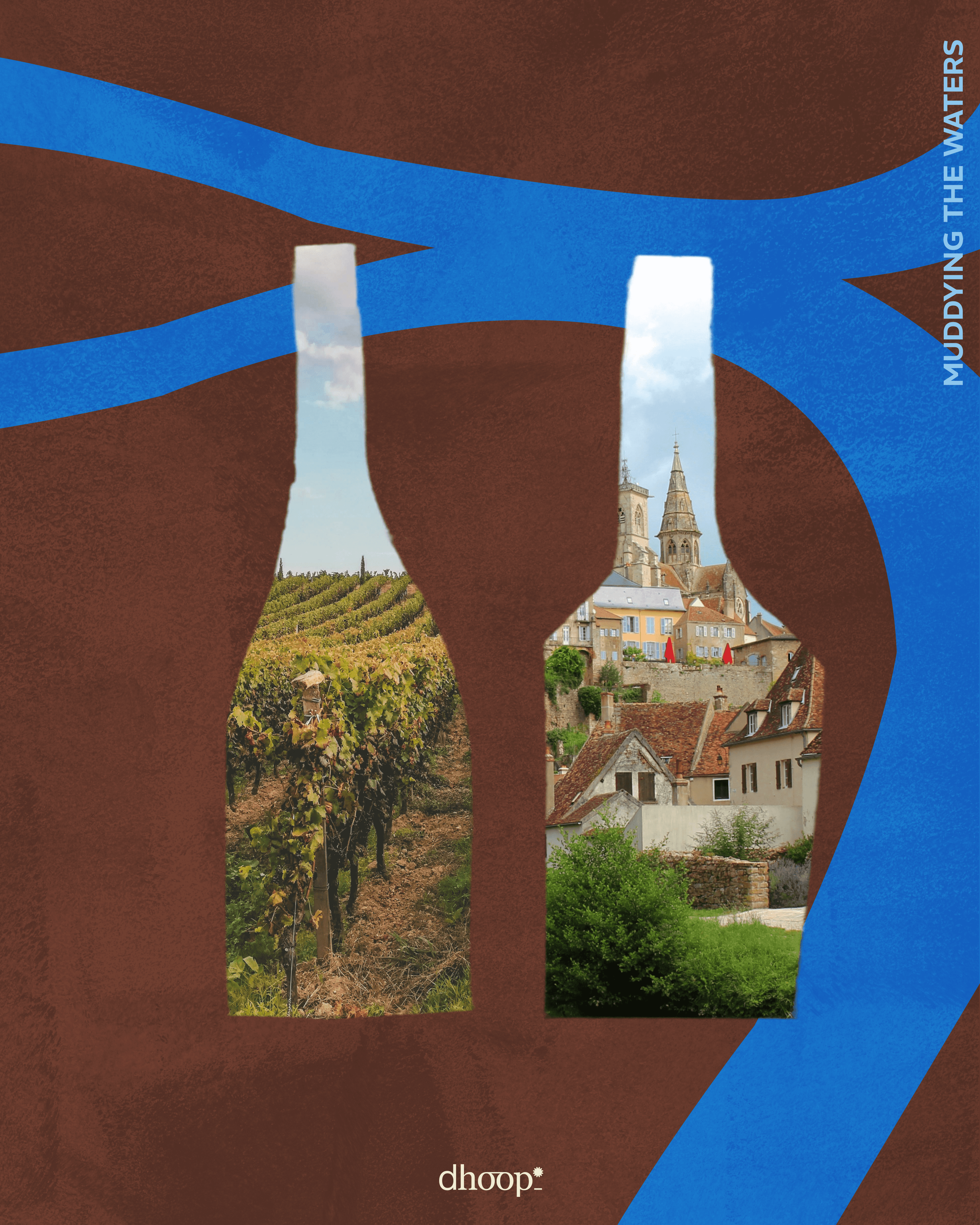
In the context of wine, the concept of terroir is more defined but equally complicated (for me) – like Steph Lewis-Degan’s questions “is wine produce, or a product?” In wine there are “Two Regions, Two Mindsets,” in Burgundy, terroir, the characteristics of the land is important to the final product. Whereas in Bordeaux, it is the winemaker and their ability to use the ingredients to make the final product takes precedence. Terroir as a concept might seem snobbish, a tad bit elite, something that makes me think of patents around food, seeds, something that says “We own it now, ask for permission before using.”
Then I am compelled to ask if terroir is about the land or about ownership. It is true that some things cannot be replicated, but is it only terroir or is it the people who became purveyors of the craft of making and retaining standards. This is something Ishita Dey articulates well in her ethnographic study of Bogurar doi, a sweetened fermented milk dessert, unique to the northern region of Bangladesh – which challenges the eurocentric understanding of placemaking and credits movement of cow breeds, caste-based craftsmanship and repetition as central pieces to the making of bogurar doi. Through her argument she challenges the “romantic notions of linking food to place,” compelling us to move beyond the French notion of terroir and think of it from a broader perspective.
Terroir in the age of climate change
When people move from one place to another, they carry a palette, if not specific ingredients. This palette compels craving, a taste of home, an embodied taste. As cuisine is influenced by the movement of people, it is also directly influenced by climate. Local cuisines are specific to the climate of a place, hence, they become an extension of terroir. But what is terroir when the climate is constantly changing? How can we imagine what’s local when what’s currently growing in a place, might not grow in the near future? For example, “In Maharashtra, farmers in drought-prone regions have shifted to pomegranates from grapes due to falling ground water levels, along with increasing input costs or In south Gujarat, many farmers have shifted to aquaculture. They used to grow paddy and other crops, saltwater ingress in fertile soil made it impossible for them to continue.” The practice of taking action in response to actual or expected climate change and its effects is called Transformative adaptation. When food of a place needs to evolve with the constantly changing climate, what does place of origin even mean? Then adapting to the changing environment, migration, and newer foodways is resilience.
The Ramgarh lake has been non-existent since 2000. There are no lores connecting the digestion to this man-made lake-water now. We evolved and moved on, but we are still finding ways to revive the lake - maybe because there’s some truth to this belief.
We still eat kachoris, equally fearlessly. The last one I had was a rather fancy kachori at The Johri, paired with a glass of a crisp white wine from Italy.