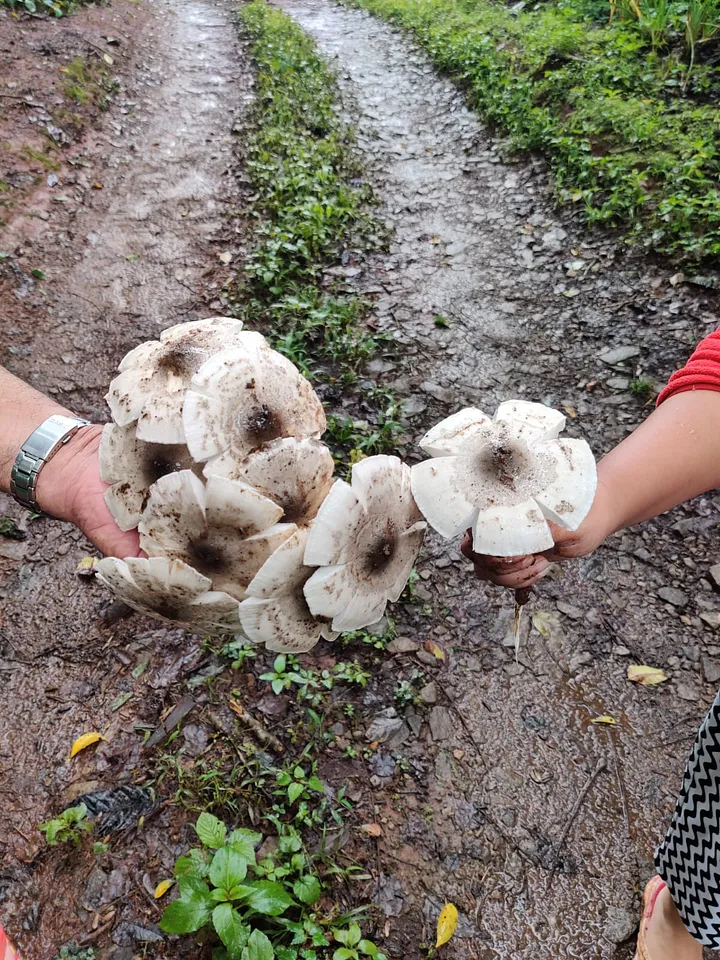
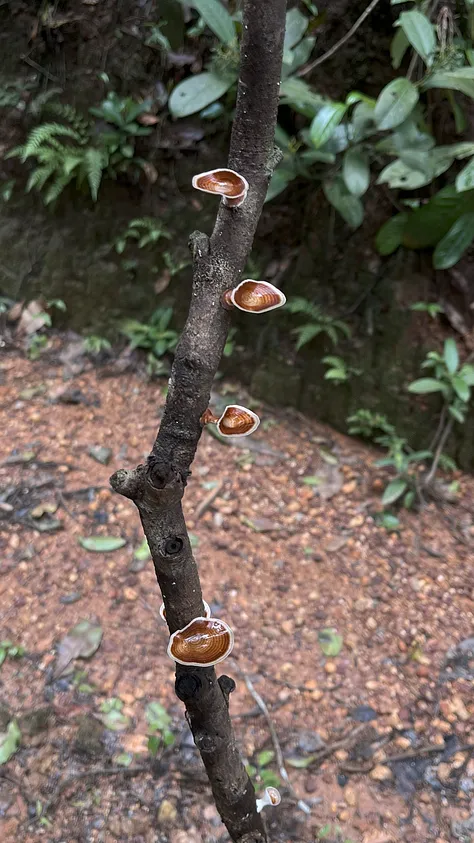
Recently mushrooms have been popping up everywhere – not only on forest floors, but in moist dark rooms, supermarkets, kitchens, restaurants, packaged goods and social media. See, the global market of edible fungi is estimated to be $71 billion, while India’s mushroom market, valued at approximately USD 1.18 billion in 2023 is expected to grow at a compound annual growth rate of 12.7% from 2024 to 2030. There is an audience looking for functional food, alternate sources of protein and diversity in diets. From the proliferation of Gucci, Lion’s Mane, Shiitake, Oyster, King Trumpet, Milky, Nameko, Portobello to fortified products like Arka Mushroom Rasam powder or Vitamin-D Mushrooms, we are seeing them all.

This cycle of mushrooms gaining traction may seem new in the post-pandemic world, where social media and the age of ingredients are undergoing a health halo. However, while the market expands rapidly, this fascination is not novel. Mushrooms have always sparked curiosity. It could be their strange and delicate form - a slender stem holding up a smooth dome-shaped cap. Or, it could be their striking shapes and colours, and how they sometimes glow in the dark. Their ability to burst out of the soil overnight, from seemingly random places, is eerily otherworldly. Maybe it’s all of these things that make them irresistible – and tasting them seals it.


The deeper one goes; beyond shape, size and colour, there is a whole another world to be discovered. The diversity of fungi is immense. Beyond button mushrooms, the kind most people in India are familiar with; there are nearly 14,000 species of fungi (not all edible) in India, alone.

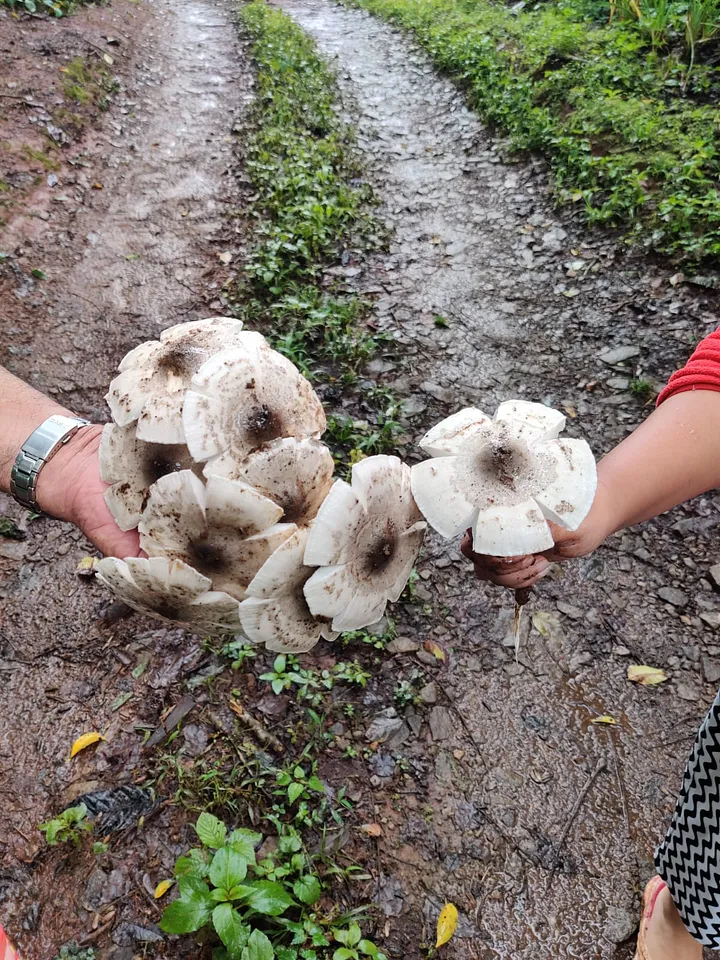
A friend from Manipur recently shared insights about local mushroom varieties such as Peh-tuh, Peh-Ngoh, and Hadzu—with peh being a staple in their diet. They explained that mushroom consumption follows a seasonal pattern and is deeply intertwined with traditional customs. Indigenous and tribal communities living in forested regions forage these mushrooms, making them distinctly hyperlocal foods. This localized abundance has fostered a rich reservoir of knowledge, where people identify, name, and understand mushrooms unique to their own landscapes.. Researchers call the study of this traditional knowledge, uses, and cultural significance related to fungi ethnomycology. For example, people in Kerala colloquially call mushrooms kumil idi or koon idi, which roughly translates to ‘thunder that causes mushrooms to sprout.’ In Jharkhand, people flock to find rugda/putka chattu when rain is accompanied by lightning. Gubari Chyau (gubari means clouds) appears when clouds gather alongside thunder and lightning. Locals widely believe that mushroom sightings tie to thunderstorms. Over decades and centuries, they have noticed shifts in ecological patterns. Although the logical connection between rain and mushrooms exists, it originated from these long-held observations.

Biplab Mahato recalls going on an excursion in the forests of Jharkhand with an elderly woman to look for rugda that appear after a night of thunder. The air felt humid, and the ground was soft. The woman brushed away leaves and discovered white stems pushing through the soil. She did not pick them immediately. First, she carefully checked by looking at, smelling, and feeling the gills. Then, she cooked the putka chattu in mustard oil with salt and green chillies. The dish tasted earthy, rich, and a little sweet—a flavor one can find only for a few days each year.
Stories reinforce the connection between communities’ knowledge, ecology and culture. And they invariably become starting points for understanding how people live in certain ecosystems.
Beyond their cultural and culinary roles, mushrooms quietly perform vital functions beneath our feet. There’s so much that they do silently. To borrow from Giuliana Furci’s cake analogy, mushrooms in an ecosystem are like binding ingredients in a cake ; without egg or aquafaba into the mix, the other ingredients don’t stick together. The mycelium network formed by mushrooms (mycorrhizal fungi) below the ground helps plants communicate with each other in exchange for food. Suzzane Simard named this phenomenon “Wood Wide Web”, wherein the mycelium network is formed below the ground almost like the wires one sees on the streets of most Indian cities. Mushrooms provide many ecosystem services, including communication. They feed on dead and organic matter and convert it into nitrogen, phosphorus, and minerals, making these nutrients available for plants to use.

Even though mushrooms exhale carbon dioxide back into the atmosphere during respiration, they do not release all of the carbon immediately. Instead, they store a portion of the carbon in the soil for years, which enriches it. Hence, mushrooms act as a conduit to store large amounts of carbon and play an irreplaceable role in carbon sequestration!

The list goes on, yet we have only begun to scratch the surface of what fungi contribute to our world. What precisely do they do? And what does the world hope to gain from them? So much remains to be uncovered about mushrooms—why do they deserve a category of their own? How do they function within ecosystems? What does their incredible diversity reveal? How vital are mushrooms to communities across the globe? How do people forage them? In what ways do they support the commons? Why are mushrooms essential to ecology, food, and culture? How deeply are they woven into our diets? Why do forests depend on them? How do different regions and states in India use mushrooms in their traditions and daily lives? Why is it crucial that we keep talking about mushrooms? And what new stories are just waiting to be told? This is only the beginning of our exploration. Let’s start.

Partnering with Shroomin, we’re exploring the world of mushrooms through a series that celebrates curiosity, embraces wonder, and uncovers new myco learnings along the way.
What do you do when your world starts to fall apart? I go for a walk, and if I’m really lucky, I find mushrooms. Mushrooms pull me back into my senses, not just—like flowers—through their riotous colors and smells but because they pop up unexpectedly, reminding me of the good fortune of just happening to be there.
Anna Tsing, The Mushroom At The End of the World