
This time, it happened at the Frankfurt airport; I translated the stranger-couple’s chuckle and concluded what they were thinking: “Why does a girl need a tube of tomato paste?” Or, well, they thought nothing at all, their hands overflowing with small yogurt cups. An agent slowly wiped a small, white, adhesive cloth-like thing over the tube to detect particles or residue of things… Well, the tomato paste was harmless. Or so I thought.
For a seemingly intentional purchase, I have not yet tasted the contents of the tube, let alone touch it after neatly stacking it in my pantry. It’s my piece-de-resistance, I convinced myself – having almost missed my flight! The need for this tomato paste emerged from countless videos I watched on Youtube, flipping through international cookbooks’ ingredient lists where a lot of them asked for a specific kind of concentrated tomato paste. I didn’t have it and assumed that this would transform my cooking. Clearly, many specific ingredients do that to me. What? There’s Algae oil? On other occasions I share Alicia Kennedy’s sentiments about not using these very same speciality purchases: “If I’m going to fry tofu or sauté broccoli, I want it to taste like I know it to always taste; I don’t want to waste my own meal if this comes out greasy or weird. For all the innumerable products that come to the market, I wouldn’t want to add anything to a perfectly good meal.”
Broadly speaking, my pantry in Jaipur is filled with tins of ‘Indian’ spices sold in American stores, an assortment of everything from Neelam Foodland, coffee from brands who work with farmers across Karnataka, Tamil Nadu and Kerala, podi and thokku from Coimbatore, Tony chocolates from Amsterdam, The Everything Bagel Seasoning from Trader Joe’s, rice from Chennai, rice from Kerala, rice from India gate, khichiya from Jodhpur, bags of namkeen from Jaipur, Bären-Treff gummy bears and liquorice from Germany, a grocery-shop soy sauce from Guangzhou , dried chanterallas from Gottenberg, matcha and salt from Japan, mustard from Le Bon Marche, kasundi from Calcutta, banana chips and capers from Kochi.…and many others.
You can tell that I am a collector. Okay, hoarder. Collecting things seems so easy if one has the privilege, access and space. It is also easier because the market wants you to collect (in exchange of money) – memories, flavours, experiences, taste of somewhere – anything that can be put in a bottle or can be made to put in a bottle is sold (hello, liquid salt).
If I were to abide by Michael Pollan’s, “Don’t eat anything your grand-mother wouldn’t recognize as food,” then half of my pantry would be dismissed. My dadi would be surprised to see my luggage; perhaps I should introduce her to grocery tourism. Much as she misses the flavour of vegetables from her time, I would tell her, “This is simply the taste of other places.”
As a food-curious person who frequently writes/researches about food, I like to indulge and try (and know a thing or two) as many flavours as I can. And, perhaps carry some with me.. I am also mostly always challenged by what it means to be consuming more, consuming from faraway lands, and consuming without thinking. There are parallels that exist between glossy looking items on social media that look cool to own and the implication they might carry with them. Getting Le Beurre Bordier butter, Alain Milliat preserved fruit jams (I don’t even like jams) , a nice bottle of wine, and Martin-Pouret mustard from Paris almost feels necessary and urgent. These food souvenirs are relics of my travels and an unnecessary pre-emptive action in the case of needing a jam – I should have the one most sought after. The urgency is also exaggerated because of the need to learn everything about the food of a place in the limited time I have, so I collect and prolong the experience.
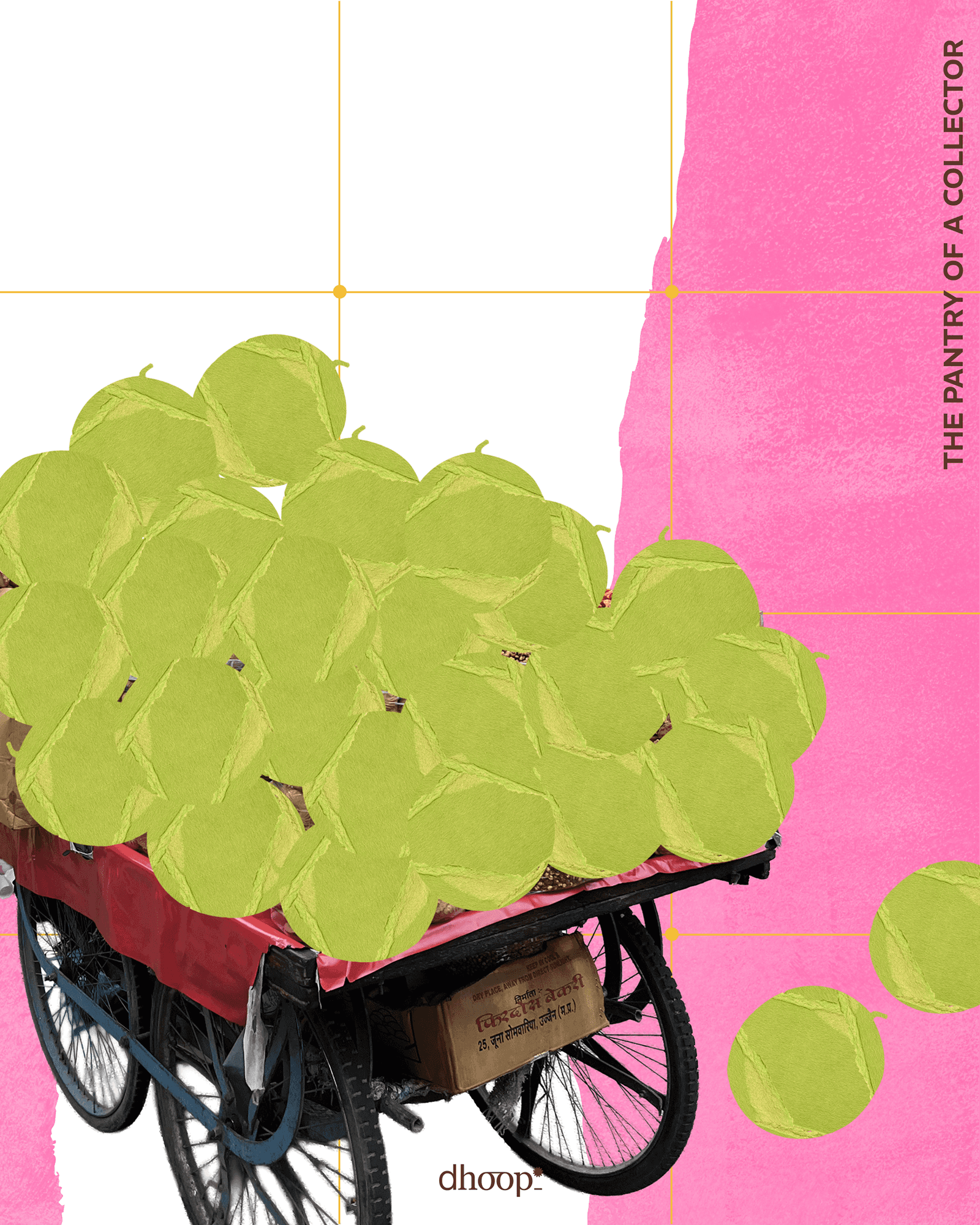
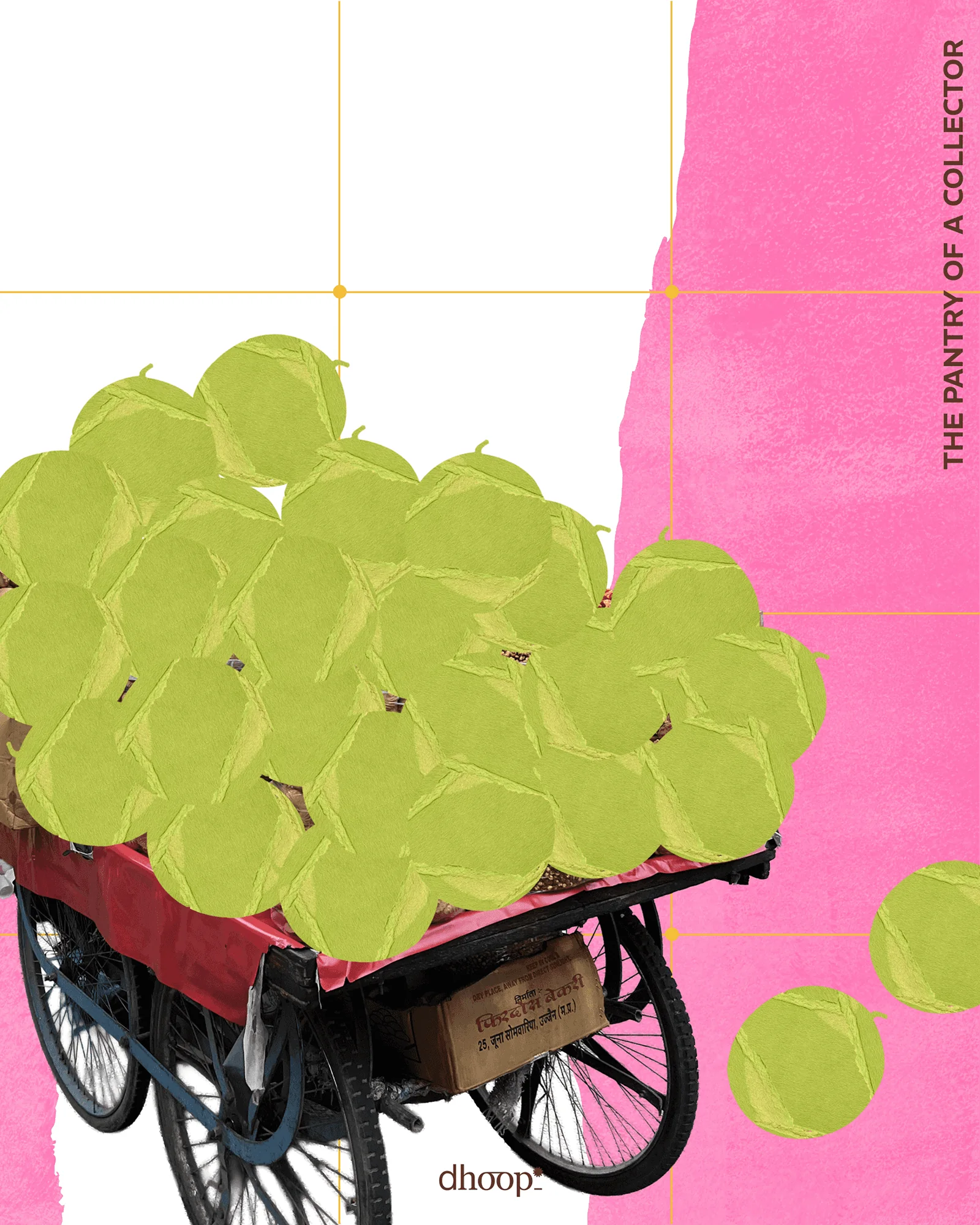
Travelling anywhere, sometimes even within my city, Jaipur, is revelatory—just the other day, I saw a small hill of watermelons and muskmelons at a fruit mandi near my house. I stopped and enquired about the muskmelons. “Ye muskan variety hai, imported hai (they are an imported variety called muskan),” the shopkeeper said, referring to the pale yellow-looking muskmelons. “Mujhe dhaari waale chahiye, desi” (I want the ones with lines, local ones). He told me to come next month, when the local variety would be in stock. Of course, I have seen the imported variety in the mandi for a long time now; I didn’t know it was called Muskan or where it came from. On further enquiry, I gathered that the muskmelon, or Muskan melon, is a hybrid variety developed by a Taiwanese company called Known-You Seed (which came to India in 1999) and specializes in breeding varieties suitable to the climate of tropical countries. This melon is bred, engineered, and optimized for the Indian market by Known-You Seed. It has replaced the heirloom, thin-skinned, variegated varieties. I cannot recall when the new, thick-skinned variety replaced the one I grew up eating—I didn’t question it before, and somehow it made its way into our fruit basket.
I am not making a case for travelling (or collecting) I am making a case for travelling as a state of mind) – where you look at everything with the curiosity of looking at it for the first time.
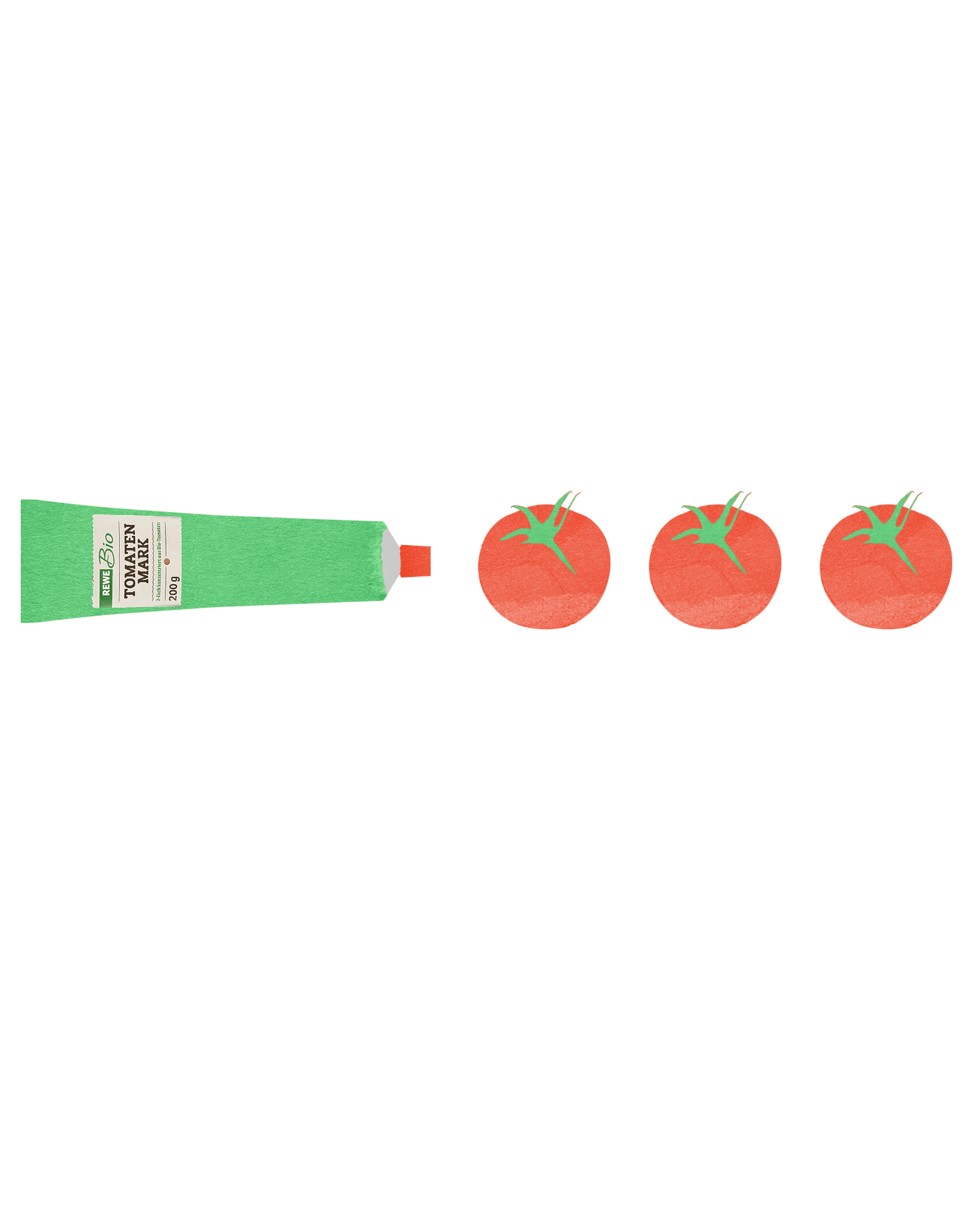
Back to that tomato paste that put me through a security scrutiny at Frankfurt airport. I don’t know the origin of this tube – it was just so readily available in their supermarkets and grocery stores that it blurred the concept of local or maybe I didn’t care Maybe I should have only gotten something tomato-based from whenever I travelled to Italy..as all the listicles suggest. The tomato paste in a toothpaste tube was also invented in Parma, Italy by Ugo Mutti, the father of “tubetro di concentrato di pomodoro” which loosely translates to the first tomato paste tube. I would have bought multiple Mutti tomato paste tubes from its place of origin. But tomatoes only came to Italy in the 1550 and in reality is native to Mexico or Peru. This “aggressive coloniser in the old world” has taken over and shaped the personalities of so many cuisines as we know it today that the blurring of lines is inevitable.
Funnily, on my trip to Bengaluru, I discovered Indras ’ tomato paste. I picked 3 packets and lugged them back home to Jaipur. Does it matter if the tomato paste is from Italy or Germany or Bengaluru?