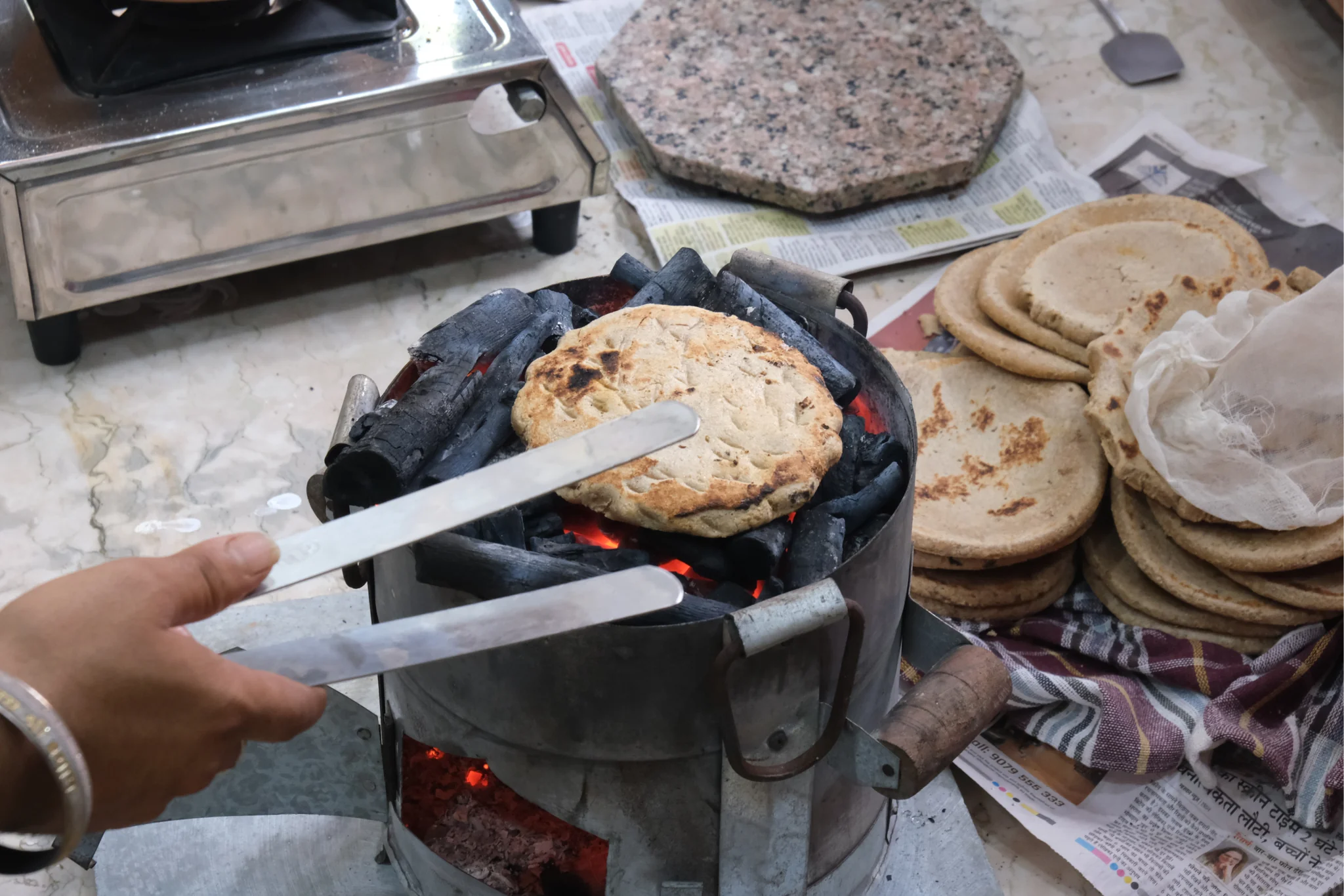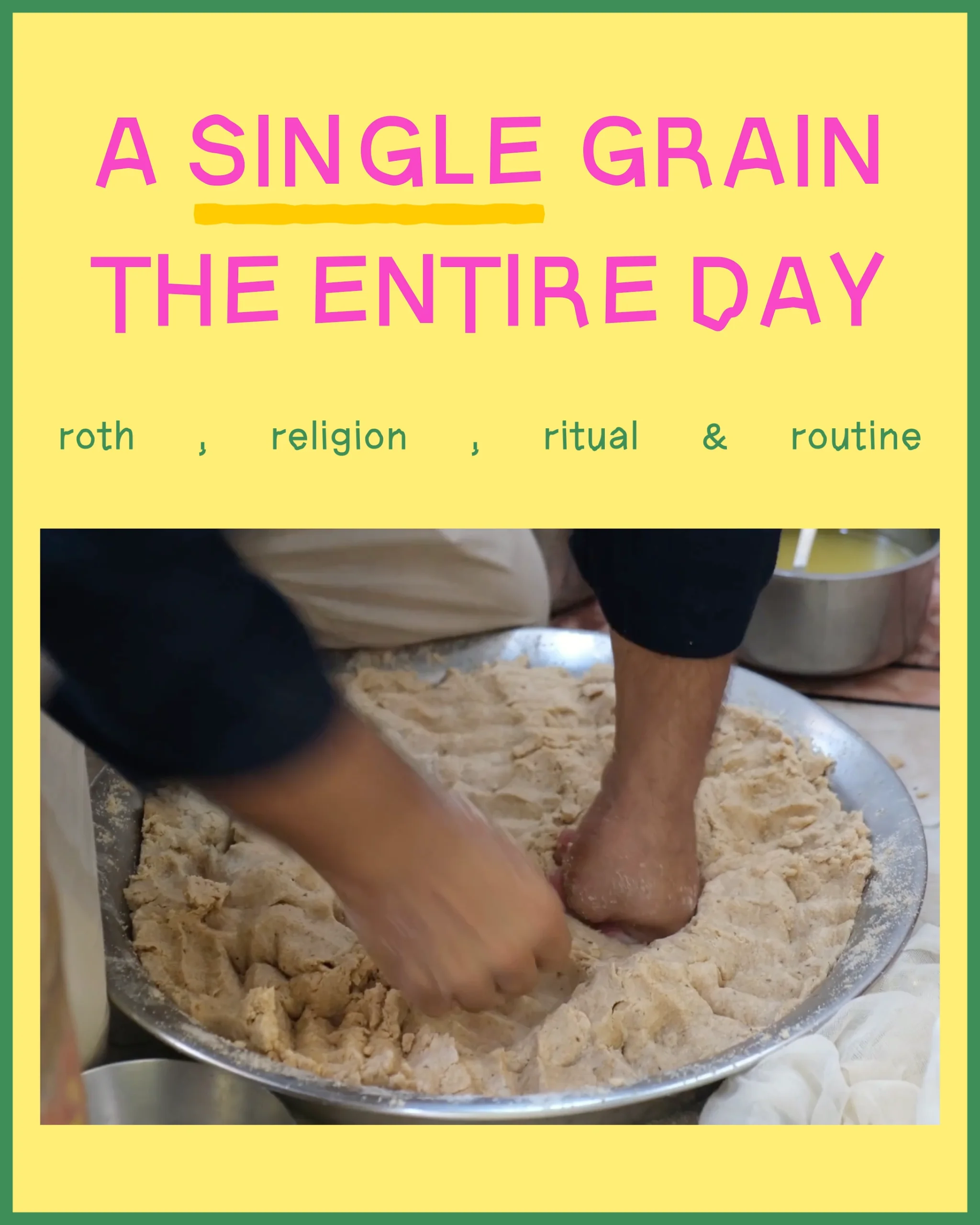
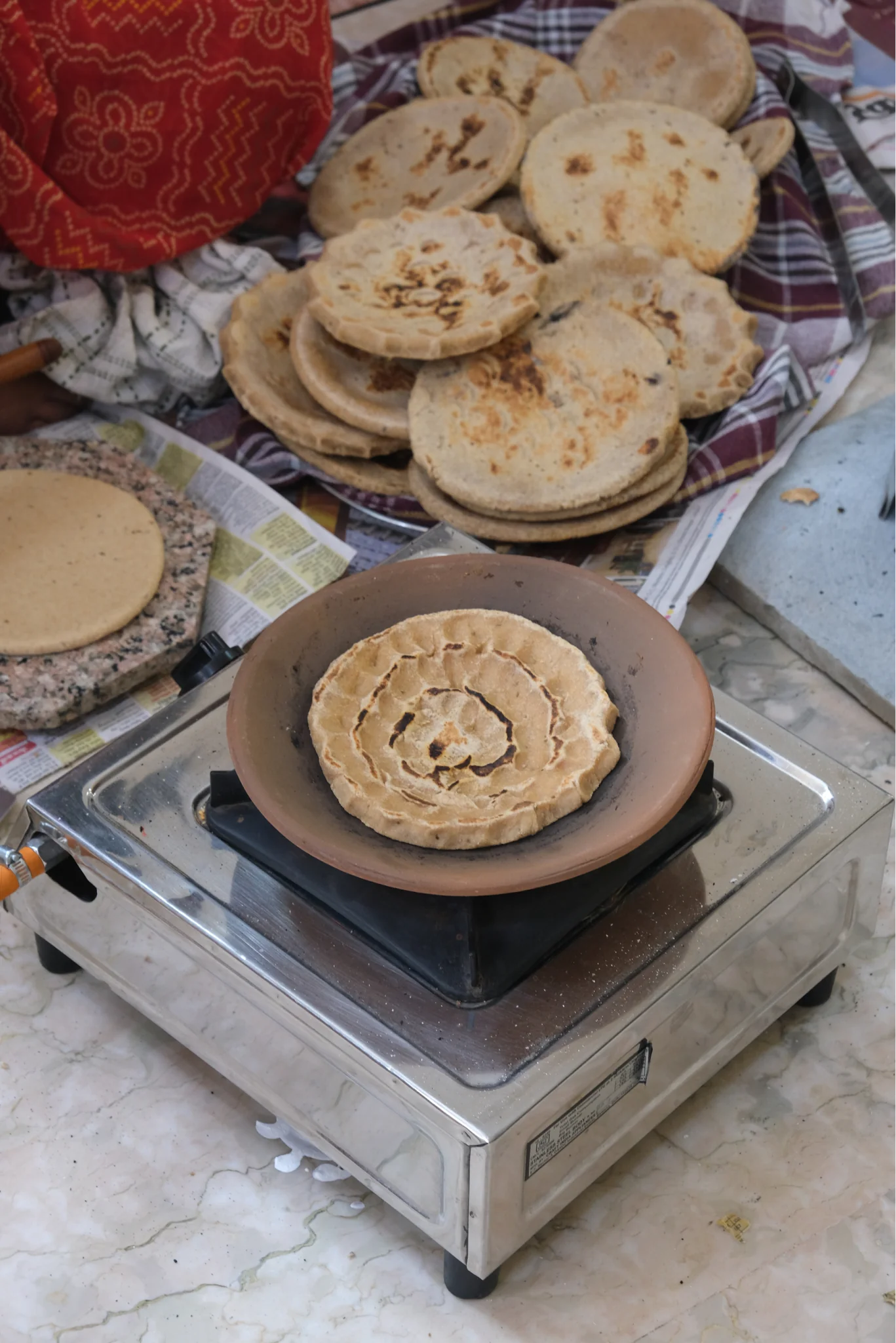
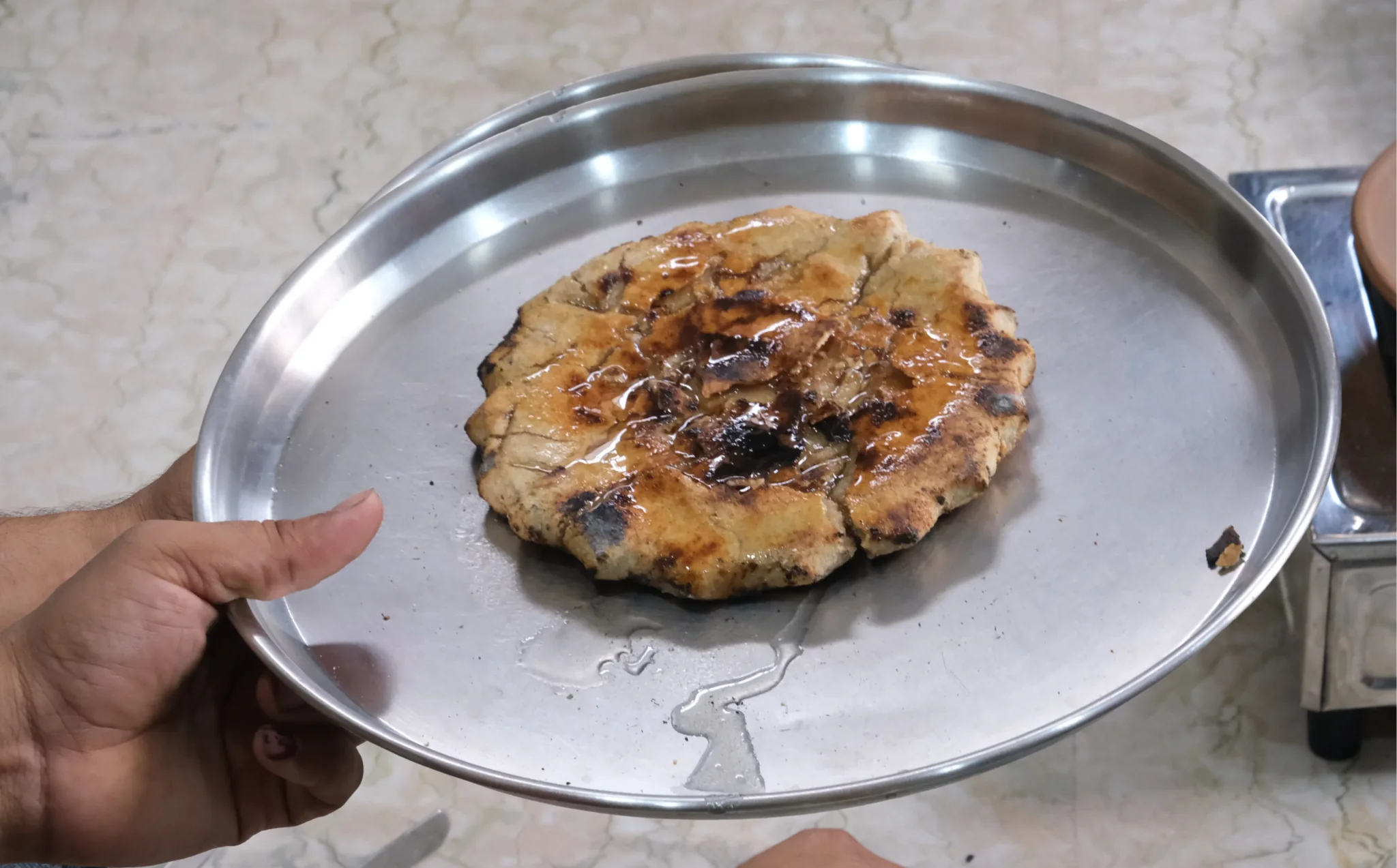
It is essentially a thick, stodgy roti made with a slightly coarser grind of wheat than the finer quality we are used to, giving it more body and texture and making it easier to digest. The labour of making one is cumbersome, so it’s no wonder my mother makes one once a year.
Naturally, when someone invites me for a roth meal, I have to go.
This year, I was invited to a stranger’s house — though technically, I secured the invite by asking everyone in my family to pass theirs along. Our household cook, who had attended many times, spoke excitedly about this particular family, “Didi, vo haath se khilate hai, bahut alag tareek hai unka,” he said. They feed you with their own hands, their way is unique. This family I chose (out of the five invites) feeds 150–200 people on Roth Teej, and I was an addition to this large crowd.
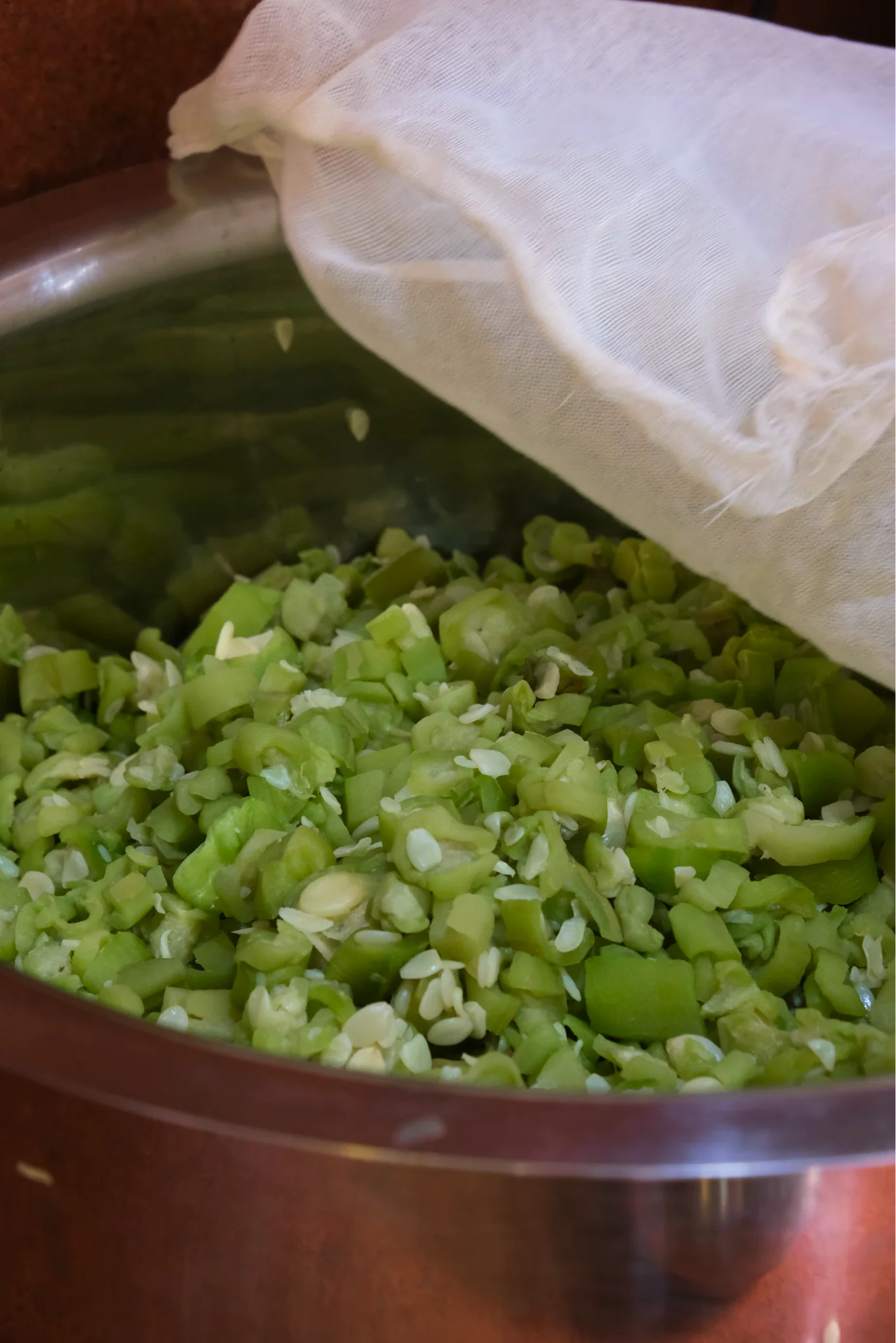
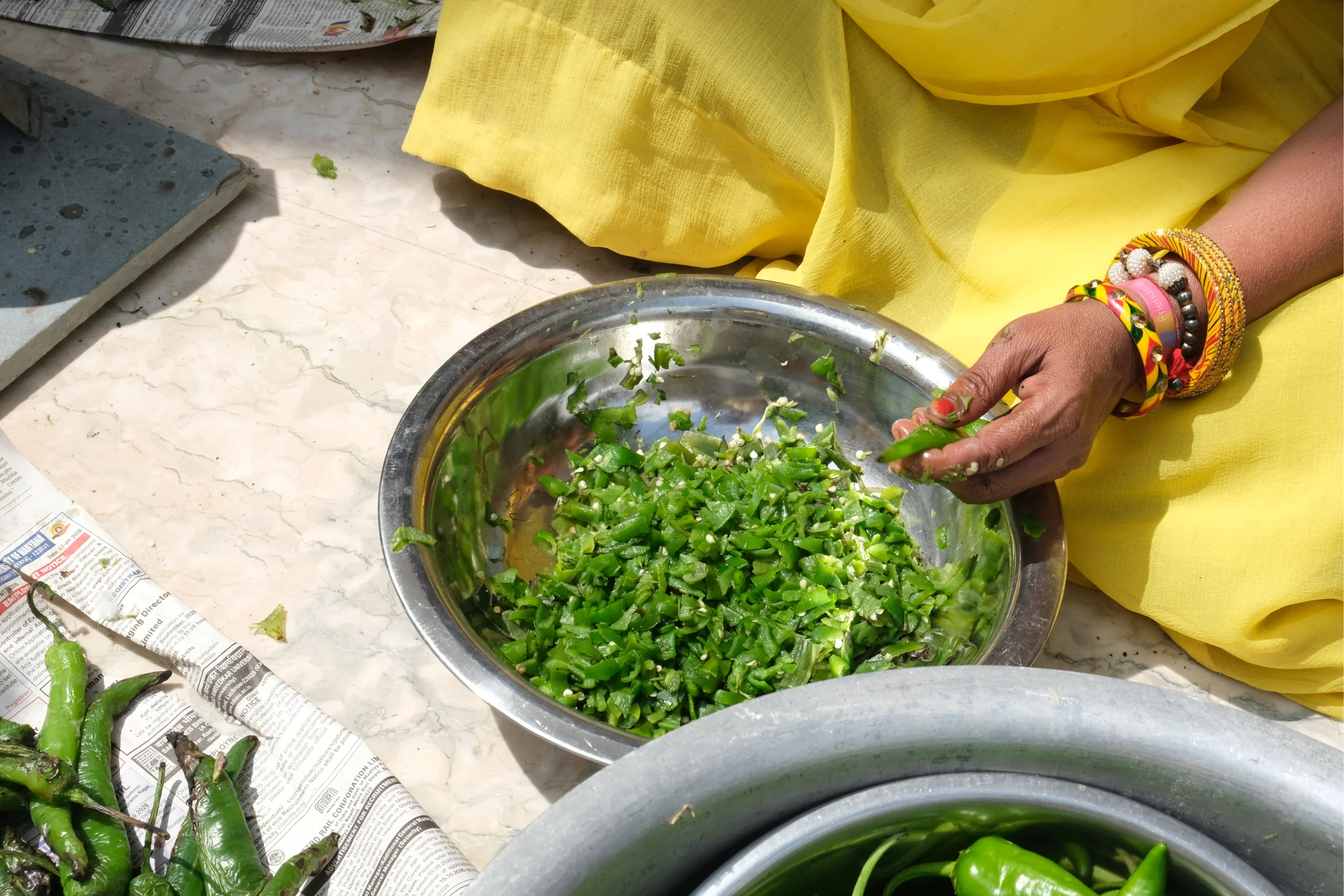
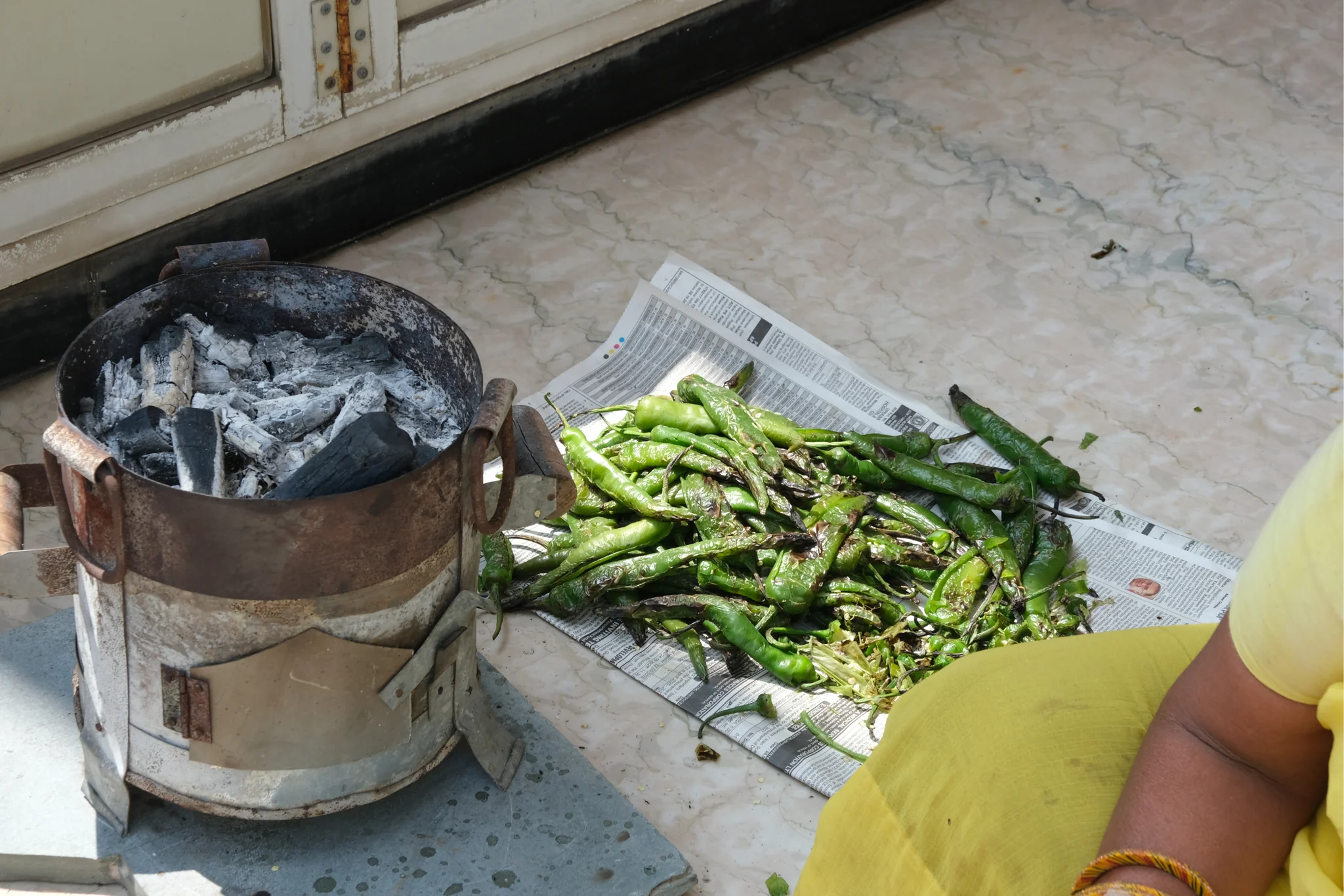
On the day of the meal, I drove across the city — almost two hours before the meal to eat it! The lobby was lined with circular tables covered in shiny tent fabric, its frills hanging down. The ceiling was decorated too, but my attention was drawn through the open kitchen to the preparations. The family’s matriarch, dressed in a red saree, sat on a stool on the kitchen floor, setting up the coal chullah as she instructed the helper kneading the dough to knead it tightly this time. Beside her, a woman with her head covered in a veil rolled the dough into circles, prepping ahead of time. The turai (ridge gourd) was fully cooked, and the kheer (rice pudding) bubbled on the stovetop. Outside the kitchen window, in the verandah, two women in their brightly coloured sarees sat in the sun. Peeling the skin off charcoal-cooked green chillies, deseeding and chopping them finely to serve as a condiment, they told me they could cook every local dish and were called to the homes of people who wanted help planning a big meal. The hot chai made the harsh sun bearable. They didn’t know what a Roth Teej is; they just came to help with lunch. I sat with them, sipping chai before the meal (what do you do if a guest arrives early?), not knowing much about the festival. I too came for the lunch.
When I asked the host about the story of Roth Teej, she pointed me to a pink laminated pamphlet. I imagine many people had asked the same question before me.
The story begins with King Shrenik asking Mahavir Swami much the same question I asked the host. As it is told, it concerns a wealthy exporter with a large, prosperous family. His wife, moved by the importance of vows, asks a muni for a simple vow she can observe once a year, one that allows her to eat something. The muni tells her about Roth Teej, an annual observance. On that day, she must worship and eat only once, in a single sitting, abstaining from the six rasas (milk, ghee, curd, oil, sugar, salt) and eating a single grain (or roth). Keeping the vow is said to bring happiness and Lakshmi (wealth) to the household. The wife fails to observe the fast as prescribed, and the family's wealth begins to dwindle. There is a period of hardship that follows this misdeed. The story ends with the wife recognising the importance of the vow and working to keep it, after which things return to normal.
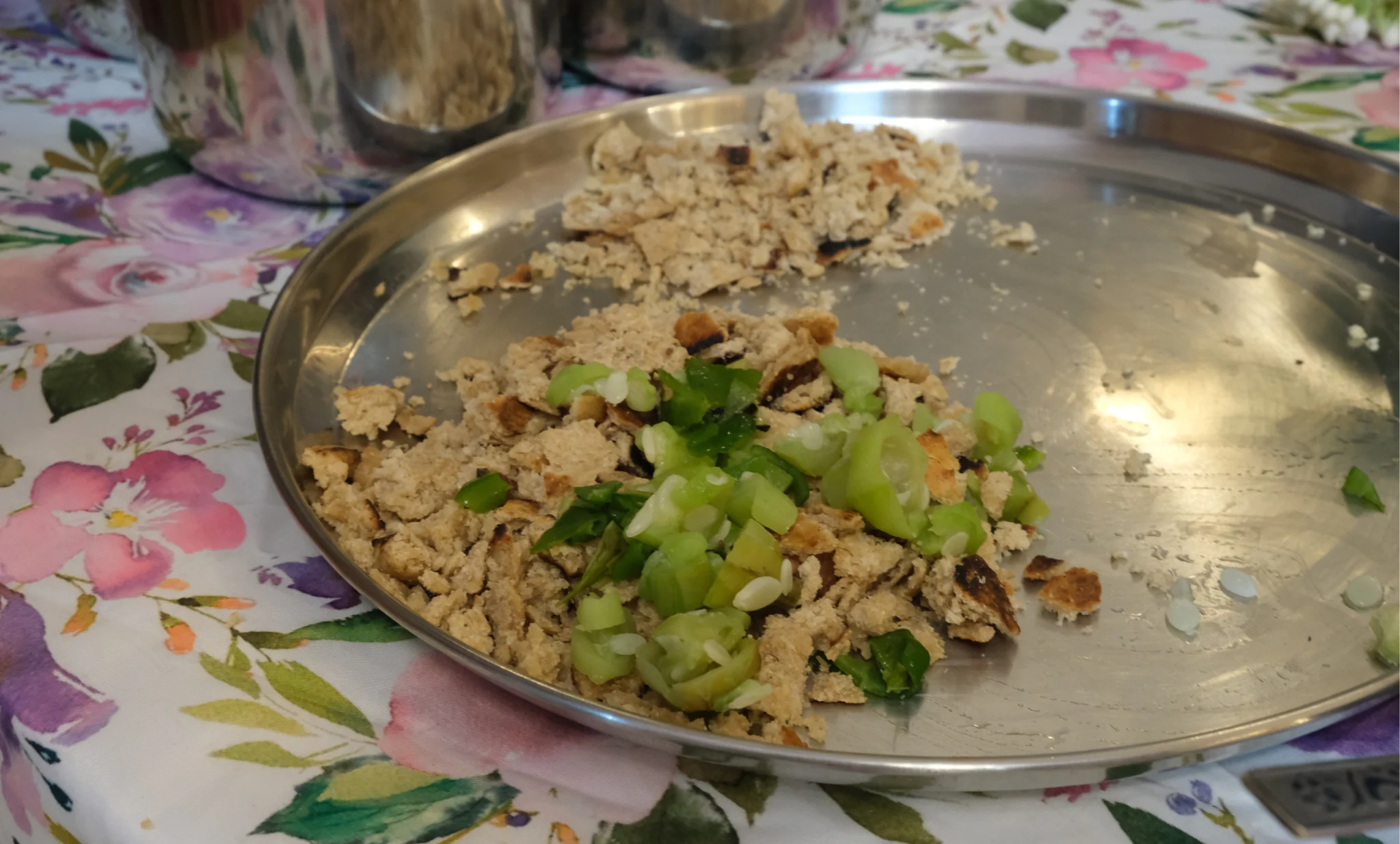
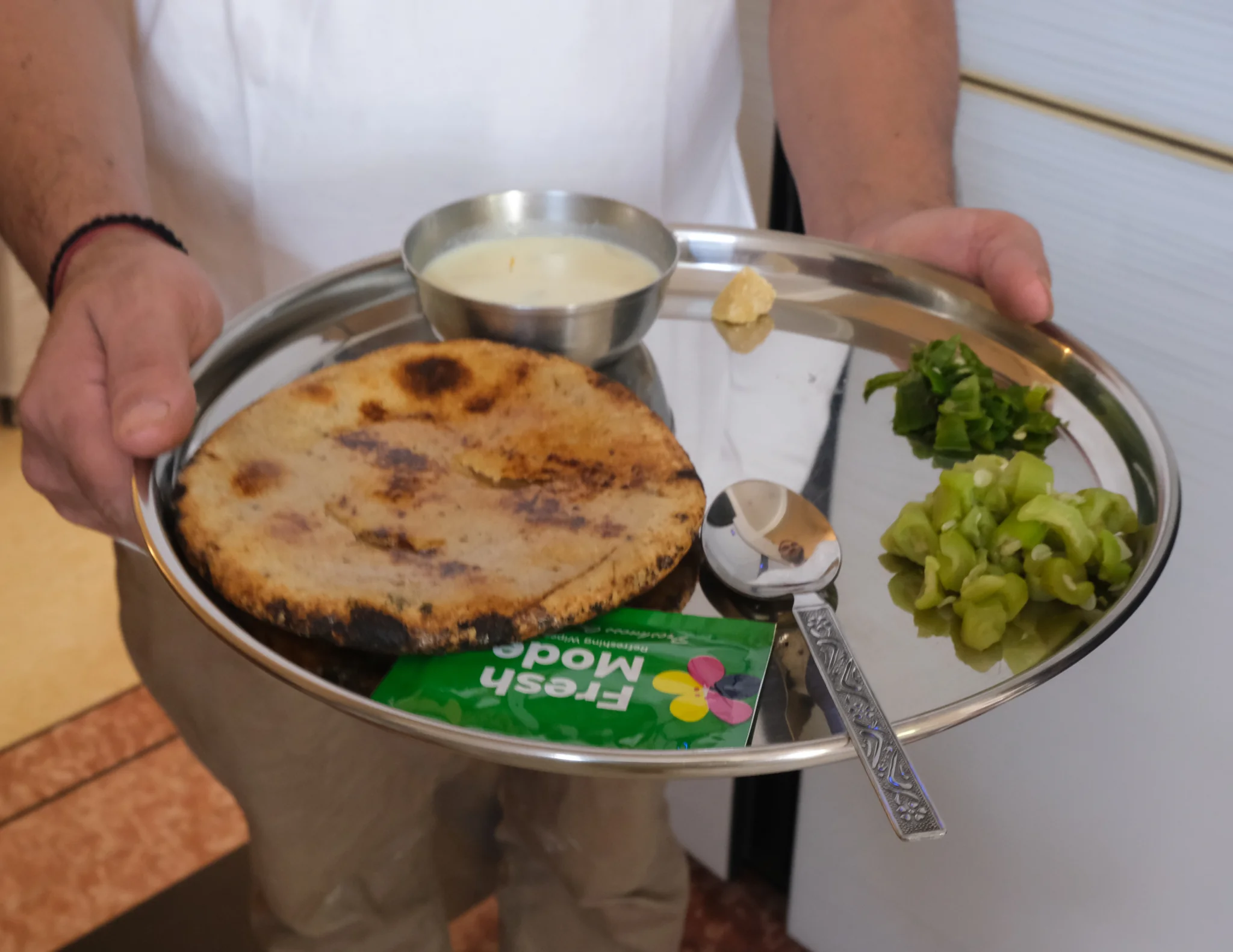
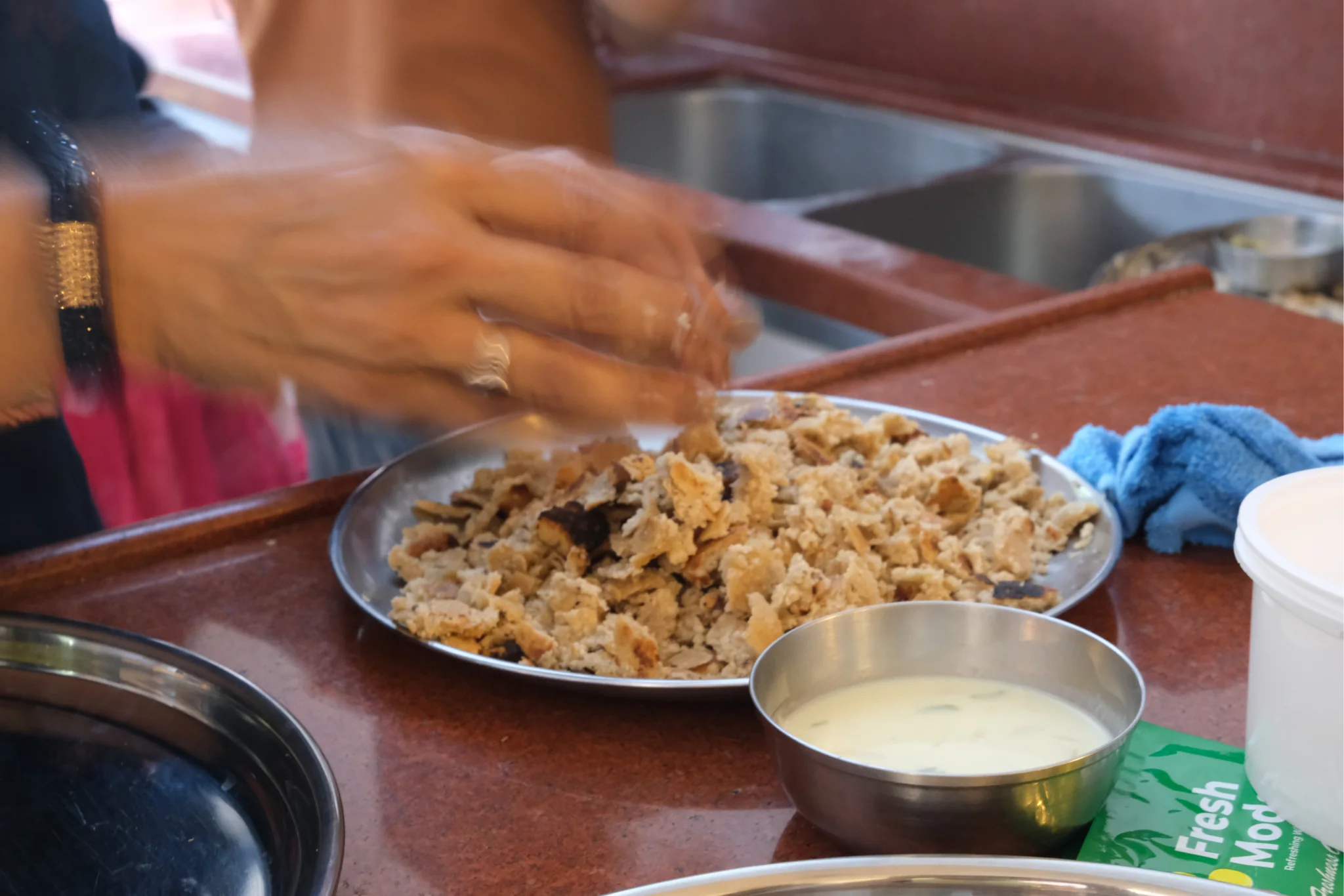
The host's daughter-in-law came with a thali of roth, turai, kheer, and ghee. She divided the circle into two halves, crushed the roti, almost breaking it into small pieces — all of it on my plate. Her hands in my plate felt invasive for a second; I am not used to anyone breaking my food down for me. She then added dahi to one half, mixing it with her hands as you would before feeding a toddler. The other half was prepared in the same way, except with ghee and sugar. This was repeated on all the guests’ plates — this was the way of feeding our cook had been talking about — one where the boundaries of strangeness blur.
I was the first one to finish my meal. On my way back home, to distract myself from sleeping while driving, I thought of the story I had read, trying to draw parallels. The story broadly spoke of devotion, renunciation, women, wealth and food. The lunch I attended was made primarily by women who were fasting. As guests, we indulged in ghee and dahi. The festival has evolved into something more than it was before.
In my conversations with people from the same community or people who celebrated this festival every year, barely anyone knew of this story. A 60-year-old uncle elaborated on the meal, this time telling me that they eat turai raita (ridge gourd yogurt) and turai sabji . A friend mentioned that his family celebrates the festival every year, but he cannot stand turai and hates the fact that it’s the only vegetable prepared on the day of the festival. Another friend who attends the festival at his aunt’s place mentioned that it is a routine for them to go and they never really bothered to ask why it is celebrated.
The story matters as a point of origin; it matters to establish context, but what also matters is which version of it is passed on. In that sense, if roth is made and remembered only once a year, then why not celebrate it as a festival?