A City and its Greens

A City and its Greens

Deepa S. Reddy

Deepa S. Reddy

What if I told you that the path to this little seaside town, Pondicherry, on the Coromandel coast of India, is through its greens? I’m aware this place is better known as a one-time Comptoir of the Compagnie Française des Indes whose legacies are writ large on buildings and memorialized on tombstones in historic graveyards, and which show themselves in greens not at all—but hear me out.

A City and its Greens

A City and its Greens

Rini Singhi

Deepa S. Reddy

Deepa S. Reddy

What if I told you that the path to this little seaside town, Pondicherry, on the Coromandel coast of India, is through its greens? I’m aware this place is better known as a one-time Comptoir of the Compagnie Française des Indes whose legacies are writ large on buildings and memorialized on tombstones in historic graveyards, and which show themselves in greens not at all—but hear me out.

This isn’t about the roads leading into town, though those were once lined with tamarind and other large trees that arched into green tunnels in our childhood imaginations. All that’s gone, just like the French. The trees that remain with their tropical green canopies have their own tales to tell, but those will have to wait because they are different from the ones that the vegetable market greens tell, and it’s in the markets that my excursion begins.
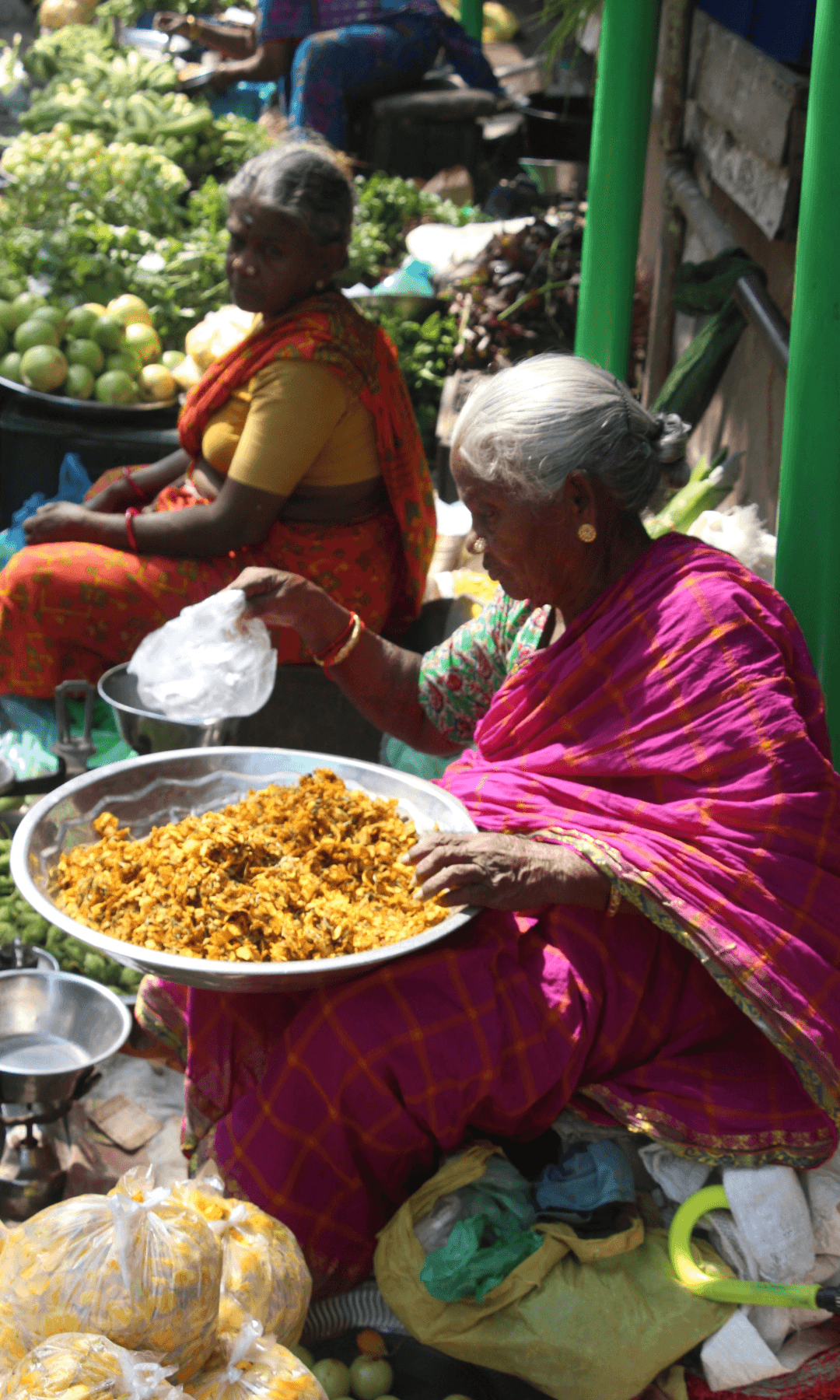
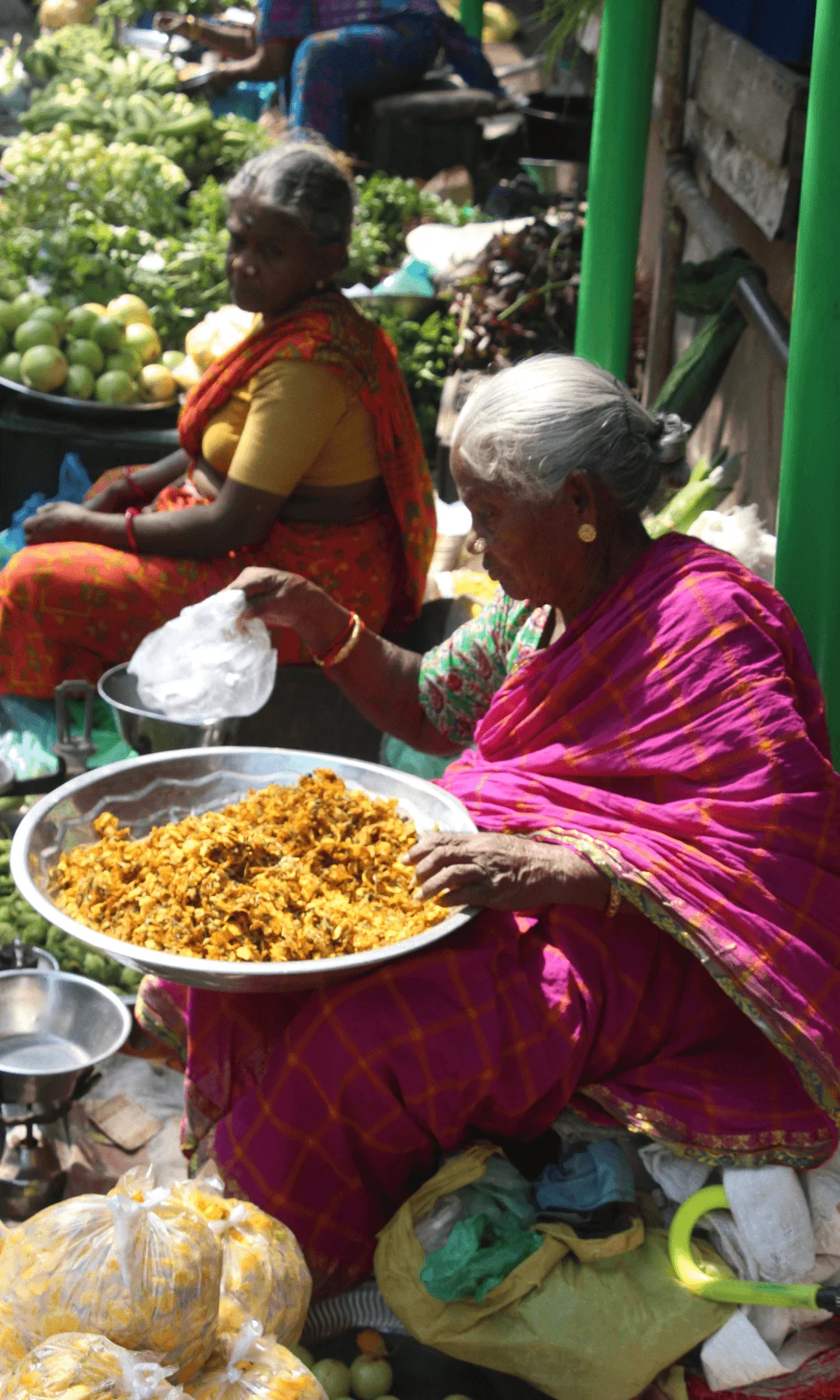
Pondicherry’s many vegetable markets—the Grand Bazaar off Nehru street, the many small or chinna markets dispersed about the town, the uzhavar sandhai or farmers’ market near the old Jardin Botanique—are bound to land you in a jostle and bustle of sound, movement, color: per force a sensory immersion, always overwhelming, some say even assaulting. Amidst the chorus of cries and calls of a hundred sun-burned bodies moving like independent, unstoppable vectors, against the trading blur of pink onions, orange carrots, purple eggplants, white-white cauliflower (in season), red, red tomatoes (year-round), knobbly drumsticks and dark curly chillies—piles upon piles of bunched greens are kept seductively fresh in the mornings with water sprinklings for as long as the city’s swelter allows. They are a kind of respite unto themselves: a merely textured monochrome. The most common and plentiful of these are, of course, the ubiquitous podhina-kothamalli-karivepillai, mint-coriander-curry leaves, so essential for daily cookery, but then there are many others which come and go by season, public demand, and the vendors’ whims or luck.
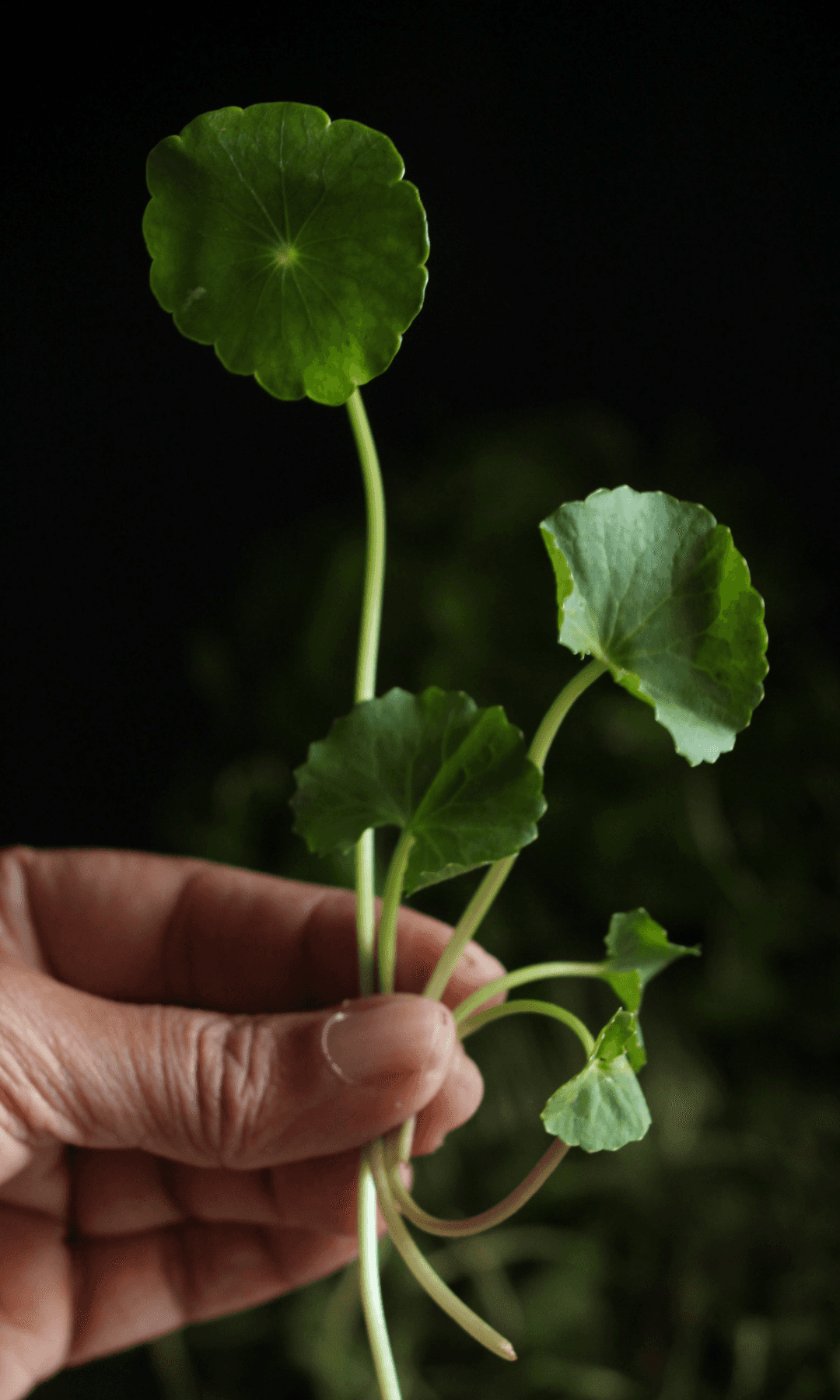
“What are all these greens?” a non-Tamil speaking friend new to the city once asked, observing that small vendors in the uzhavar sandhai seemed to have a particular variety. And as I got about explaining them to her and to myself, I unwittingly became a storyteller of greens, and of this city, for the tale I told most often was of greens being not so much things as locations.

Greens are where markets full of common things reveal their uncommon edges, where local ecologies are not overwritten by industrialized agricultural systems, where grandmothers and marginal economies are still caretakers of medicinal knowledge and body-care practices, and where the city keeps its most perishable, hyperlocal self. Fruits and vegetables come from far-off places: apples from New Zealand or Kashmir, potol or pointed gourd for the tastes of Indians from the Eastern states resettled here. But greens do not typically travel long distances well and remain mostly in place. They tell you whether the hills or the wild wetlands are nearby. Because Indians fundamentally still believe that the best medicine is daily food, all ingredients, especially local greens, carry particular significance. They are not aspirational, like fruits and vegetables, but they are among our cheapest and most available natural foods. In their availability or the speed of their selling out are secrets of how a population eats, or economises, or thinks of how best to fortify the body or make it through another searing summer—in short, of Pondicherry life in situ

While the rest of this town scrambles to project its purported Frenchness to crowds of well-paying tourists, greens are a diminutive vernacular tongue, which leads me into the less-recorded, less broadcast local Tamil imaginaries of Pondicherry. I’d like to wander about there for a bit. “There is a rhetoric of walking,” says the French theorist Michel de Certeau in his well-known rumination on how pedestrian acts of walking through a city are, like speech acts, enunciative. Walking strings together the city’s many fragments, all those thoughts and notions and histories strewn about; “walking affirms, suspects, tries out, transgresses, etc. the trajectories that it ‘speaks’.” What do we know about how this city is made of its greens? We’ll have to walk to find out. 

Join me? 

Read the full article and much more in our latest issue

Read the full article and much more in our latest issue

Read the full article and much more in our latest issue

Issue #4:

Hyperlocal

Issue #4:

Hyperlocal

Issue #4:
Hyperlocal

Issue #4:

Hyperlocal

If origin doesn’t make something truly hyperlocal, what does? Could it be the destination? Indigenisation? Re-territorialisation? Or, naturalisation? Is local something you are born with, or is it something you simply become?

If origin doesn’t make something truly hyperlocal, what does? Could it be the destination? Indigenisation? Re-territorialisation? Or, naturalisation? Is local something you are born with, or is it something you simply become?

If origin doesn’t make something truly hyperlocal, what does? Could it be the destination? Indigenisation? Re-territorialisation? Or, naturalisation? Is local something you are born with, or is it something you simply become?

Some dhoop for you!

Sign up for our newsletter.

dhoop uses food as a lens. Through this lens, we interrogate culture, sustainability, design, and the systems that sustain life. We started as a magazine focused on stories of food and its intersections.

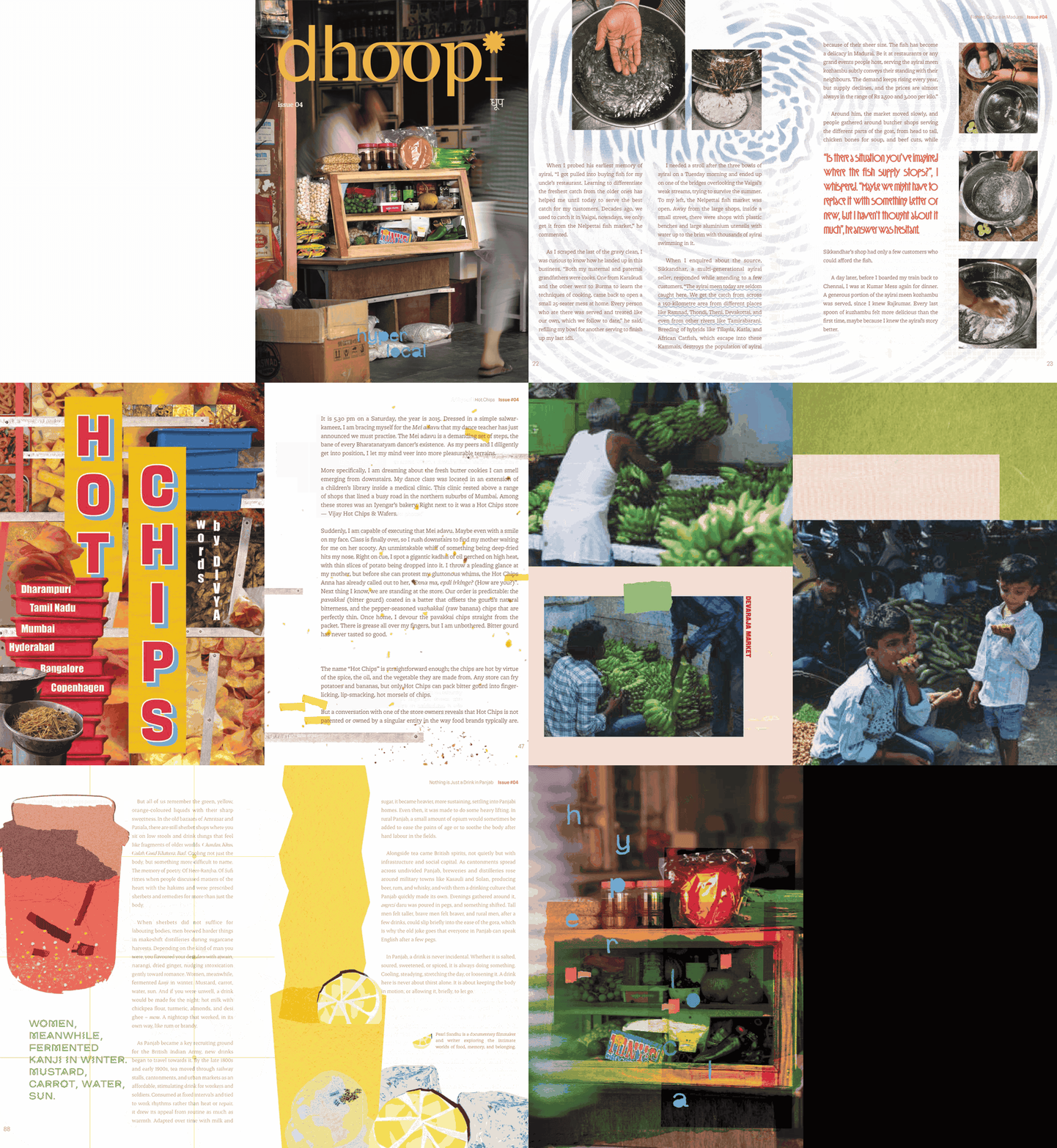
Issue 04: Hyperlocal

Speaking of man-made, who decided what is local to a place? Can only native, indigenous things be local? If origin doesn’t make something truly hyperlocal, what does? Could it be the destination? Indigenisation? Re-territorialisation? Or, naturalisation? Is local something you are born with, or is it something you simply become?

Some dhoop for you!

Sign up for our newsletter.

dhoop uses food as a lens. Through this lens, we interrogate culture, sustainability, design, and the systems that sustain life. We started as a magazine focused on stories of food and its intersections.

Issue 04: Hyperlocal

Speaking of man-made, who decided what is local to a place? Can only native, indigenous things be local? If origin doesn’t make something truly hyperlocal, what does? Could it be the destination? Indigenisation? Re-territorialisation? Or, naturalisation? Is local something you are born with, or is it something you simply become?

Some dhoop for you!

Sign up for our newsletter.

dhoop uses food as a lens. Through this lens, we interrogate culture, sustainability, design, and the systems that sustain life. We started as a magazine focused on stories of food and its intersections.

We work out of Jaipur, Bangalore & Mumbai

Issue 04: Hyperlocal

Speaking of man-made, who decided what is local to a place? Can only native, indigenous things be local? If origin doesn’t make something truly hyperlocal, what does? Could it be the destination? Indigenisation? Re-territorialisation? Or, naturalisation? Is local something you are born with, or is it something you simply become?

Some dhoop for you!

Sign up for our newsletter here.

dhoop uses food as a lens. Through this lens, we interrogate culture, sustainability, design, and the systems that sustain life. We started as a magazine focused on stories of food and its intersections.

We work out of Jaipur, Bangalore & Mumbai

Issue 04: Hyperlocal

Speaking of man-made, who decided what is local to a place? Can only native, indigenous things be local? If origin doesn’t make something truly hyperlocal, what does? Could it be the destination? Indigenisation? Re-territorialisation? Or, naturalisation? Is local something you are born with, or is it something you simply become?