Cities
Cities
Cities
Anonymity and enduring cosmopolitanism – two things that make cities lovable. In their endless modernity, food is a tasteful proscenium where it all unfolds. So, the best way to know our food and cities is by flipping each other to see one through another.
Anonymity and enduring cosmopolitanism – two things that make cities lovable. In their endless modernity, food is a tasteful proscenium where it all unfolds. So, the best way to know our food and cities is by flipping each other to see one through another.
Anonymity and enduring cosmopolitanism – two things that make cities lovable. In their endless modernity, food is a tasteful proscenium where it all unfolds. So, the best way to know our food and cities is by flipping each other to see one through another.
Anonymity and enduring cosmopolitanism – two things that make cities lovable. In their endless modernity, food is a tasteful proscenium where it all unfolds. So, the best way to know our food and cities is by flipping each other to see one through another.
Some dhoop for you!
Sign up for our newsletter.
dhoop uses food as a lens. Through this lens, we interrogate culture, sustainability, design, and the systems that sustain life. We started as a magazine focused on stories of food and its intersections.
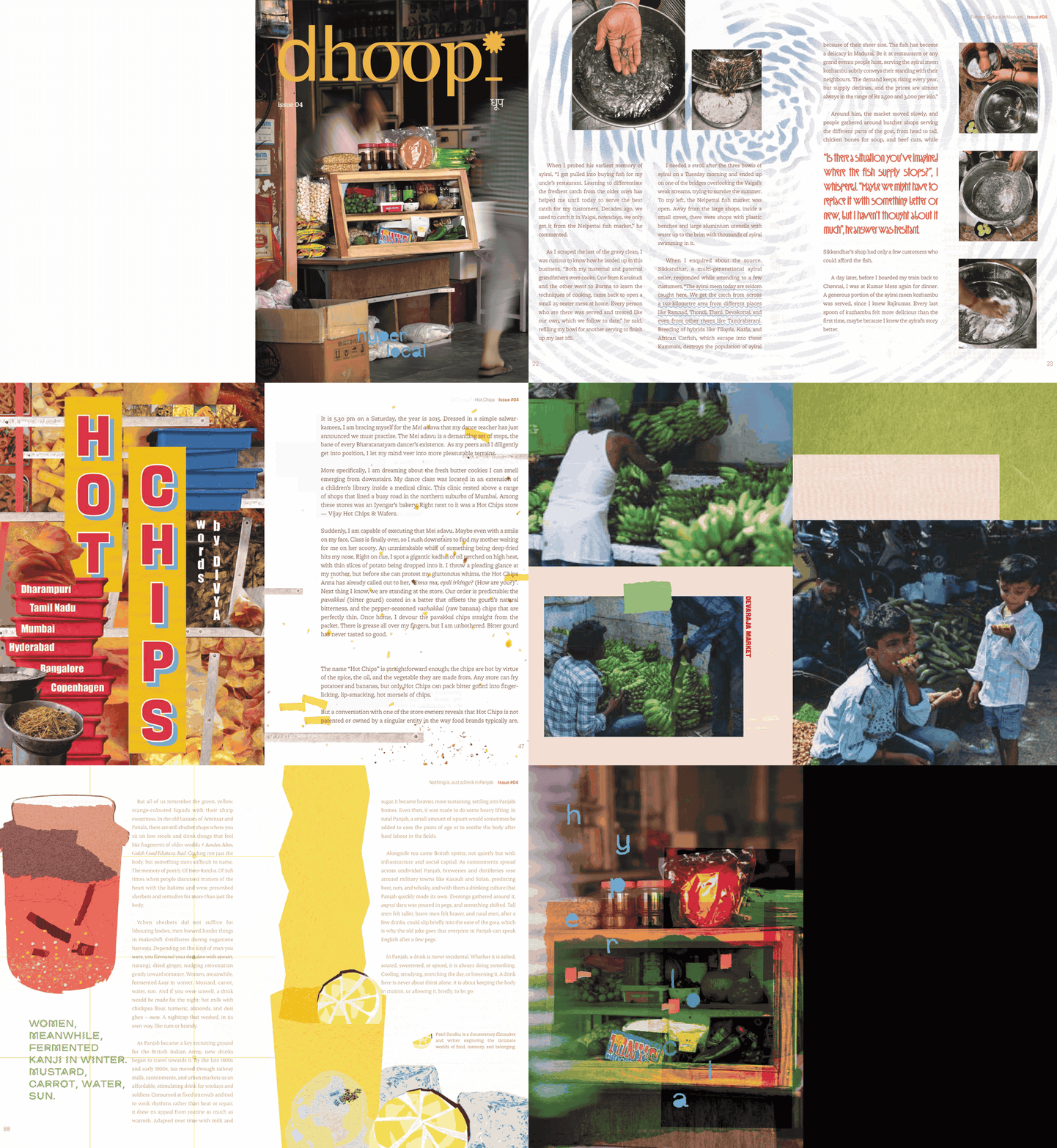
Issue 04: Hyperlocal
Speaking of man-made, who decided what is local to a place? Can only native, indigenous things be local? If origin doesn’t make something truly hyperlocal, what does? Could it be the destination? Indigenisation? Re-territorialisation? Or, naturalisation? Is local something you are born with, or is it something you simply become?
Some dhoop for you!
Sign up for our newsletter.
dhoop uses food as a lens. Through this lens, we interrogate culture, sustainability, design, and the systems that sustain life. We started as a magazine focused on stories of food and its intersections.
Issue 04: Hyperlocal
Speaking of man-made, who decided what is local to a place? Can only native, indigenous things be local? If origin doesn’t make something truly hyperlocal, what does? Could it be the destination? Indigenisation? Re-territorialisation? Or, naturalisation? Is local something you are born with, or is it something you simply become?
Some dhoop for you!
Sign up for our newsletter.
dhoop uses food as a lens. Through this lens, we interrogate culture, sustainability, design, and the systems that sustain life. We started as a magazine focused on stories of food and its intersections.
We work out of Jaipur, Bangalore & Mumbai
Issue 04: Hyperlocal
Speaking of man-made, who decided what is local to a place? Can only native, indigenous things be local? If origin doesn’t make something truly hyperlocal, what does? Could it be the destination? Indigenisation? Re-territorialisation? Or, naturalisation? Is local something you are born with, or is it something you simply become?
Some dhoop for you!
Sign up for our newsletter here.
dhoop uses food as a lens. Through this lens, we interrogate culture, sustainability, design, and the systems that sustain life. We started as a magazine focused on stories of food and its intersections.
We work out of Jaipur, Bangalore & Mumbai
Issue 04: Hyperlocal
Speaking of man-made, who decided what is local to a place? Can only native, indigenous things be local? If origin doesn’t make something truly hyperlocal, what does? Could it be the destination? Indigenisation? Re-territorialisation? Or, naturalisation? Is local something you are born with, or is it something you simply become?