
Tully, an obedient mountain dog whose allegiance I had somehow won, trotted ahead, navigating steep pathways with the effortless grace of a local while I huffed and puffed my way up. Bichhu booti (stinging nettle) brushed menacingly against my ankles, and far below, the Neugal Khad rushed fiercely over gray stones. For someone whose relationship with workouts is complicated at best, this 5km uphill stretch felt less like a stroll and more like a character-building exercise. What kept my feet moving was a singular, glorious promise by the locals: breakfast at the end of it.
After an hour and a half, we reached Sudesh ji and Dimple ji’s home. It was a magnificent, century-old Himachali homestead — a living architecture of mud, stone, slate, cow dung, wood, and bamboo. The central aangan (courtyard) acted as a quiet threshold between the public world and domestic sanctuary. Climbing up steep wooden steps, we entered an attic-like space housing a tiny, soot-kissed kitchen.
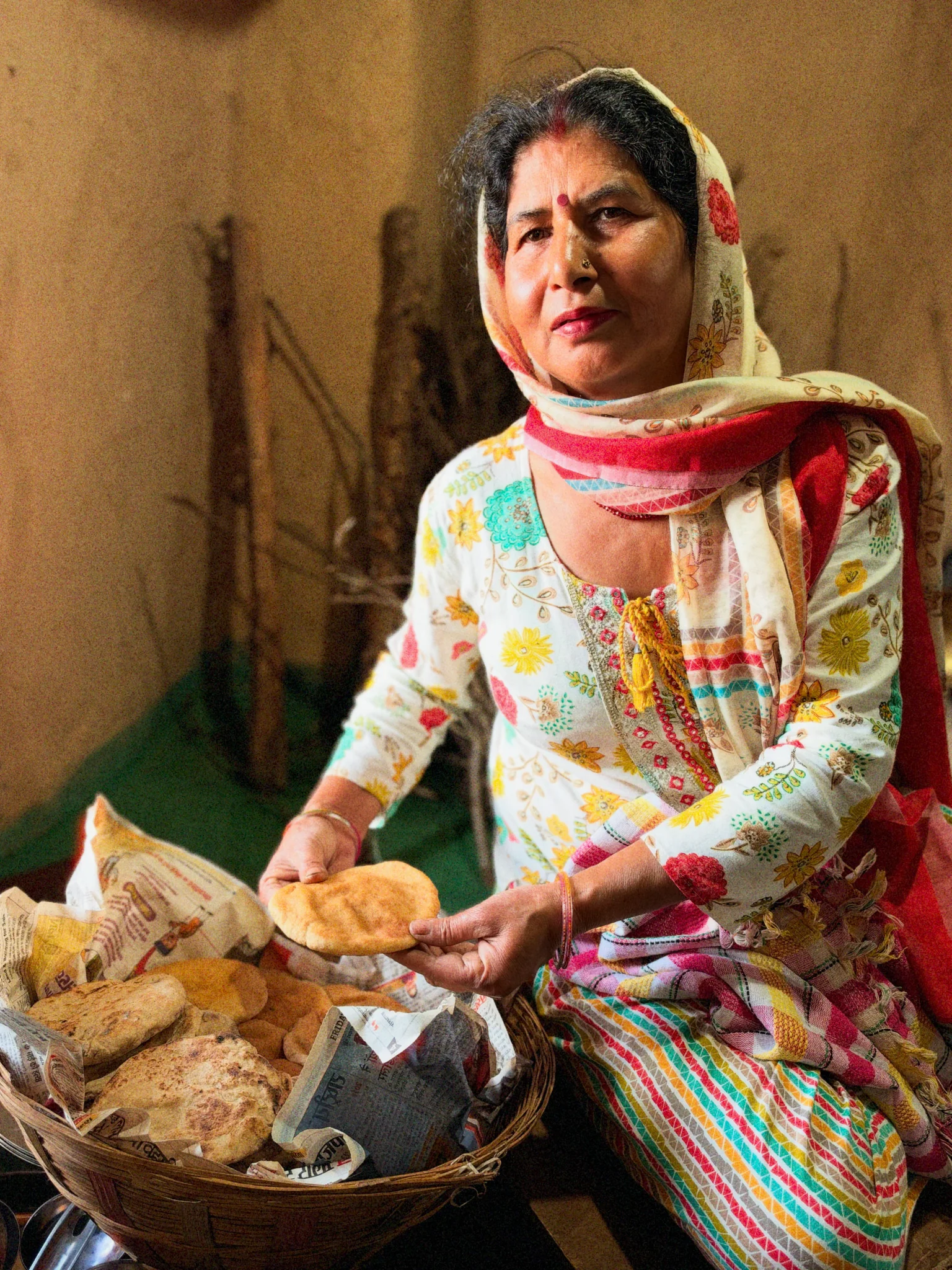
“Hum ab yahaan nahi rehte, hum neeche rehte hain, par yeh ghar humara hai aur choolah jalane yahaan aate hain din mein ek baar,” (we don’t stay in this house anymore. Our main house is now down the hill, but we do come here to light the hearth because it is our ancestral house) Sudesh ji told me warmly, her hands busy rolling out dough. In her late forties and the elder daughter-in-law of the house, she was preparing tali hui roti — thick, fried rotis that puff up like rustic pita breads. Beside her, her younger sister-in-law, Dimple ji, stirred a bubbling pot of hot aloo-chana subzi.
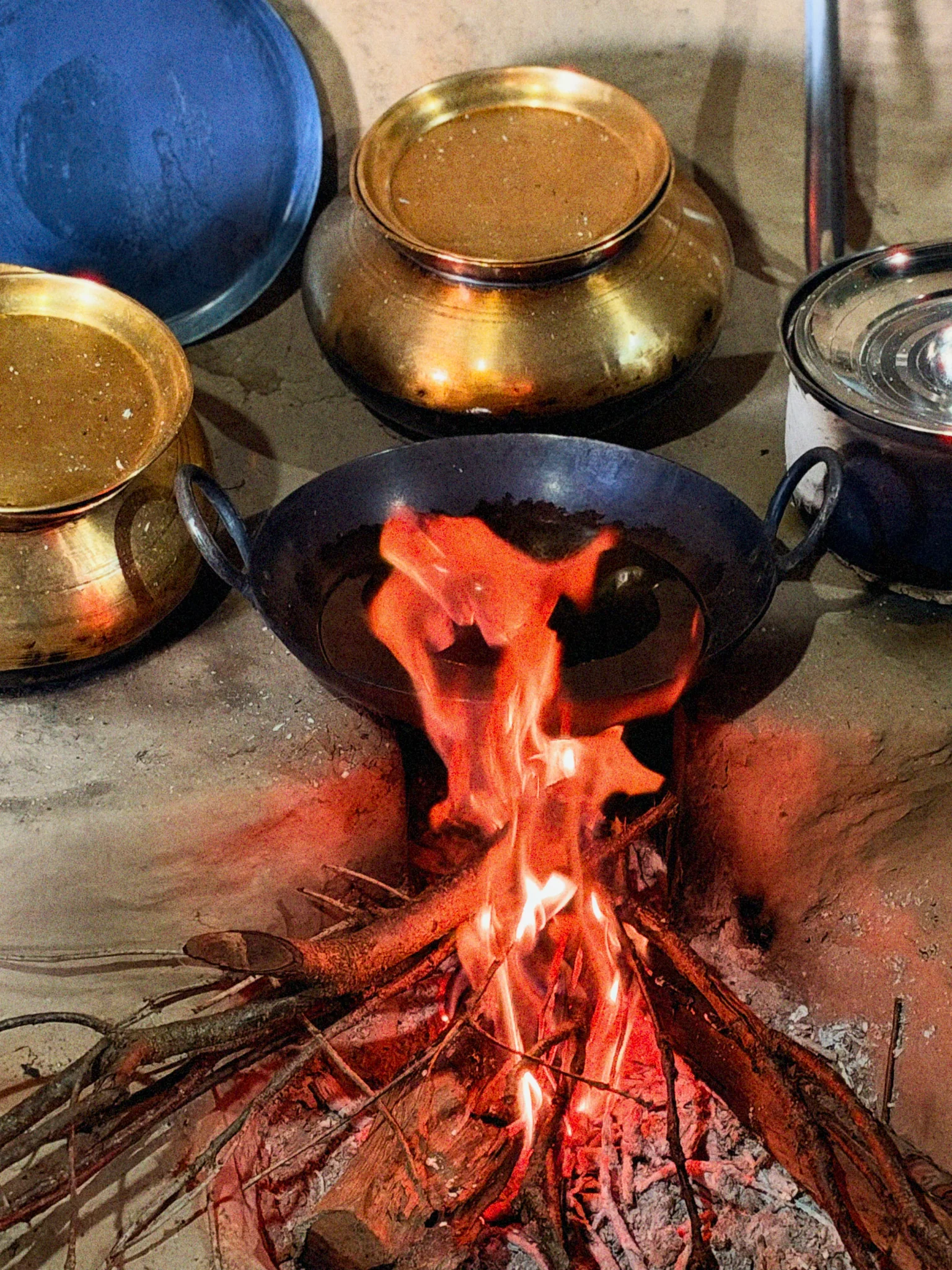
“Humare yahaan khameer kaafi use hota hai,” Sudesh ji remarked casually, tossing another round of dough onto the iron tawa. Then came the sentence that fundamentally shifted my perspective: “Woh kya hai na ki hum aata fridge mein nahi rakhte na, kyunki pahado mein fridge nahi hota.”
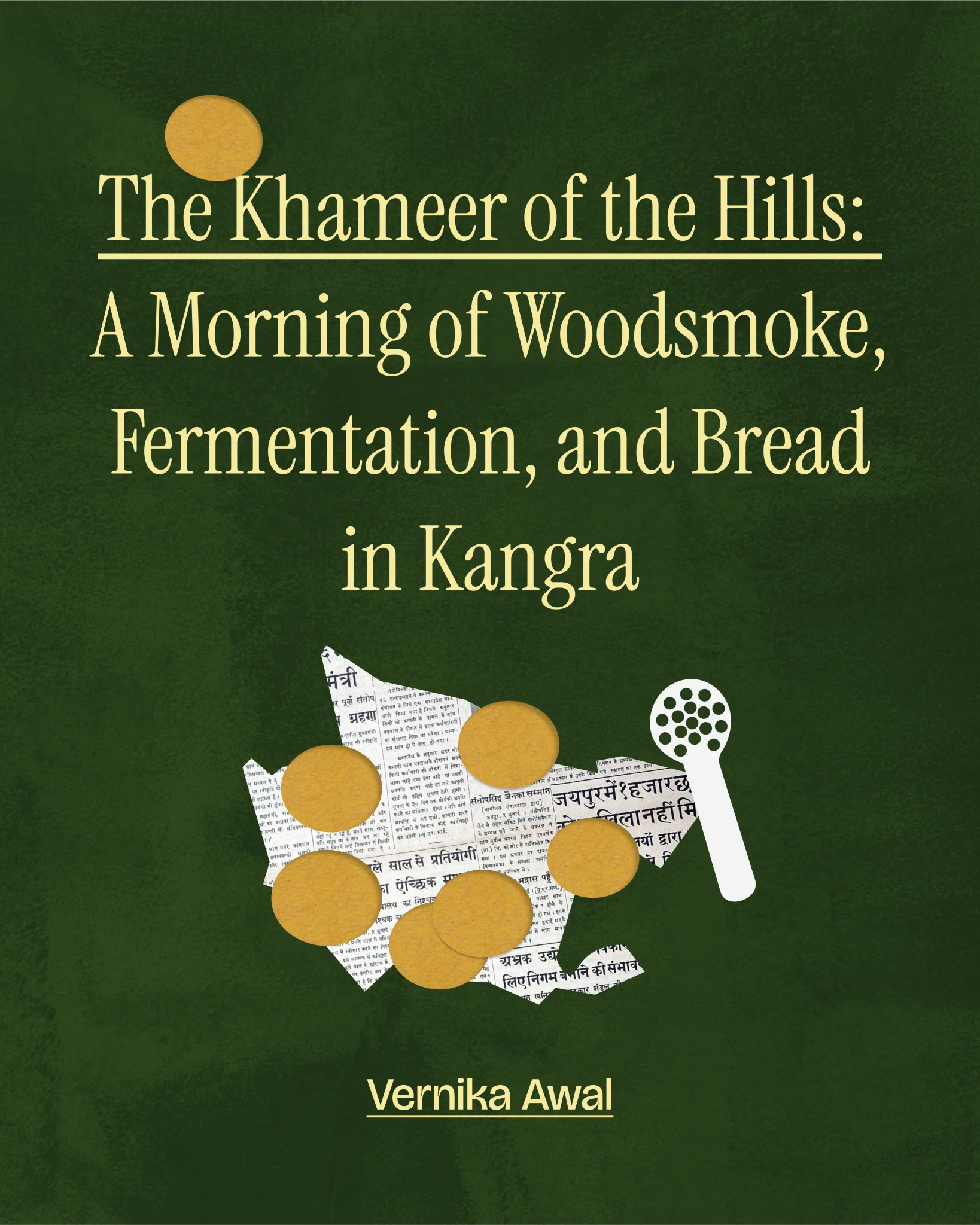
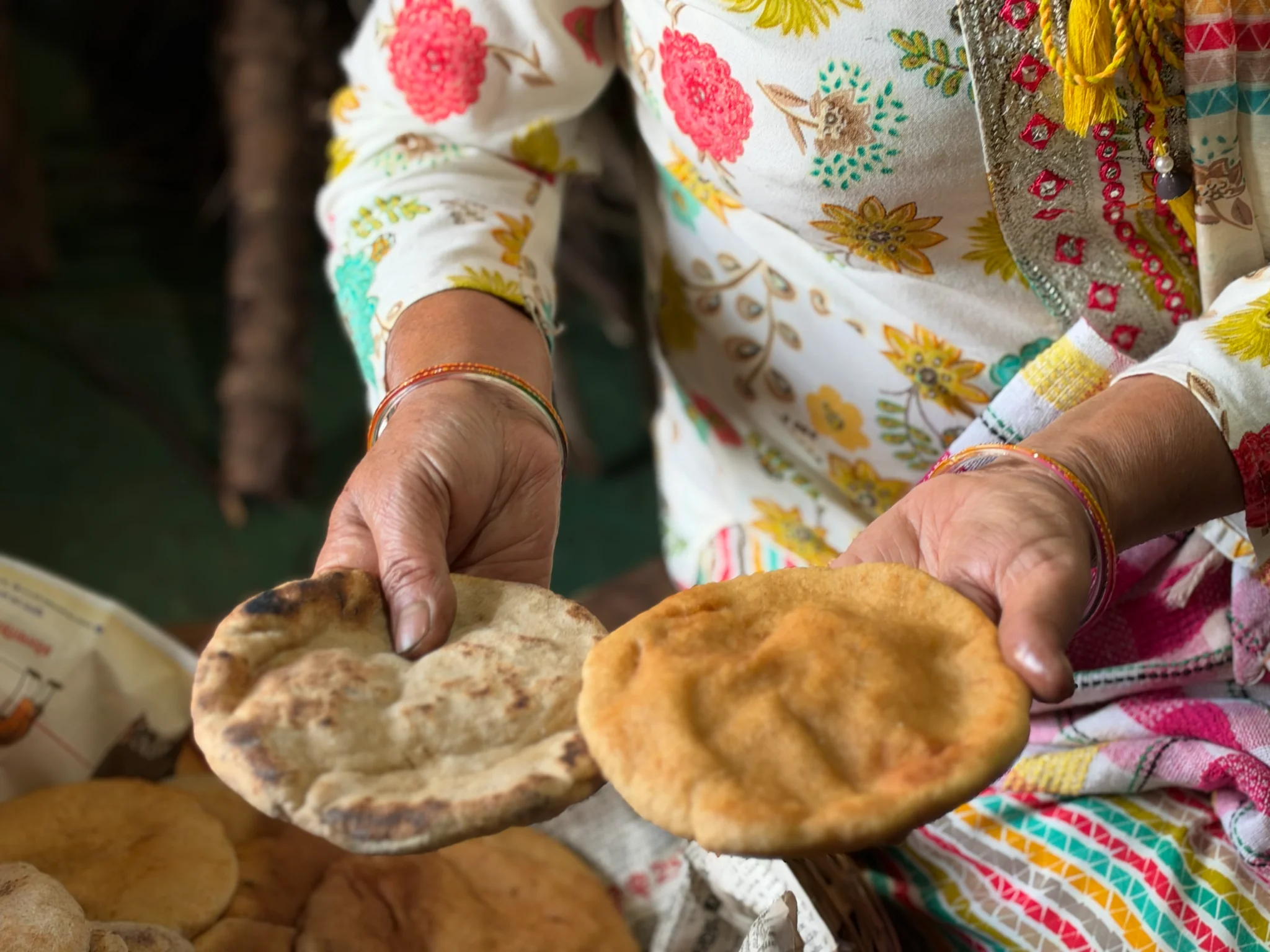
In the hills, sourdough — or khameer — isn't a trendy artisanal philosophy; it is practicality born of necessity. Without refrigerators to arrest natural yeast activity, dough ferments organically, becoming a way of life. As Sudesh ji fried those pillowy rotis, she also made an aakhri roti — the final, rustic flatbread made from the scraped-together remnants of the dough, for those who don’t prefer to have the deep-fried bread. Alongside them sat a smoky kaddu (pumpkin) subzi, smoked by the woodfire of the choolah.
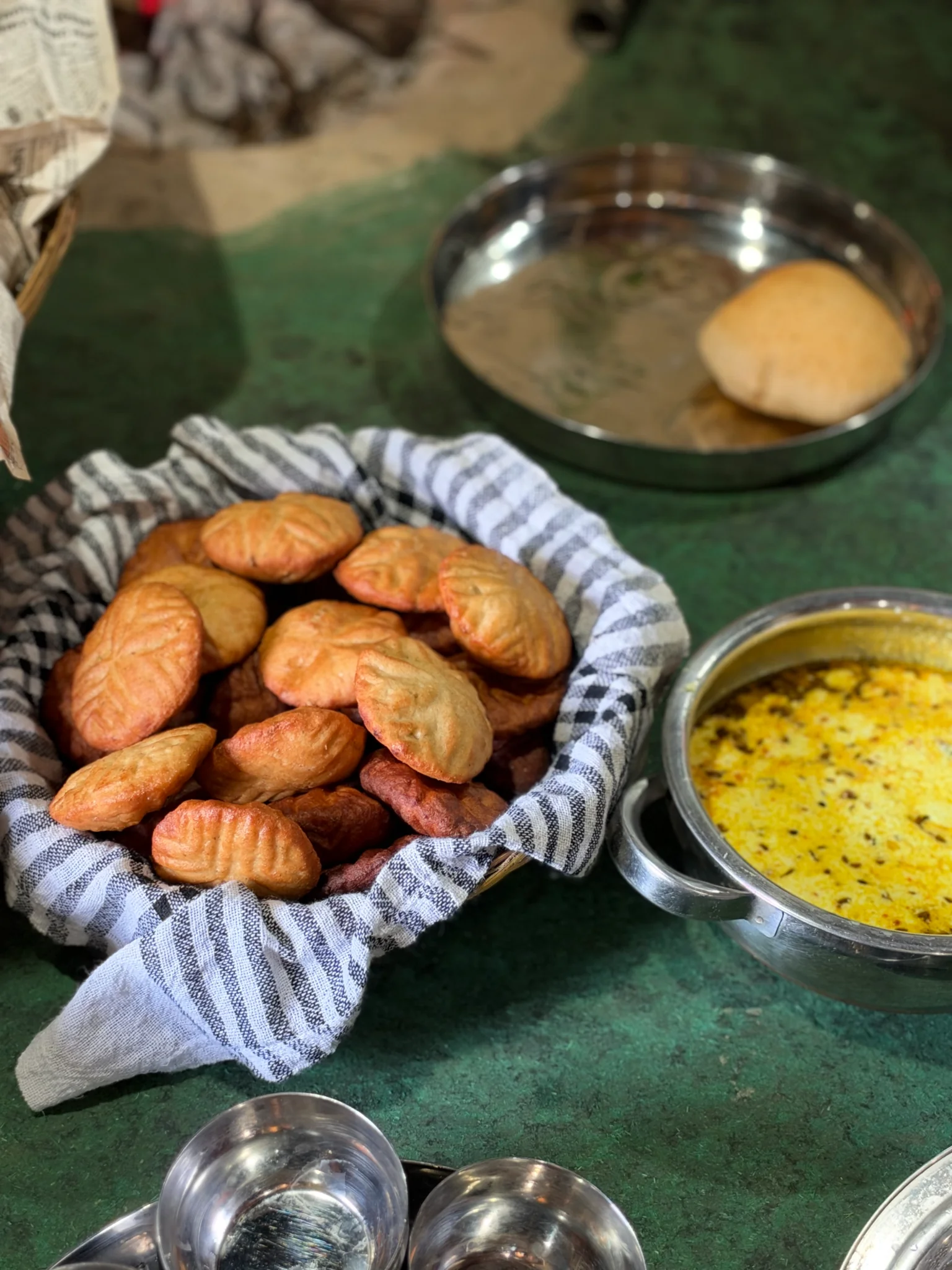
“Isse aap mithru ke saath khaao, didi,”( try this with the mithru, didi) Dimple ji urged, handing me a biscuit-like bread reminiscent of Uttarakhand’s rothane. Crafted from wheat flour, fennel seeds, sugar, and ghee, the mildly sweet mithru offered a brilliant counterpoint to the sweet-and-tart pumpkin subzi.
Just when I thought my education in Kangra-style morning rituals was complete, Hema aunty — a local who worked at my resort — called out across the courtyard with an offer of hot siddu.
Making siddu is an absolute art form. It is a dish of nomads, and historically consumed as sustenance on long trips, Hema aunty who belongs to the Gaddi tribe explained. I noticed that its shape closely resembles many other stuffed breads or dumplings like empanadas or shaphale of the Tibetan cuisine. It demands precise wrist rotation and a gentle touch, lest the yeast-risen dough tear or turn dense. The fillings are an ecological map of the region: walnuts, hemp seeds, and dried apricots, roasted and ground with onions, ginger, garlic, coriander stems, and spices. (In Kullu, mashed potatoes take center stage; in sweet versions, jaggery and crushed poppy seeds). Served swimming in generous pools of local ghee, it is comfort food in its purest, most potent form.
That kitchen became my masterclass in Himachali breadcraft. Himachal’s native breads bear little resemblance to the standard rotis of the plains. Shaped by the punishing terrain, the biting cold, and historical isolation, their defining characteristic isn't just grain variety — it is fermentation.
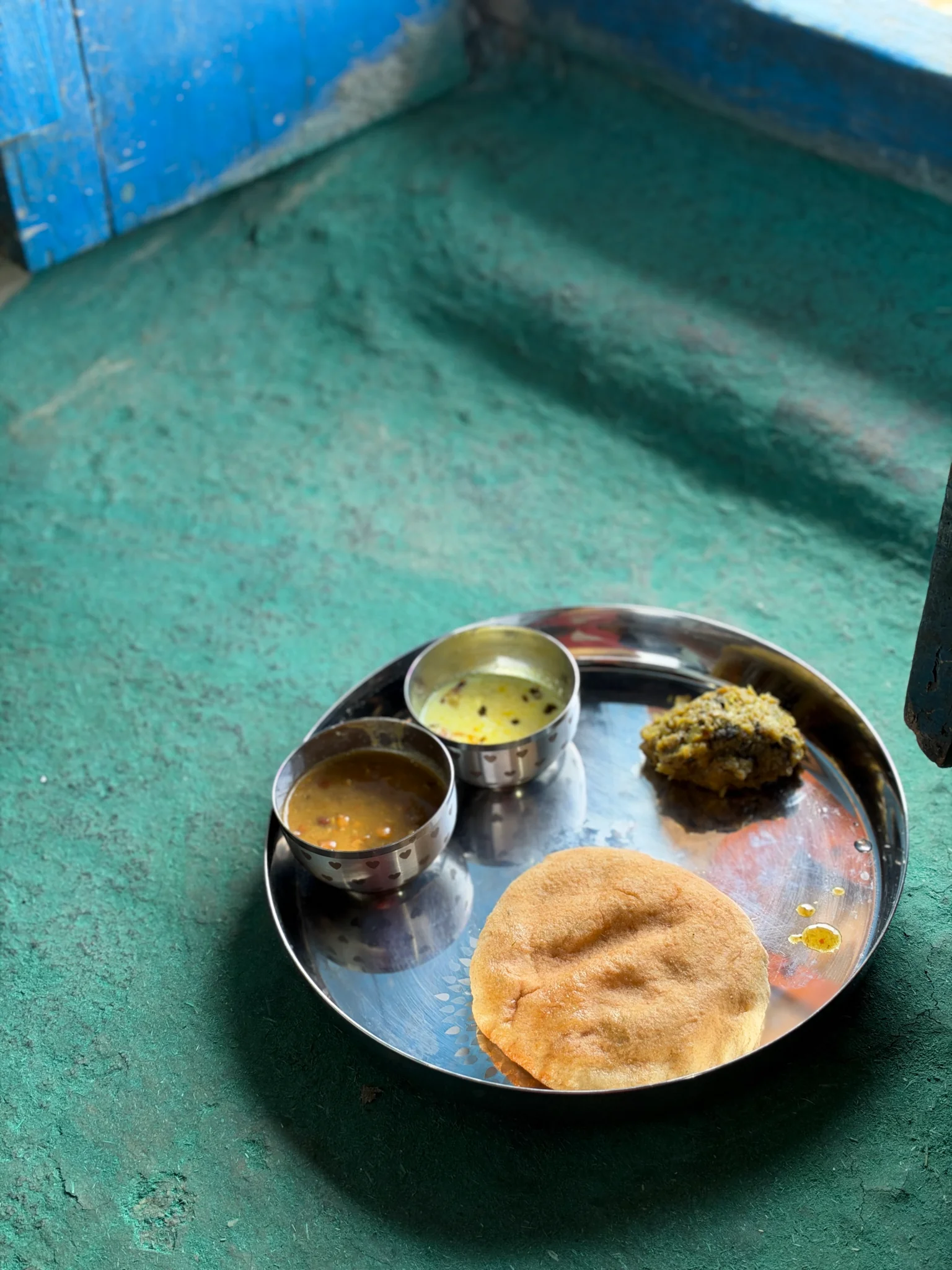
As we talked, the conversation naturally widened to encompass the broader topography of the region. The twelve districts of Himachal harbour culinary traditions that differ wildly from one another; while some valleys wear distinct Tibetan, Rajasthani, or Punjabi influences on their sleeves, others remain intensely localiszed.
“When you look at the Himalayan belt, you will see a lot of similarity in the way communities cook or prepare their dishes,” Hema aunty explained, gesturing outward toward the sweeping peaks. “For example, Tibet’s steamed momos are famous throughout the world and served with a hot chutney and thukpa. Similarly, siddus are steamed and served with chutney and a lentil broth.”
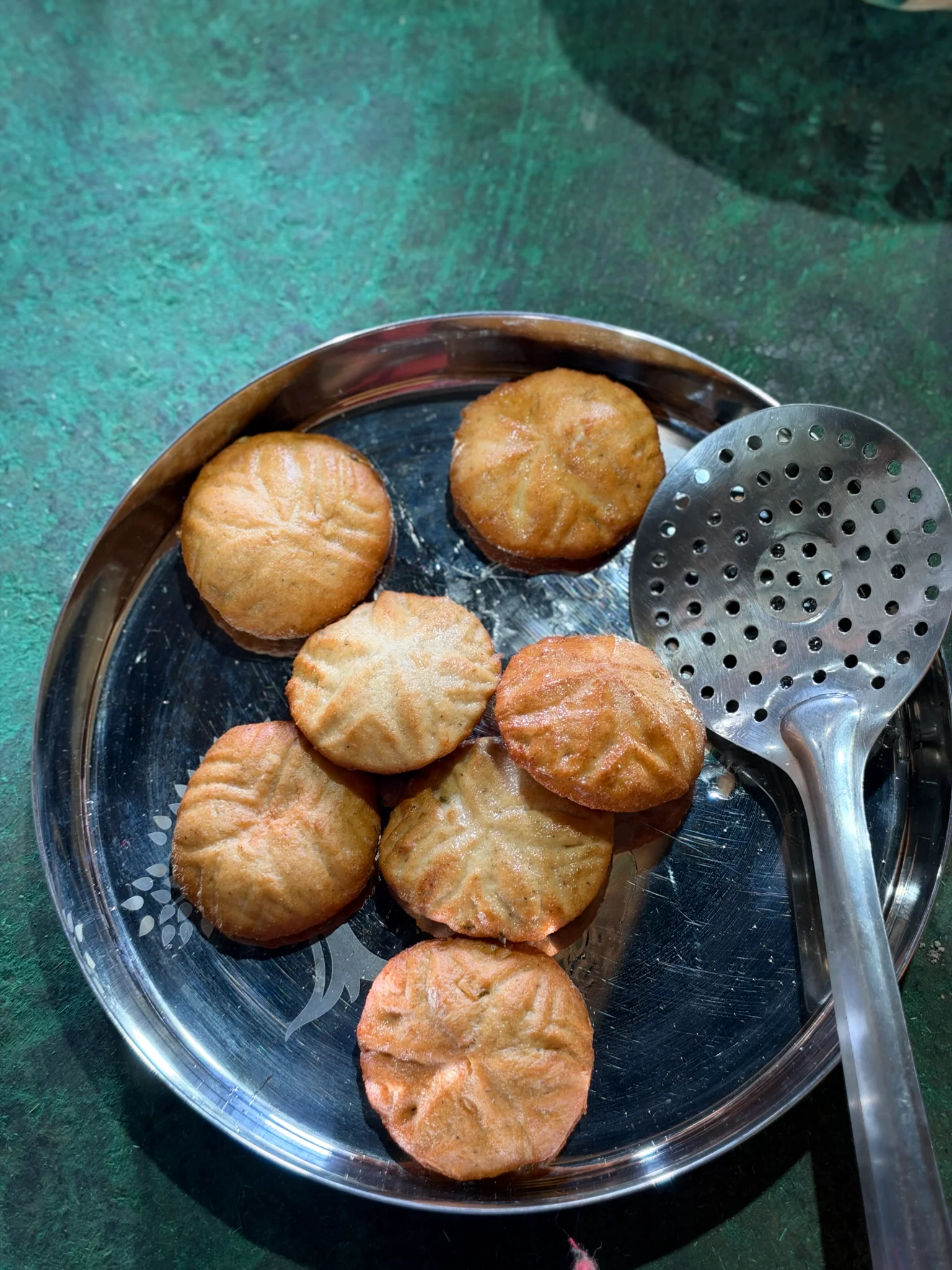
Over lunch, our conversation drifted to grain, as I asked her about the different grains that they use in Himachal and how superfoods like millets have been a staple for them, even though they are trending globally now.. Hema aunty boasted that Himachal grows the finest makkai ka aata (cornmeal) in the country and challenged me to roll out makke ki rotis by hand, completely bypassing the rolling pin. Channeling my inner Punjabi who battles winter cornmeal on the regular, I stepped up to the wooden board. To aunty’s genuine astonishment, our hands worked in tandem to pat out perfectly round, unbroken discs to accompany a robust aloo-badi (potatoes and dried lentil vadis) and earthy kulith dal (horsegram lentils).
“Agli baar bhaturu sikhaungi,” (next time I’ll teach you to make bhaturu) she promised with a triumphant grin.
Bhaturu — another fermented, deep-fried marvel of the hills, raised using the traditional Malera (this is a traditional Himachali name for sourdough culture) sourdough culture — stood as a reminder of celebrations past and present. Eaten soaked in ghee or tangy tari (curry), it is a bread born of ancient hearths and stubborn mountain winters.
Sitting there in that centuries-old courtyard, nursing a cup of tea as the mountain chill began to settle back in, I realized that Himachali breads like bhaturu, mithru, tali hui roti, siddu aren’t just sustenance. It is history fermented in flour and water, baked over woodsmoke, and handed down by women whose hands hold the memory of the mountains.