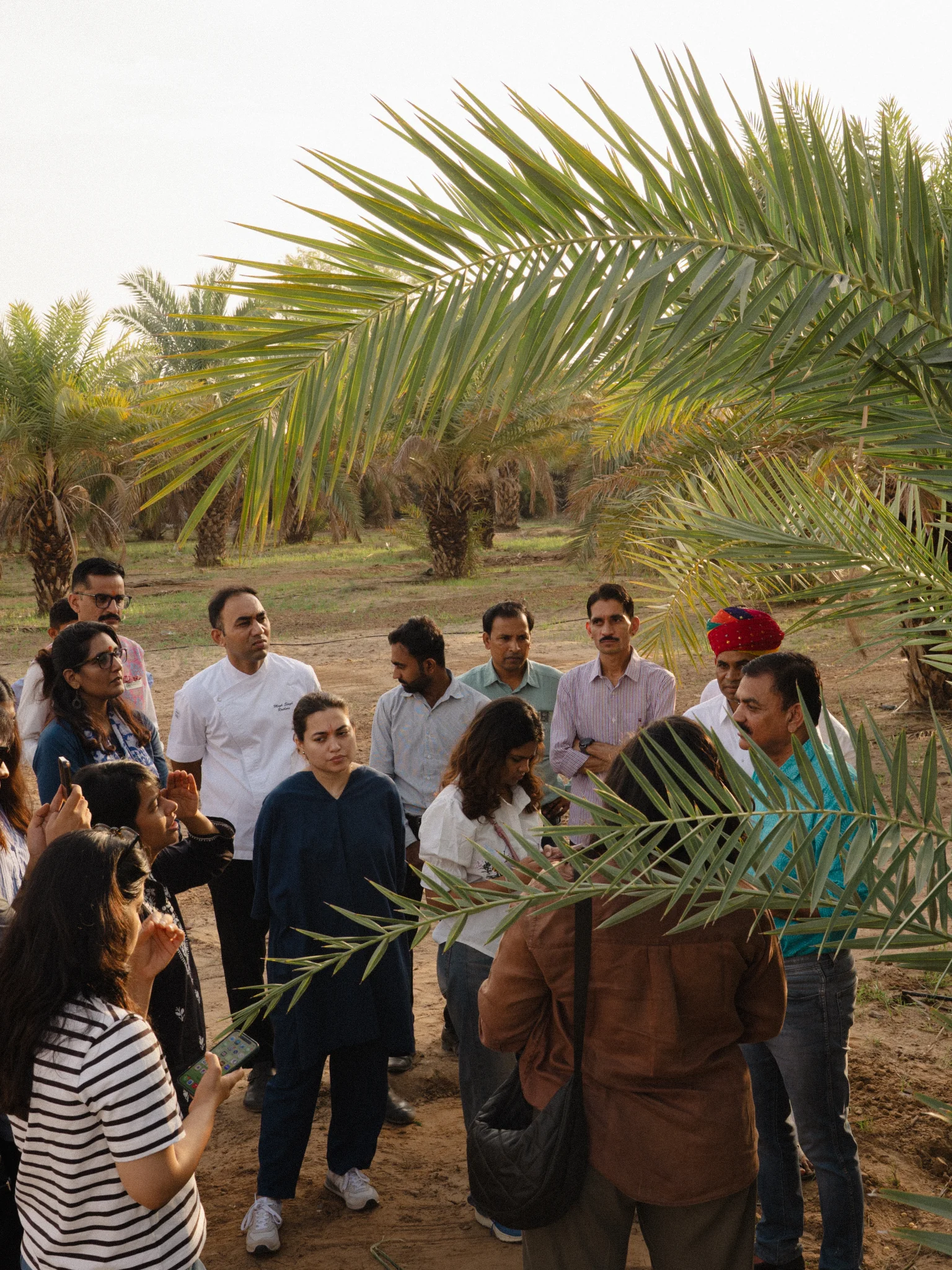

A bunch of researchers, writers, chefs, photographers and thinkers traversed through the Thar desert with the help of people who knew the land and lived on it for generations.
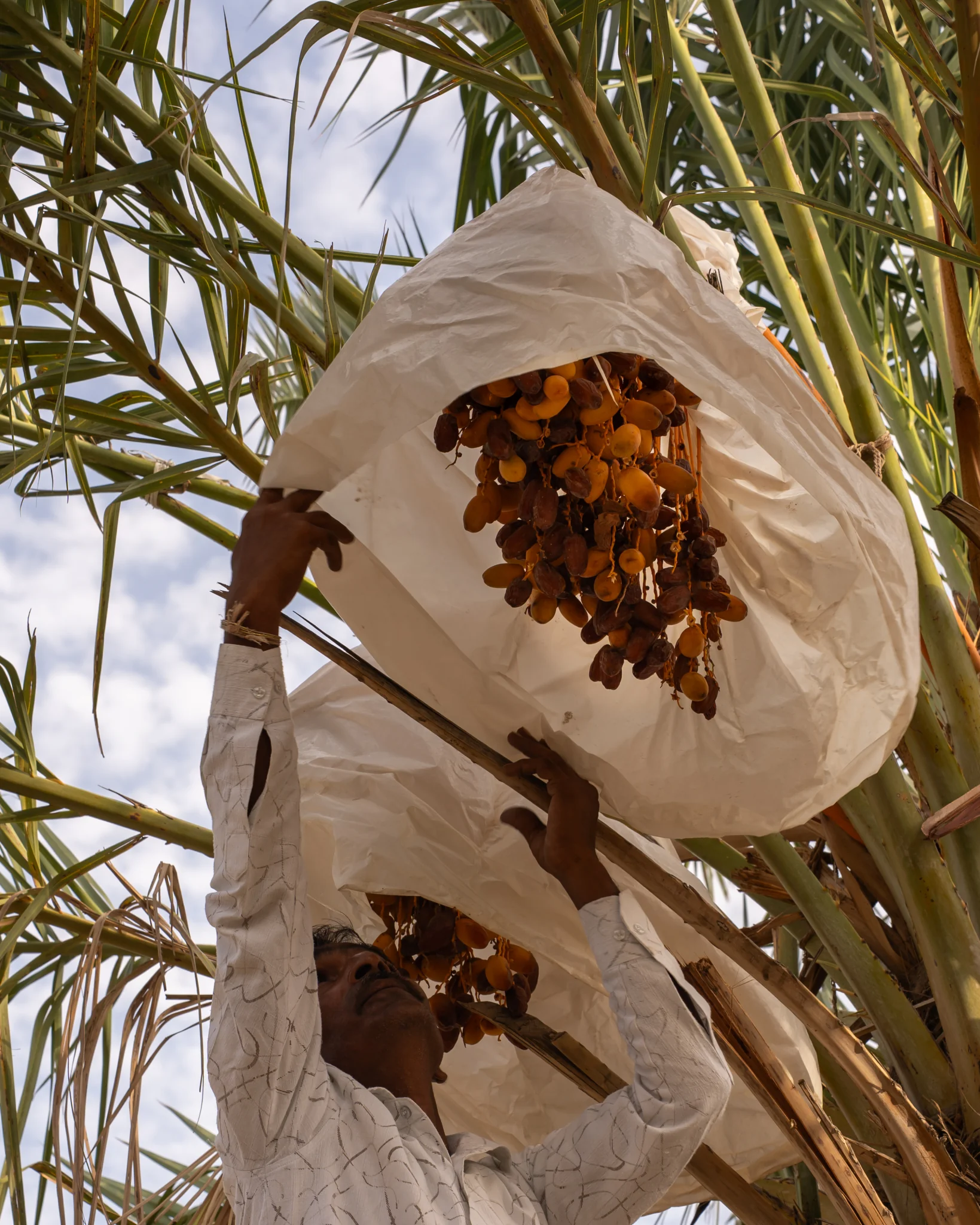
The idea of tissue culture technology coming into the desert to make it more arable is the goal of this project by Atul Ltd, a private corporation that supplies tissue culture date palms to 20 states in India. In Thar particularly, Atul works with several individual farmers to whom it hands out subsidised tissue culture date palms in collaboration with the state government. In this dry region where drought is always ready round the corner, where water resources are scant, these new farms are helping to combat desertification. Whenever something that we know as usual changes, we don’t accept it. Likewise, I went to the desert with skepticism and a bunch of questions about water, commercial farming and native food. There’s a lot to learn from people who have spent time living in this harsh land – its history of the Paliwal community and their ingenious Khadin systems to preserve water blew my mind ( more on that later). On this trip, I realised that solutions are not as black and white as they might seem on paper and a little bit stepping out reveals the realities and requirements of different landscapes.
On our train back from Jaisalmer, Gayatri Desai, the chef and founder at Ground Up and one of the participants of the residency chatted with me about research, field work, food and people.
Edited conversation between Gayatri Desai and Rini Singhi
R: When you go to a new and unfamiliar place, what is usually your process to understand the food of the place?
G: I’m biased towards seeing anything from the lens of an underdog. I want to understand the ground level reality, whether it's food or something else. It's cliche to say I want to know where the locals eat, where the locals go to drink, for example, what they think about these Khajoor farms. But I want to hear it from them. I don’t want anyone else to represent them. Even if there is a language barrier, I would like to observe their experiences, their body language, their understanding of the space. That’s the first thing I look for, be it any topic.
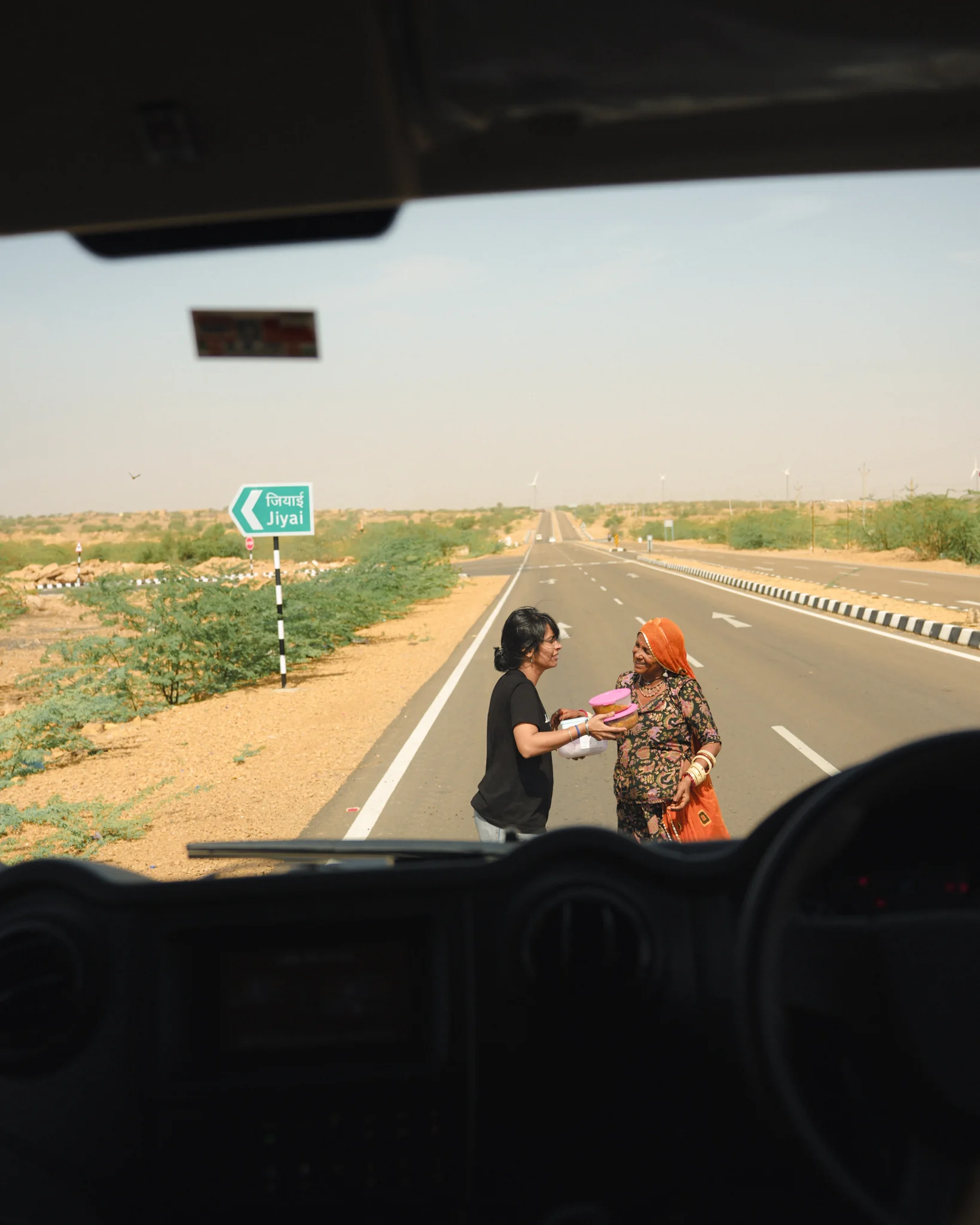
R: For a lot of people who come under the category of ‘locals’, food is not central to their lives in a way it is for researchers, fermenters, cooks, and scholars of food. How do you get them to talk about food in a way that’s intentional?
G: That’s fine I think. They are the ones who have lived in that land the longest. So, you just want their (locals) perspective. You can add yours later. Sometimes, you don’t even need your immediate perspective. I think when you are going to a place you first need to absorb without any preconceived notions. It’s about who you seek to get that perspective from.
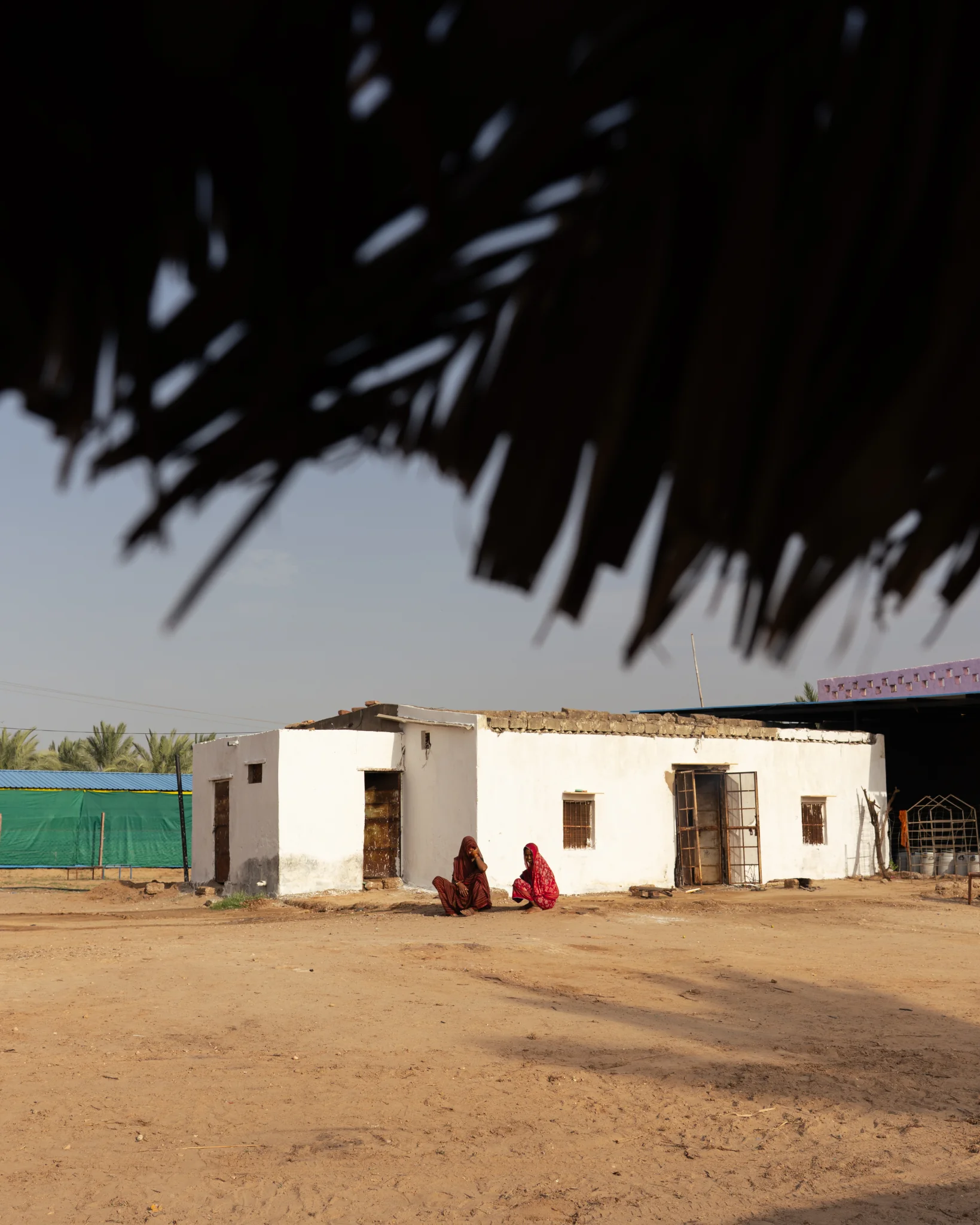
R: Absorbing before evaluating! Do you think that when you travel to places where you don’t speak the language, intermediaries/middle-men change the experience? How do you screen that?
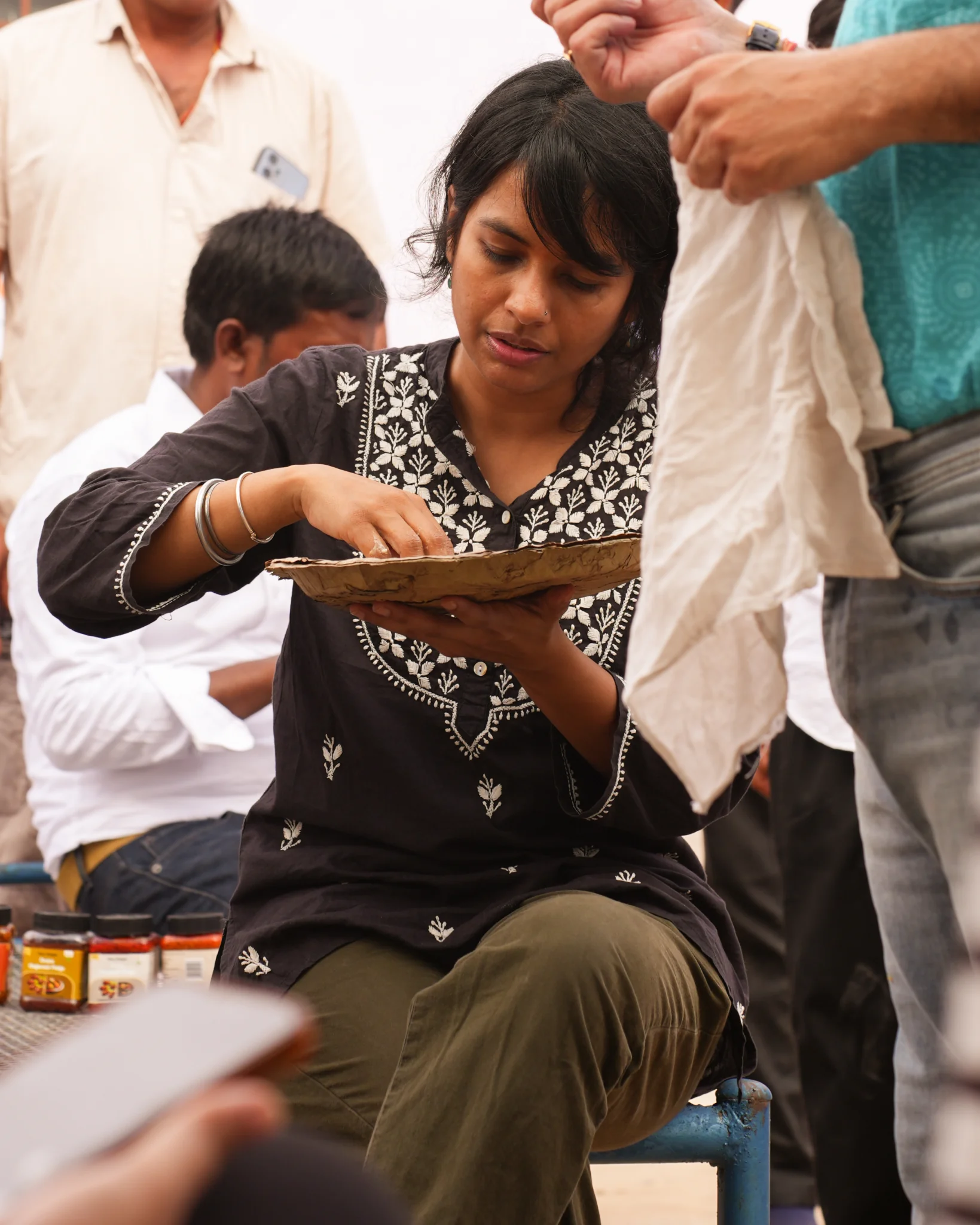
G: I think over a period of time, because I have travelled solo to deeply rural, slightly sketchy areas, with tough topography, I have this tendency of not trusting middle-men. So, I will always ask more questions and I will always try to find my way to talk to the direct source, even if it’s a tiny detail. For example, even today when I got that 15 mins with the farmer on the bike [when we were moving from one farm to another, G decided to hop on the farmer's bike instead of getting into the car with us], it was special. I didn’t have to ask him anything. But he was so proud about the lana ka phool he showed. I’m interested in one-on-one conversations like these the most. There is a certain amount of rawness to such conversations. Even this chat between you and I, where both of us are chatting, is the best rather than a situation where I’m talking to 10 people. The intimacy of the conversation is one-on-one. The unfilteredness of the conversation is so much more when it is between two people.

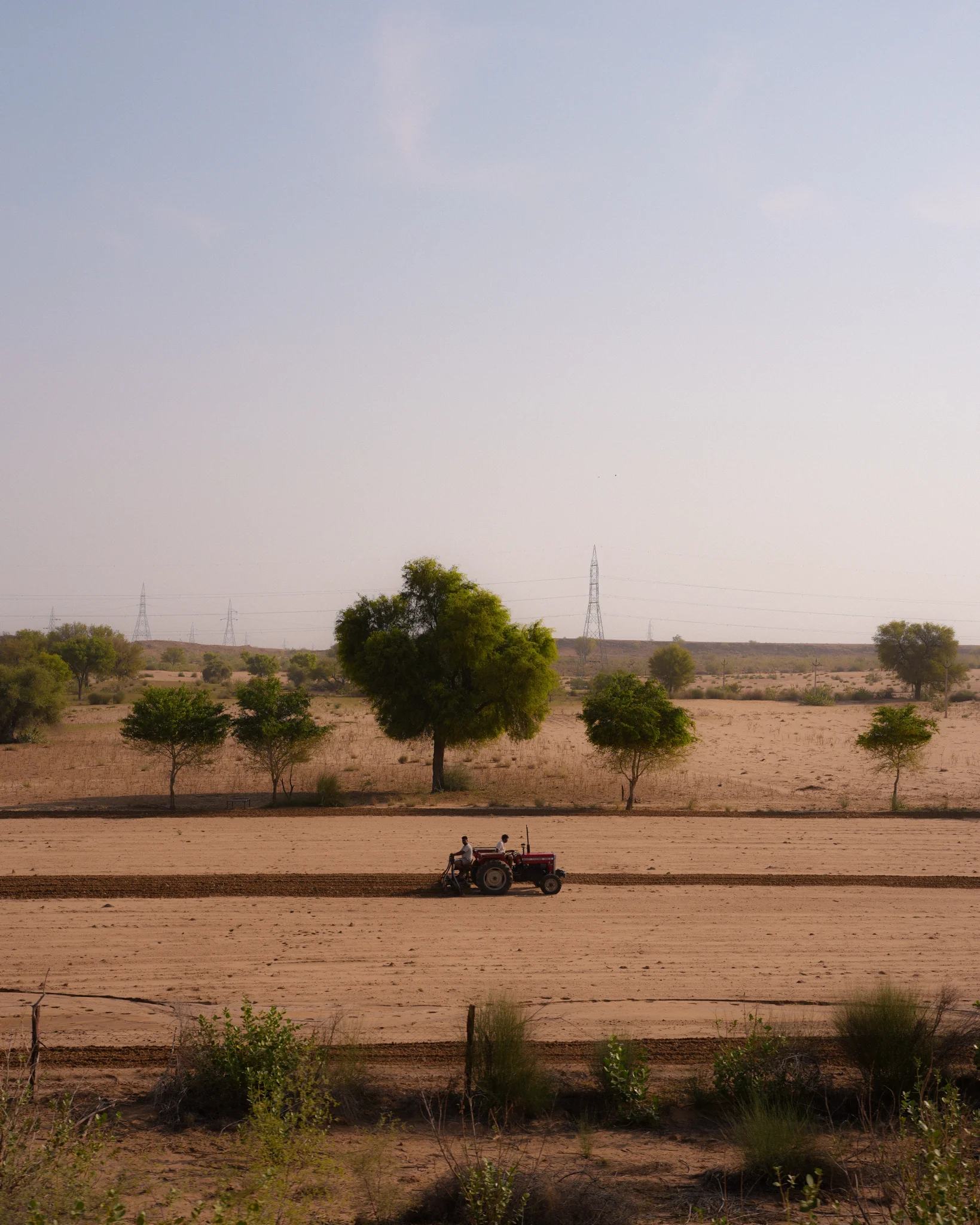
R: Do you research before travelling? And how much do you rely on research while you are on the field?
G: Research is very important. But, it is also important to be mindful — how much ever you research, a part of you or maybe all of you have to be open to a complete opposite of that research. That’s how I like to travel. I’m completely fine with going the opposite way when I meet an individual who challenges that perspective. There are changes that happen as you spend more time, as you get out of your comfort. You are researching from a different place, then when you come to close proximity to the place you research about. Then you talk to a person who lived there all their life and is giving you a different perspective from all your research – you should be ready to shed all that research. You should have the most open mind when you travel.

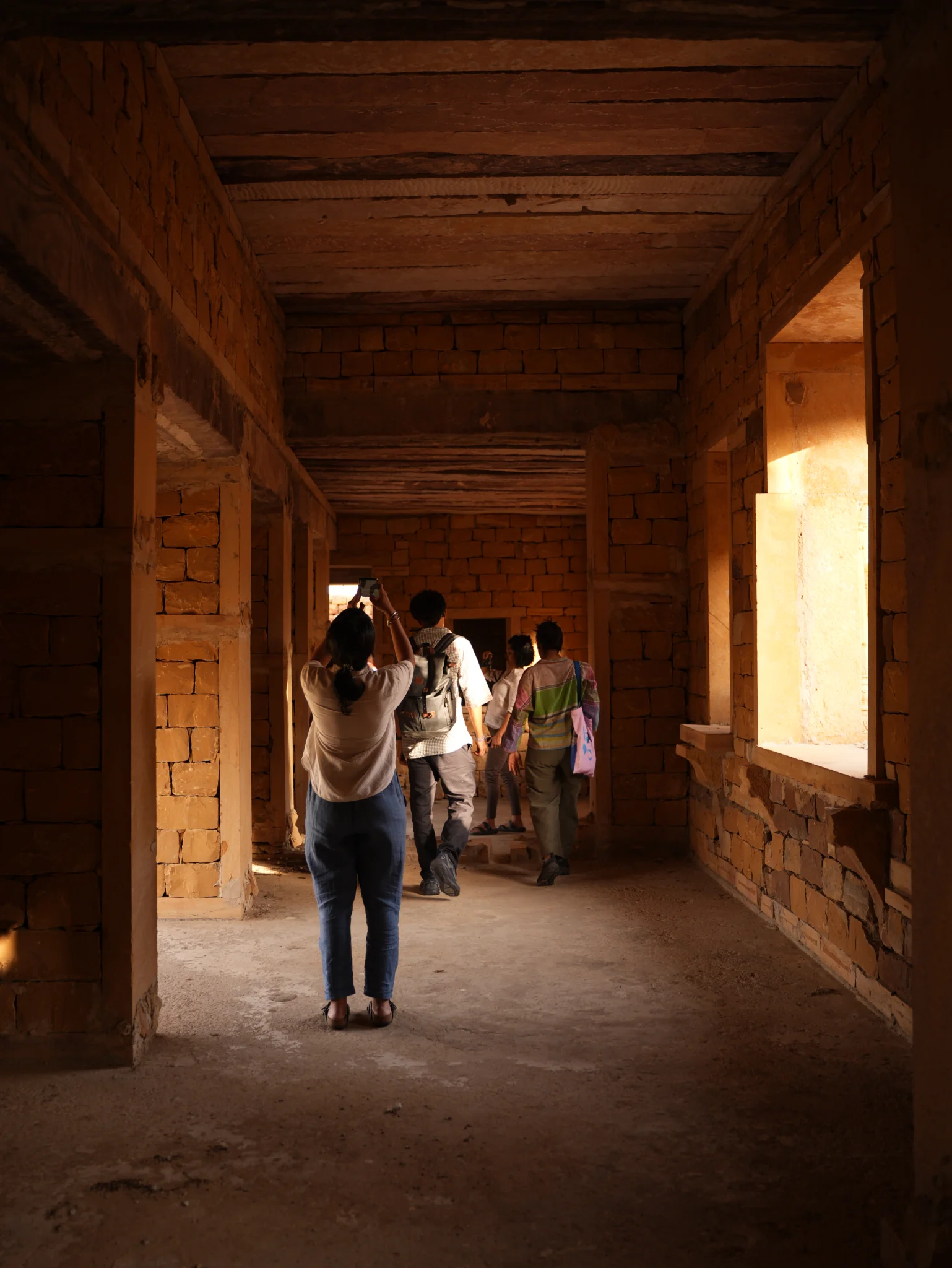
R: What were you expecting from this trip to Jaisalmer? What were your pre-conceived notions about life and farming in the desert?
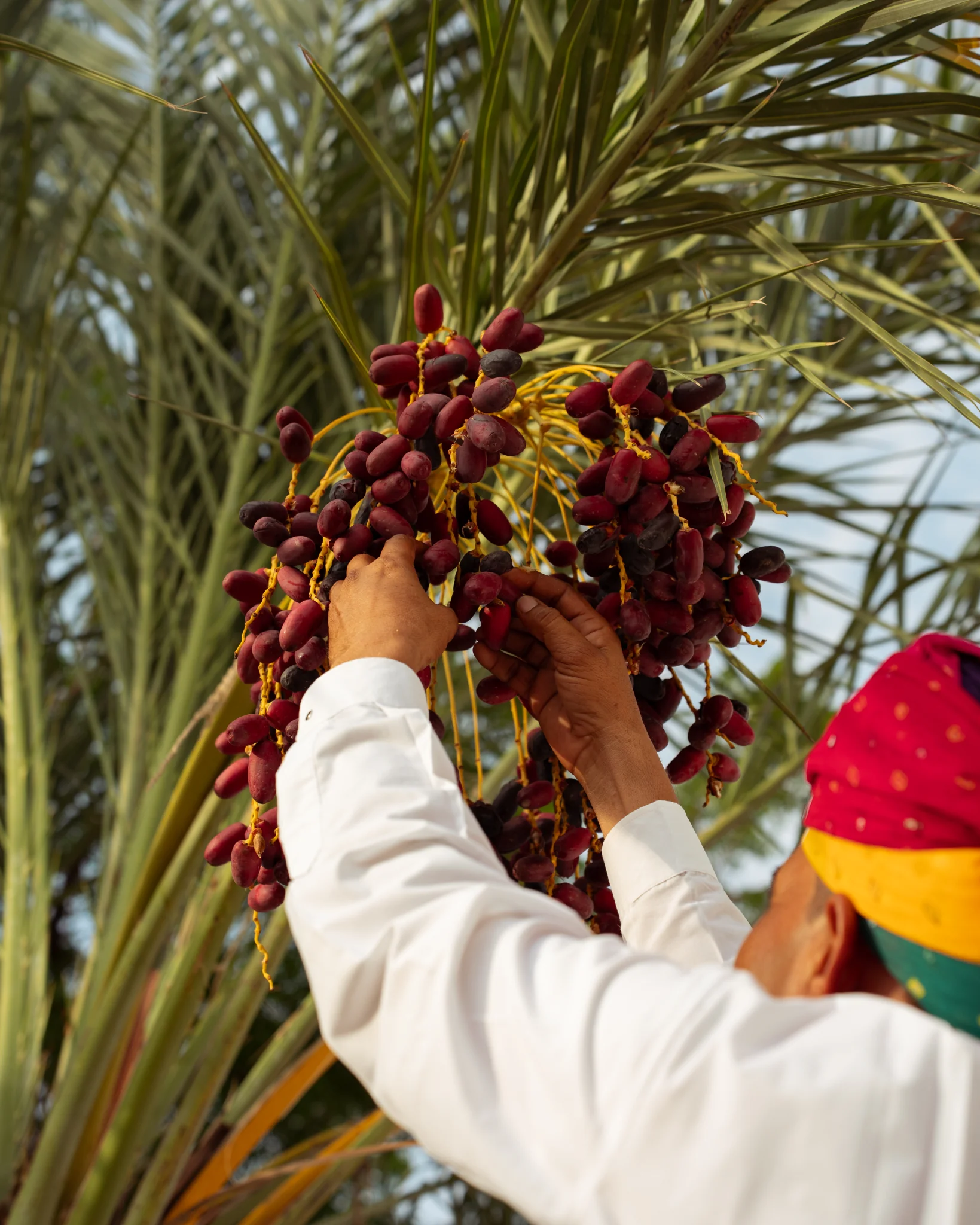
G: To be very honest, I didn’t have the time to think. Until the last few days, something was going on at work. But my immediate understanding was that I was going to eat stuff from khajoor, that we are going to get to see different stages of its growth. I was only thinking about khajoor at that time. And I was obviously skeptical about monoculture, already. But after coming here and seeing how they have lived all these years, how much harshness there is in the environment . If this solution of tissue culture to a certain extent is balanced with the rest of everything then it might work. I still don’t know much about it. We all need to go back, read more, understand more. But time will also tell. But it made me less skeptical about it after coming and seeing it firsthand.

R: Did anything else surprise you in a way that only being here in-person could have done?
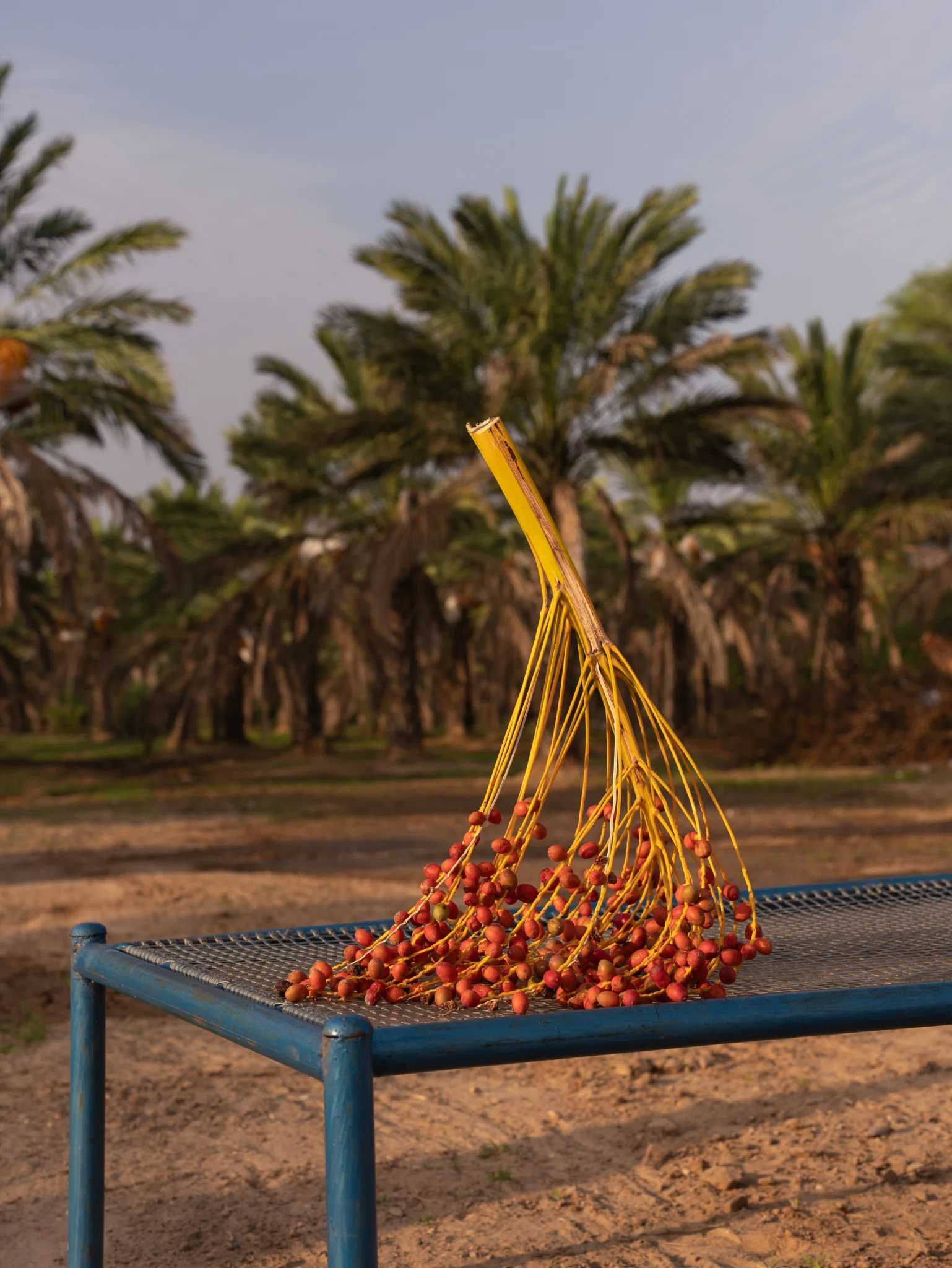
G: it’s about getting to see a plant growing in isolation vs that as a crop. which is dates here, getting to taste a date that tastes like chickoo, then you get to see a male and a female plant. You get to see the people who are a part of it. You get to see some genuine reactions. You will know right away if somebody is troubled by doing this. We didn’t see a troubled environment. We might get to know some details later on in the future about these plantations. But if they [farmers] are forced to do what they are doing, you’ll be able to see from their faces. They are the first to do what they are doing. That plus knowing the history of the land gave a lot of perspective. Also, the fact that this khajoor comes from some part of the UAE and other parts like California, where it is a proper desert, and knowing what a desert ecosystem was extremely interesting to understand. That coupled with the beautiful stories of the Paliwals and the Khadin systems.
It was different from a situation where I had to come all by myself, see this plant, and look at its variety rather than coming with context and getting to talk to the locals who have so much pride in these water systems and others. It is powerful to listen to all of that.Everything added up to the experience, like chutney making.. Especially when you come from a land which gives you so much and then you come to a land that gives you so little. But in their (people’s) minds, it still gives so much. They are grateful for it.
And it was all so much to know in two days. That intense hospitality at Suryagarh. Then you come to the people who have so much pride about their land, not just about what they grow but also about what others grow. All these personalities who are from the same land but also so different from each other. But they speak so well about each other and what each other is doing. I don’t see that in a lot of other places in mainland India. Here each one is proud about the different crops they grow on the same land like dates, cumin etc. I can sense a true community spirit in this.
R: Ofcourse it is not only about khajoor. How is land and ecology important to you as a chef/fermenter?
G: Land and ecology is extremely important. From the beginning, I had decided I don’t want to just cook or just ferment. If I were to do that, I can buy my stuff where it is delivered to me from anywhere. I have always wanted to go outside and seek the source. Seeking the source for me doesn’t only mean going there and grabbing the ingredient, having a conversation and leaving. It is a part of having a long-standing relationship with the person who is close to the land and seeing that person’s understanding of the land. I don’t read as much as others do. My knowledge comes from talking to people. My perspective is built from talking to people. I have a bunch of people around me in my little community in Pune where if I’m stuck somewhere in understanding — I turn to other people for advice.
Same with me and Shailesh (founder of OOO Farms)--- like before I was questioning the tissue culture guy [refers to her many queries to a person at the farm we visited]. I told S that I am going to this place and how I was wary of it. But I’m still going to go, I want to know and understand it. I feel that the more you talk to people from the same field, the more you learn. There is so much you can learn from the guy who showed us the thali of the wild veg vis-a-vis another tribal person somewhere in Maharashtra.
So, learning about the ecosystem of the land is extremely important. I don’t think the chain is complete unless it's done. Anybody can cook food and put it on a plate. If you want to be part of the chain in a conscious way, you need to see each and every person in that chain and their perspective.
And people like me —people who live in the cities —we need to get out. The problem is that we think that farmers should come to us. It’s impossible. Obviously, farmers who do come to us have the advantage of accessibility. I will also buy more from them because I can’t keep 10 tonnes of grain with me and use it. I will have to either change the fermented product or item on the menu.
R: Your approach to seek knowledge from people over books is very fair for a country like ours where most of the culinary and ecological knowledge in undocumented. This lack of documentation leaves our culinary practices at the mercy of keeping a particular thing – an ingredient or custom – alive by consuming or practicing it. Otherwise, it’s slowly eroded to becoming a total absence. How do we understand the larger implications of this absence? What about that?
G: It might be something as simple as uploading a photo on social media with two lines about the ingredient. There is a recall value of something that used to exist. That recall value is so important. So, every time you go somewhere and you see an ingredient that’s forgotten or lost, you need to tell at least two-three people about it. There are so many mediums. You write, talk, and spread it. Any form of spreading is important. We keep thinking ‘what’s our role in all of this?’ We (writers, artists, practitioners of food) are not farming. We are not the government. We are not doing the tissue culture. We are the guys in the middle, who are propagating it, spreading the knowledge in whichever way we interpret it and take it forward.
R: What would you like the future of something like this (the residency) to be? An immersive experience like this where you understand many things or what else you want to see in the food world in India that’s yet to happen?
G: Going back to Shailesh, once a month he comes to Pune for something in Marathi known as abhyas ghar – where people go to study.It is a gathering of farmers from the region and neighbouring regions. I have never been to an abhyas ghar. But I’d love to. From what I understand about an abhyas ghar is that they come and discuss with each other about changing seasons, what they do to their crops, this and that. It’s like therapy for them because they are all in it together but it's also like a lonely path.
Now, a similar situation applies to a cook, a chef, a fermenter, somebody who is dealing with food. It can be a very lonely journey. And you know that about chefs. The problem is I’m yet to see a community like that where we are able to create a platform where we genuinely collaborate and spread knowledge amongst each other. I’ve only seen a few women here and there so far doing this. Such an arrangement should be there in each city. I don’t have one in my own city.
There is something known as NRAI (National Restaurant Association of India). But here talks are mostly limited to how to deal with Zomato, how to sell pizza better etc. Yes, those are all important problems but not applicable to the source. There is no farmer and ecology angle. Everybody thinks that the farmer and ecology angle comes from people who don’t have to think about money. We are perceived as people who do niche things.
There is a divide between people who want to run run-of-the-mill, trend-driven restaurants and cafes and others who come with these angles. So, a community of like-minded people to pool our knowledge and practices is essential. Now, the customers also understand clean labelling. They want to know all of these things. It has become a trend to say that I know my source and farmer. But it needs to be genuine.